Yuan Zengzhuang, Han Xinyan, Xiao Manyu, Zhu Taoyu, Xu Yaping, Tang Qian, Lian Chen, Wang Zijin, Li Junming, Wang Boyu, Li Changhui, Xiang Xiaochen, Jin Ruobai, Liu Yufei, Yu Xinyu, Zhang Kehang, Li Songsong, Ray Madhumita, Li Rong, Gruzdev Artiom, Shao Shiqun, Shao Fangwei, Wang Hua, Lian Wang, Tang Yong, Chen Di, Lei Ying, Jin Xuru, Li Qinglin, Long Weiwen, Huang Huaqiong, DeMayo Francesco J, Liu Jian
Department of Respiratory and Critical Care Medicine, the Second Affiliated Hospital, and Centre for Infection Immunity and Cancer (IIC) of Zhejiang University-University of Edinburgh Institute (ZJU-UoE Institute), Zhejiang University School of Medicine, Zhejiang University, Hangzhou, China.
Edinburgh Medical School: Biomedical Sciences, College of Medicine and Veterinary Medicine, The University of Edinburgh, Edinburgh, UK.
Cell Death Dis. 2024 Dec 18;15(12):897. doi: 10.1038/s41419-024-07274-5.
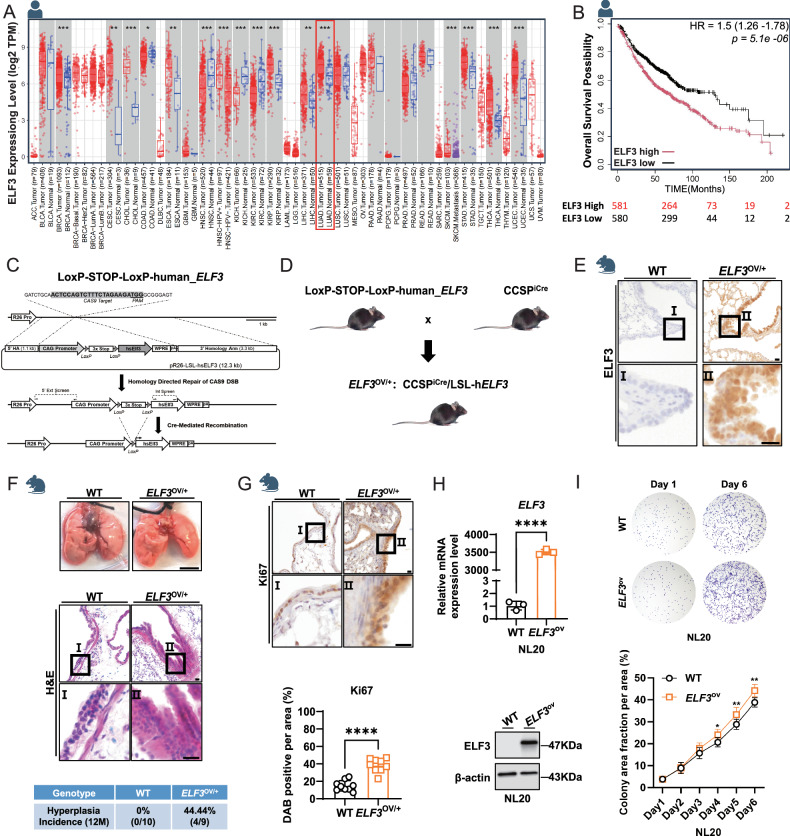
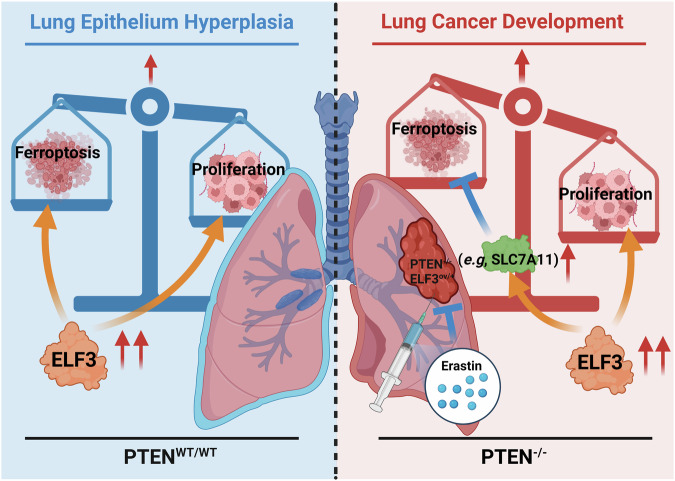
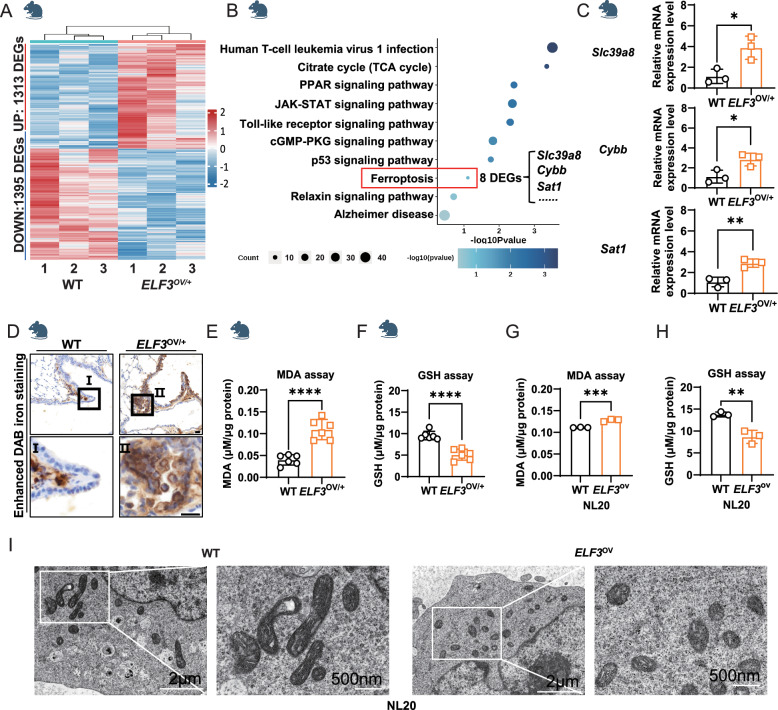
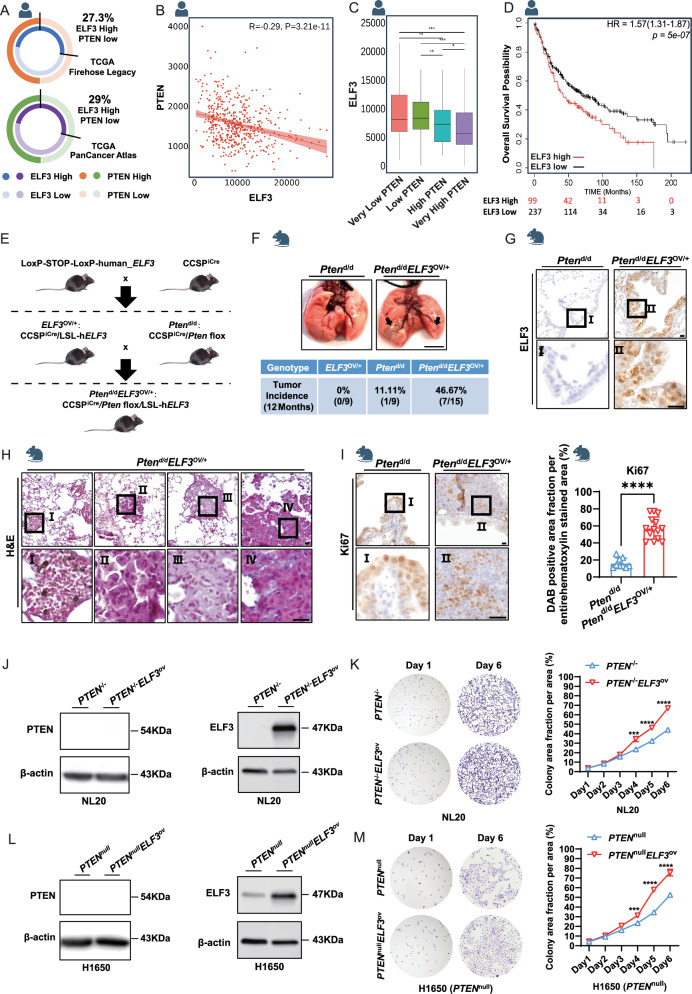
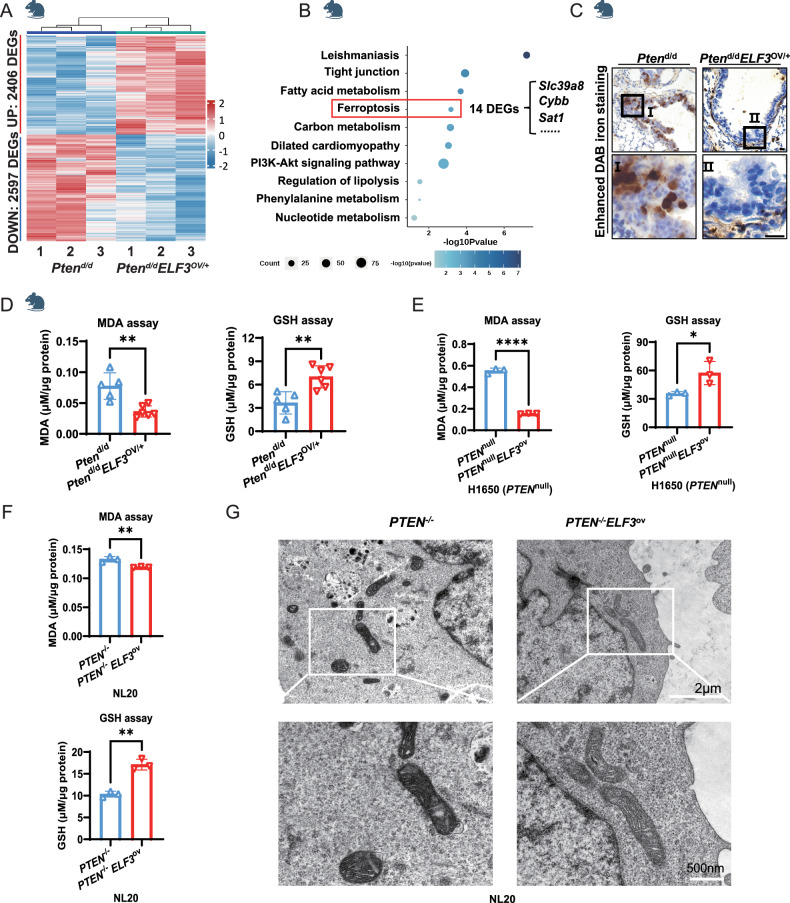
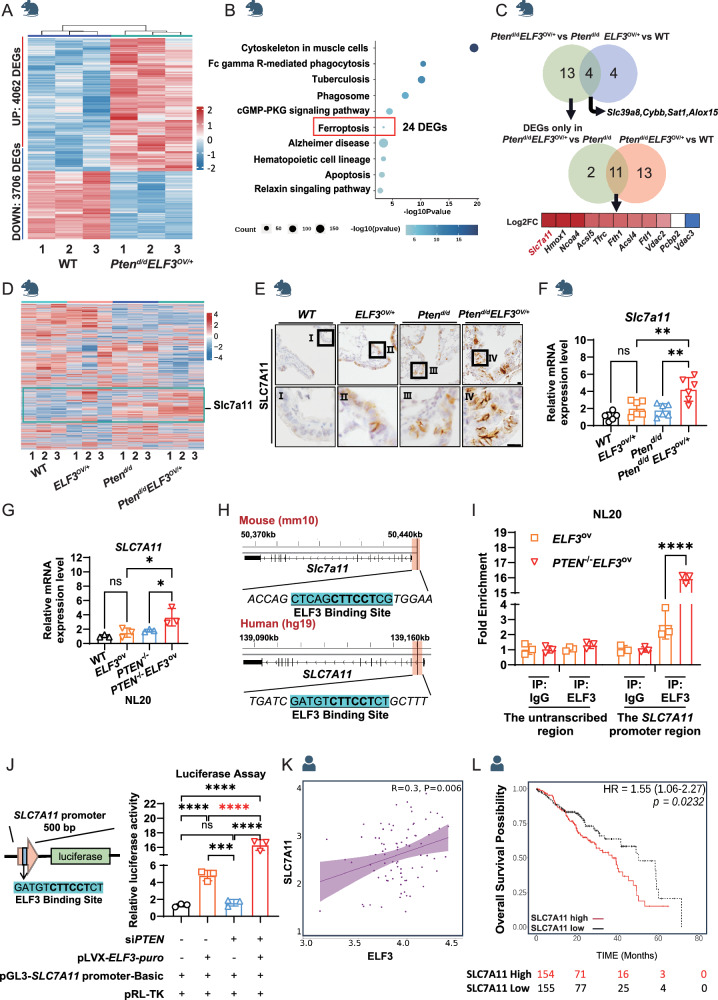
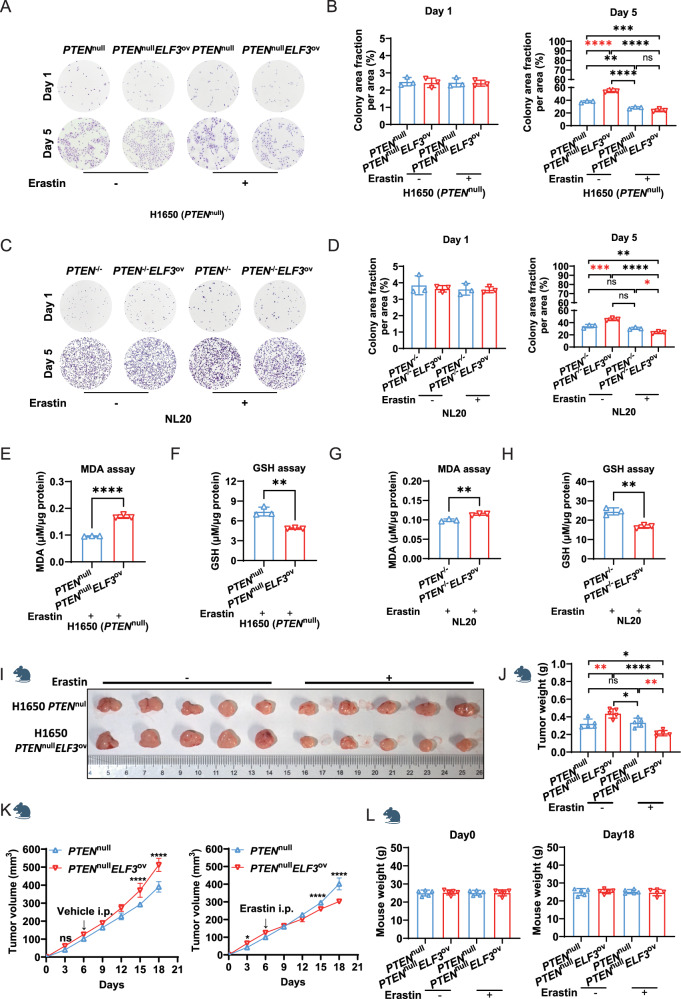
Ferroptosis has been shown to play a crucial role in preventing cancer development, but the underlying mechanisms of dysregulated genes and genetic alternations driving cancer development by regulating ferroptosis remain unclear. Here, we showed that the synergistic role of ELF3 overexpression and PTEN deficiency in driving lung cancer development was highly dependent on the regulation of ferroptosis. Human ELF3 (hELF3) overexpression in murine lung epithelial cells only caused hyperplasia with increased proliferation and ferroptosis. hELF3 overexpression and Pten genetic disruption significantly induced lung tumor development with increased proliferation and inhibited ferroptosis. Mechanistically, we found it was due to the induction of SCL7A11, a typical ferroptosis inhibitor, and ELF3 directly and positively regulated SCL7A11 in the PTEN-deficient background. Erastin-mediated inhibition of SCL7A11 induced ferroptosis in cells with ELF3 overexpression and PTEN deficiency and thus inhibited cell colony formation and tumor development. Clinically, human lung tumors showed a negative correlation between ELF3 and PTEN expression and a positive correlation between ELF3 and SCL7A11 in a subset of human lung tumors with PTEN-low expression. ELF3 and SCL7A11 expression levels were negatively associated with lung cancer patients' survival rates. In summary, ferroptosis induction can effectively attenuate lung tumor development induced by ELF3 overexpression and PTEN downregulation or loss-of-function mutations.
铁死亡已被证明在预防癌症发展中起关键作用,但通过调节铁死亡驱动癌症发展的基因失调和基因改变的潜在机制仍不清楚。在这里,我们表明ELF3过表达和PTEN缺陷在驱动肺癌发展中的协同作用高度依赖于铁死亡的调节。在小鼠肺上皮细胞中过表达人ELF3(hELF3)仅导致细胞增生,增殖增加和铁死亡。hELF3过表达和Pten基因破坏显著诱导肺癌发展,增殖增加并抑制铁死亡。从机制上讲,我们发现这是由于诱导了典型的铁死亡抑制剂SCL7A11,并且在PTEN缺陷背景下ELF3直接正向调节SCL7A11。Erastin介导的对SCL7A11的抑制在具有ELF3过表达和PTEN缺陷的细胞中诱导铁死亡,从而抑制细胞集落形成和肿瘤发展。临床上,在一部分PTEN低表达的人类肺癌中,人类肺肿瘤显示ELF3和PTEN表达之间呈负相关,ELF3和SCL7A11之间呈正相关。ELF3和SCL7A11表达水平与肺癌患者的生存率呈负相关。总之,诱导铁死亡可以有效减弱由ELF3过表达和PTEN下调或功能丧失突变诱导的肺肿瘤发展。