Lee Choong H, Blackband Stephen J, Fernandez-Funez Pedro
Department of Neuroscience, McKnight Brain Institute, University of Florida, Gainesville, FL. 32611, USA.
1] Department of Neuroscience, McKnight Brain Institute, University of Florida, Gainesville, FL. 32611, USA [2] National High Magnetic Field Laboratory, University of Florida, Gainesville, FL. 32611, USA.
Sci Rep. 2015 Mar 10;5:8920. doi: 10.1038/srep08920.
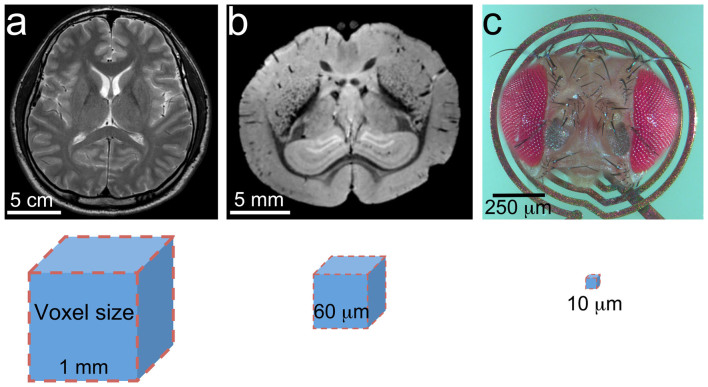
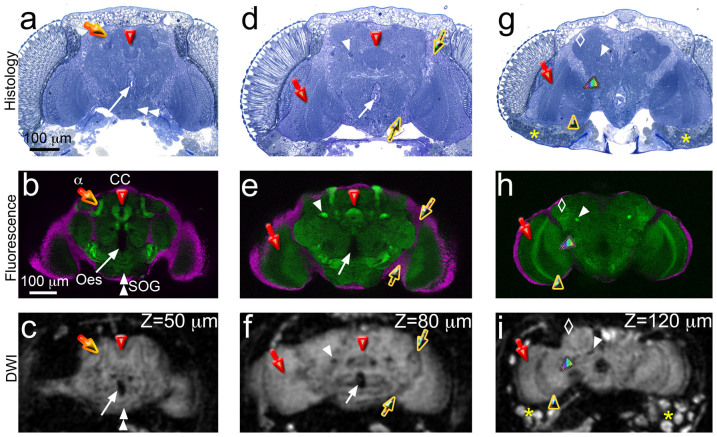
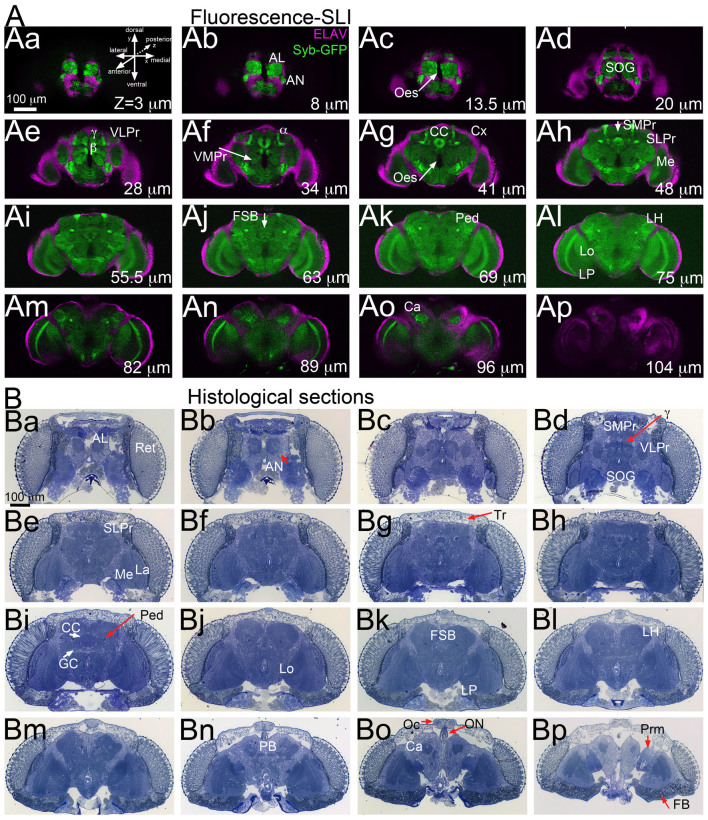
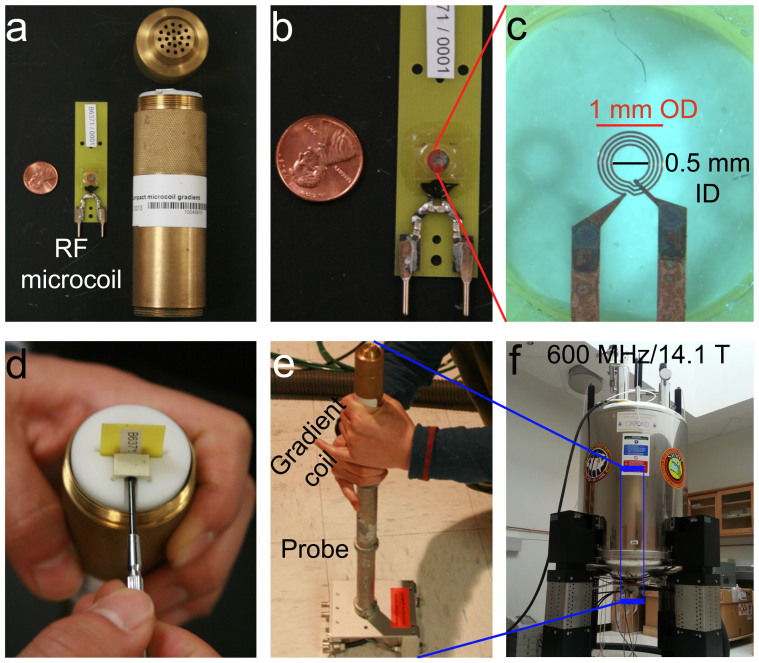
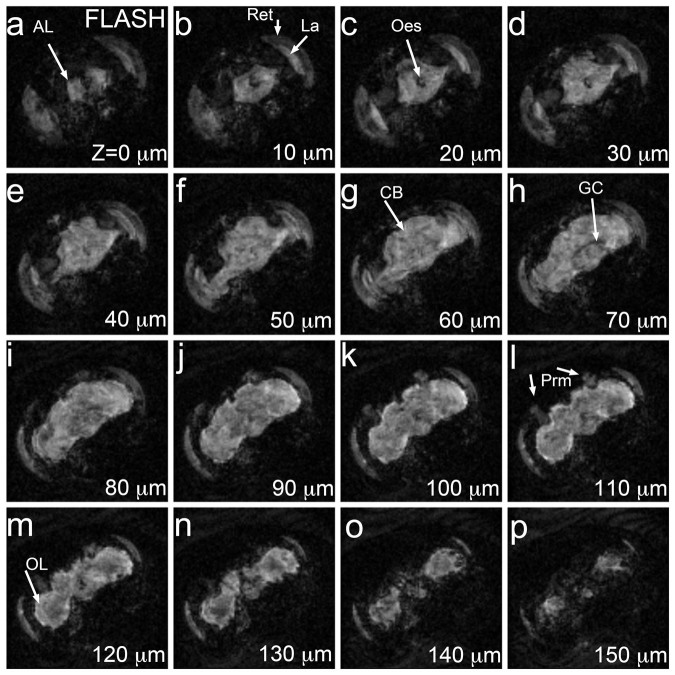
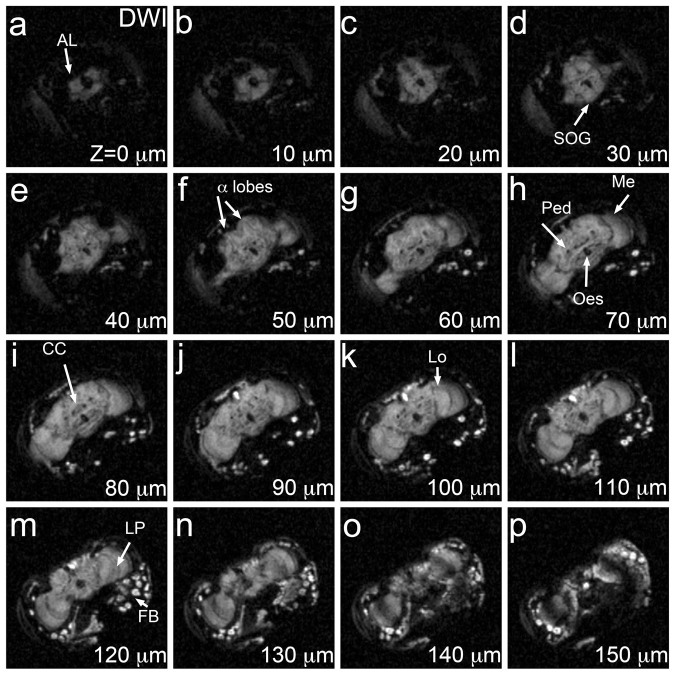
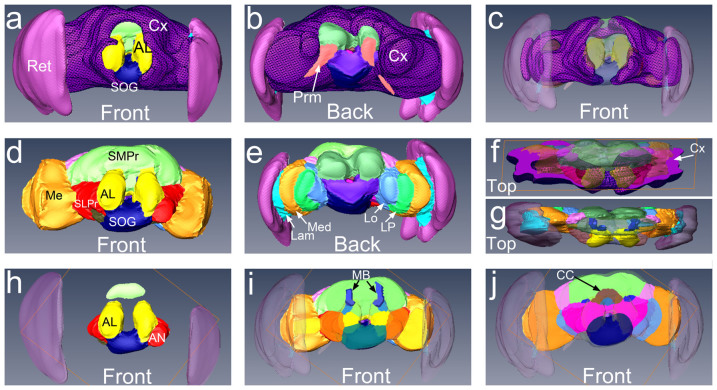
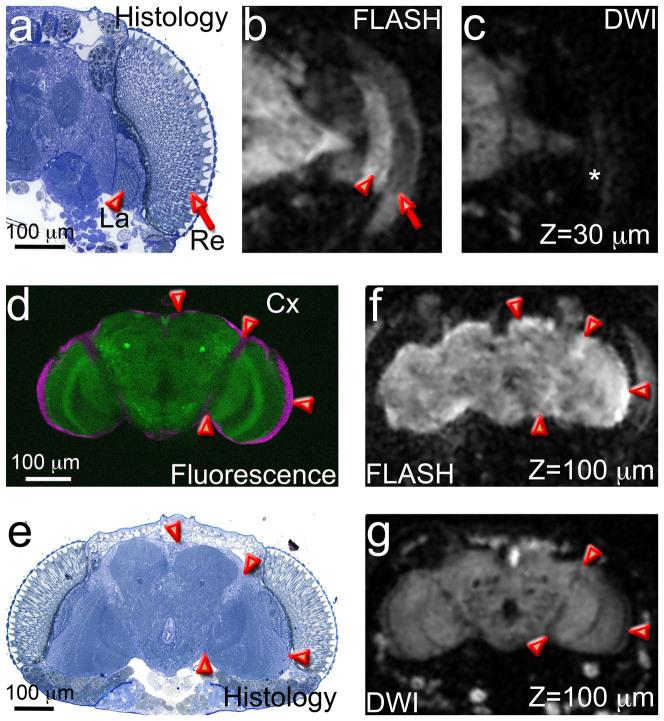
Understanding the complex architecture, connectivity, and pathology of the human brain is a major application of magnetic resonance imaging (MRI). However, the cellular basis of MR signal is still poorly understood. The advent of MR microscopy (MRM) enables imaging biological samples at cellular resolution, helping to interpret the nature of MR signal at the cellular level. In this regard, the small Drosophila brain can reveal key aspects of MR signal through the visualization of complex, intact neuronal structures in their native spatial arrangement. Applying state-of-the-art MR technology, we imaged fixed Drosophila heads at 10 μm isotropic resolution by two endogenously contrasted MRM sequences. The improved MRM sensitivity described here delivered the highest 3D resolution of an intact animal head reported so far. 3D fast low angle shot (FLASH) revealed strong signal in most internal tissues, particularly in the brain cortex, which contains the cell bodies of neurons and glia. Remarkably, 3D diffusion weighted imaging (DWI) delivered unprecedented contrast within the modular brain neuropil, revealing hyperintense signal in synapse-rich microdomains. Thus, the complex Drosophila brain revealed unknown features of FLASH and DWI with potential applications in characterizing the structure and pathology of the mammalian brain.
了解人类大脑的复杂结构、连接性和病理学是磁共振成像(MRI)的一项主要应用。然而,人们对磁共振信号的细胞基础仍知之甚少。磁共振显微镜(MRM)的出现使得以细胞分辨率对生物样本进行成像成为可能,有助于在细胞水平上解释磁共振信号的本质。在这方面,果蝇的小脑袋能够通过可视化其天然空间排列中的复杂完整神经元结构,揭示磁共振信号的关键方面。应用最先进的磁共振技术,我们通过两个内源性对比的MRM序列,以各向同性10μm的分辨率对固定的果蝇头部进行成像。本文所述的改进后的MRM灵敏度提供了迄今为止报道的完整动物头部的最高三维分辨率。三维快速低角度激发(FLASH)在大多数内部组织中显示出强信号,特别是在包含神经元和神经胶质细胞体的大脑皮层中。值得注意的是,三维扩散加权成像(DWI)在模块化脑髓质内提供了前所未有的对比度,在富含突触的微域中显示出高强度信号。因此,复杂的果蝇大脑揭示了FLASH和DWI的未知特征,在表征哺乳动物大脑的结构和病理学方面具有潜在应用。