Muuronen Antti T, Taina Mikko, Hedman Marja, Marttila Jarkko, Kuusisto Johanna, Onatsu Juha, Vanninen Ritva, Jäkälä Pekka, Sipola Petri, Mustonen Pirjo
Kuopio University Hospital, Diagnostic Imaging Centre, Department of Clinical Radiology, Kuopio, Finland.
Kuopio University Hospital, Diagnostic Imaging Centre, Department of Clinical Radiology, Kuopio, Finland; Kuopio University Hospital, Heart Center, Kuopio, Finland.
PLoS One. 2015 Mar 10;10(3):e0120598. doi: 10.1371/journal.pone.0120598. eCollection 2015.
The etiology of an ischemic stroke remains undetermined in 20-35% of cases and many patients do not have any of the conventional risk factors. Increased visceral adipose tissue (VAT) is a suggested new risk factor for both carotid artery atherosclerosis (CAA) and atrial fibrillation (AF), but its role in the remaining stroke population is unknown. We assessed the amount of VAT in patients with embolic stroke of undetermined source (ESUS) after excluding major-risk cardioembolic sources, occlusive atherosclerosis, and lacunar stroke.
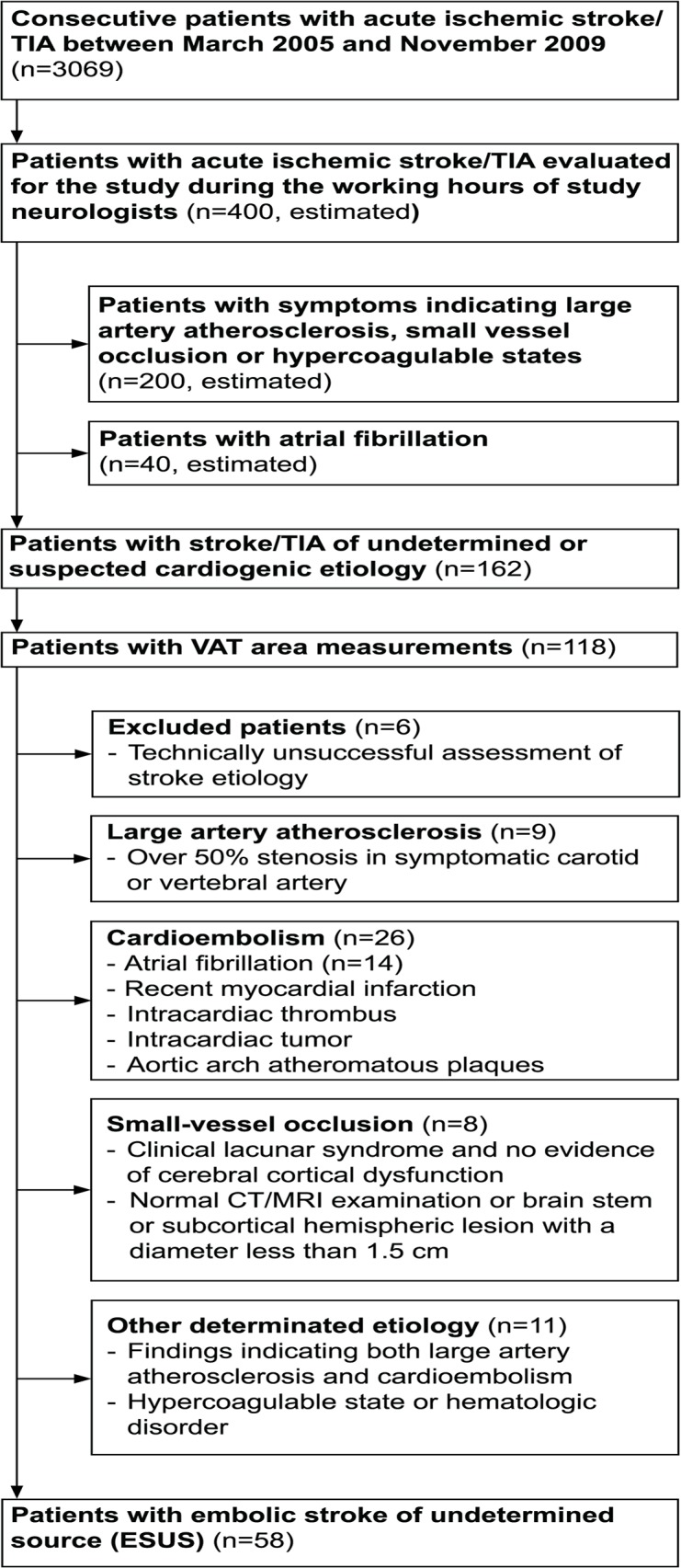
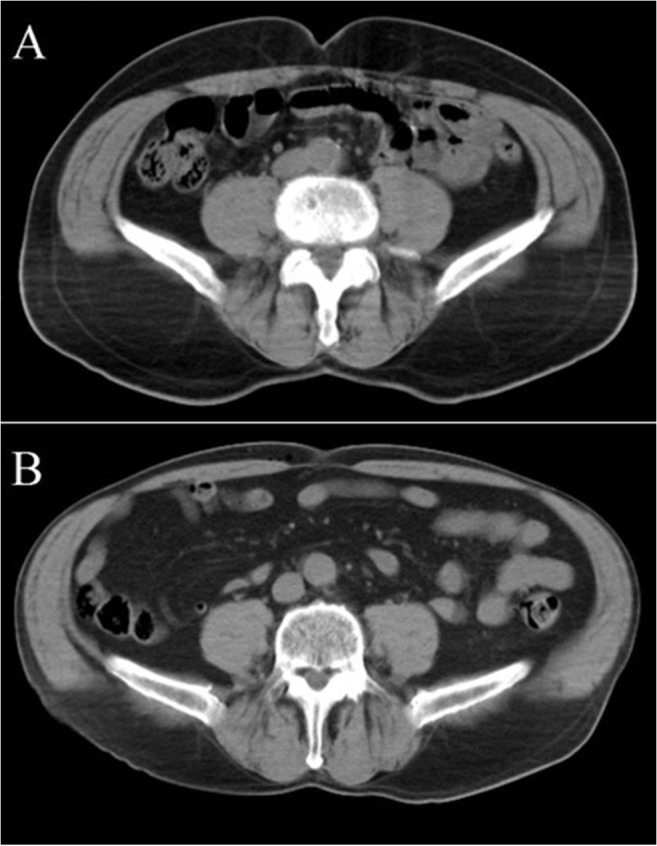
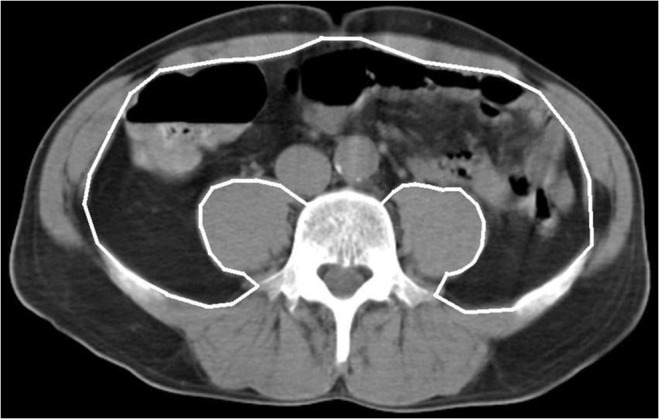
Altogether 58 patients (mean age 57.7 ± 10.2 years, 44 men) with ischemic stroke of unknown etiology but without CAA, known AF or small vessel disease underwent computed tomography angiography and assessment of VAT. For comparison VAT values from three different reference populations were used. Conventional risk factors (smoking, hypertension, diabetes, increased total and LDL-cholesterol, decreased HDL-cholesterol) were also registered.
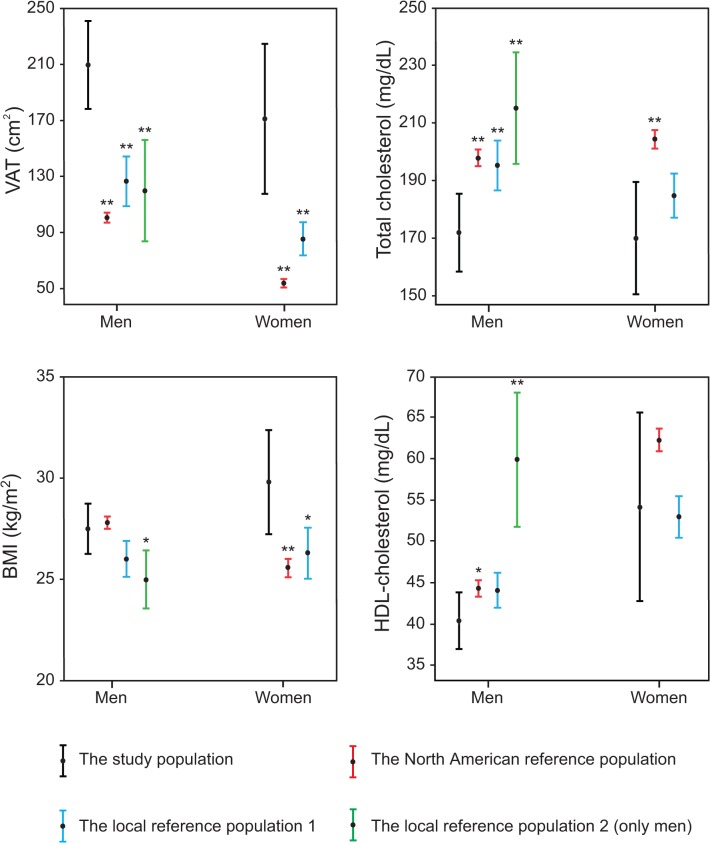
Mean VAT area was significantly higher in stroke patients (205 ± 103 cm2 for men and 168 ± 99 cm2 for women) compared to all reference populations (P < 0.01). 50% of male and 57% of female patients had an increased VAT area. In male patients, VAT was significantly higher despite similar body mass index (BMI). Increased VAT was more common than any of the conventional risk factors.
Increased VAT was found in over half of our patients with ESUS suggesting it may have a role in the pathogenesis of thromboembolism in this selected group of patients.
在20%-35%的病例中,缺血性中风的病因仍未明确,许多患者没有任何传统风险因素。内脏脂肪组织(VAT)增加是颈动脉粥样硬化(CAA)和心房颤动(AF)的一个新提出的风险因素,但其在其余中风人群中的作用尚不清楚。我们在排除主要风险心脏栓塞源、闭塞性动脉粥样硬化和腔隙性中风后,评估了不明来源栓塞性中风(ESUS)患者的VAT量。
共有58例病因不明但无CAA、已知AF或小血管疾病的缺血性中风患者(平均年龄57.7±10.2岁,44例男性)接受了计算机断层扫描血管造影和VAT评估。为了进行比较,使用了来自三个不同参考人群的VAT值。还记录了传统风险因素(吸烟、高血压、糖尿病、总胆固醇和低密度脂蛋白胆固醇升高、高密度脂蛋白胆固醇降低)。
与所有参考人群相比,中风患者的平均VAT面积显著更高(男性为205±103平方厘米,女性为168±99平方厘米)(P<0.01)。50%的男性患者和57%的女性患者VAT面积增加。在男性患者中,尽管体重指数(BMI)相似,但VAT显著更高。VAT增加比任何传统风险因素都更常见。
在我们超过一半的ESUS患者中发现VAT增加,表明它可能在这一特定患者群体的血栓栓塞发病机制中起作用。