Terol Javier, Ibañez Victoria, Carbonell José, Alonso Roberto, Estornell Leandro H, Licciardello Concetta, Gut Ivo G, Dopazo Joaquín, Talon Manuel
Centro de Genómica, Instituto Valenciano de Investigaciones Agrarias (IVIA), Moncada, 46113, Valencia, Spain.
Centro de Investigación Principe Felipe (CIPF), Avda, Autopista del Saler, 16-3, 46012, Valencia, Spain.
BMC Genomics. 2015 Feb 13;16(1):69. doi: 10.1186/s12864-015-1280-3.
Transposable-element mediated chromosomal rearrangements require the involvement of two transposons and two double-strand breaks (DSB) located in close proximity. In radiobiology, DSB proximity is also a major factor contributing to rearrangements. However, the whole issue of DSB proximity remains virtually unexplored.
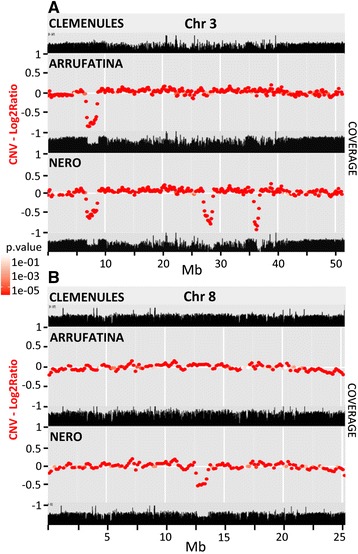
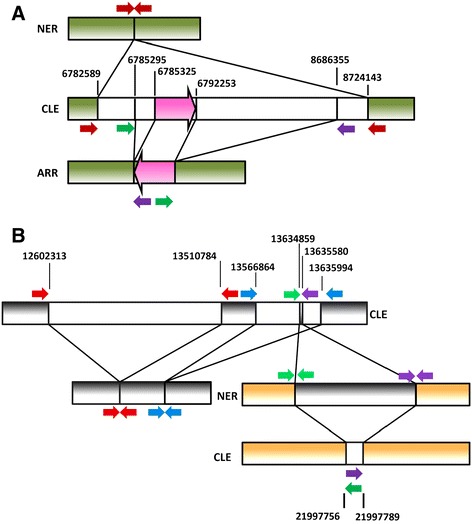
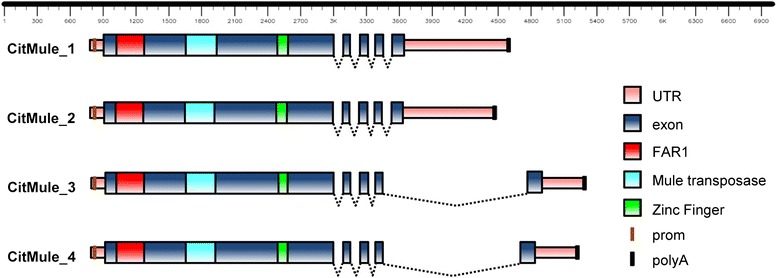
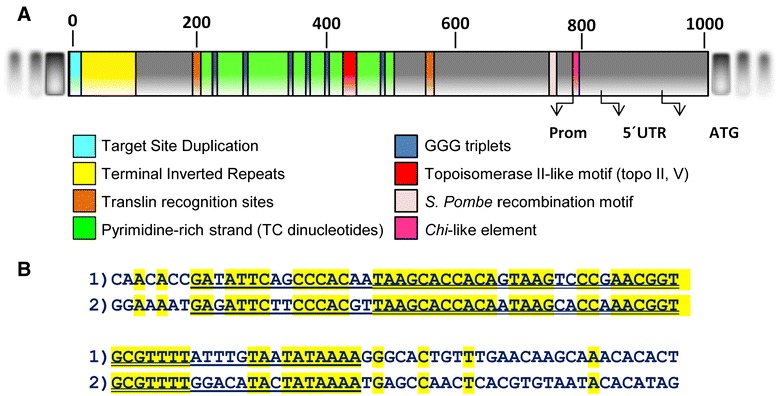
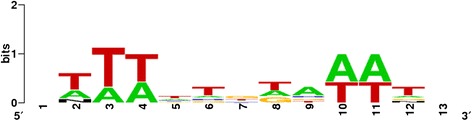
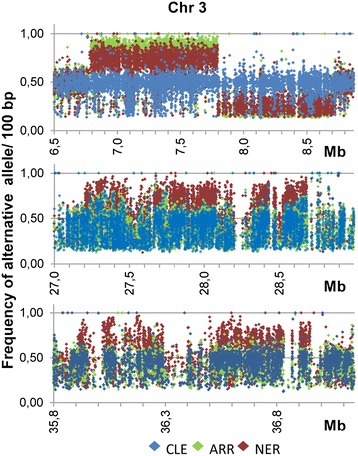
Based on DNA sequencing analysis we show that the genomes of 2 derived mutations, Arrufatina (sport) and Nero (irradiation), share a similar 2 Mb deletion of chromosome 3. A 7 kb Mutator-like element found in Clemenules was present in Arrufatina in inverted orientation flanking the 5' end of the deletion. The Arrufatina Mule displayed "dissimilar" 9-bp target site duplications separated by 2 Mb. Fine-scale single nucleotide variant analyses of the deleted fragments identified a TTC-repeat sequence motif located in the center of the deletion responsible of a meiotic crossover detected in the citrus reference genome.
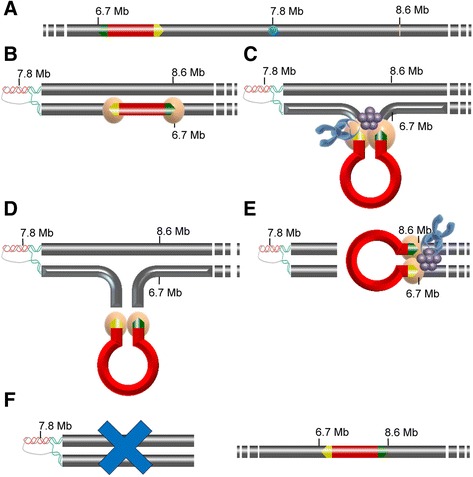
Taken together, this information is compatible with the proposal that in both mutants, the TTC-repeat motif formed a triplex DNA structure generating a loop that brought in close proximity the originally distinct reactive ends. In Arrufatina, the loop brought the Mule ends nearby the 2 distinct insertion target sites and the inverted insertion of the transposable element between these target sites provoked the release of the in-between fragment. This proposal requires the involvement of a unique transposon and sheds light on the unresolved question of how two distinct sites become located in close proximity. These observations confer a crucial role to the TTC-repeats in fundamental plant processes as meiotic recombination and chromosomal rearrangements.
转座元件介导的染色体重排需要两个转座子以及两个紧密相邻的双链断裂(DSB)的参与。在放射生物学中,DSB的邻近性也是导致重排的一个主要因素。然而,DSB邻近性的整个问题实际上仍未得到探索。
基于DNA测序分析,我们表明两个衍生突变体Arrufatina(芽变)和Nero(辐射)的基因组共享3号染色体上一个类似的2 Mb缺失。在Clemenules中发现的一个7 kb类Mutator元件以反向排列存在于Arrufatina中,位于缺失5'端的侧翼。Arrufatina的Mule显示出由2 Mb隔开的“不同”的9 bp靶位点重复。对缺失片段的精细单核苷酸变异分析确定了位于缺失中心的一个TTC重复序列基序,该基序导致了在柑橘参考基因组中检测到的减数分裂交叉。
综上所述,这些信息与以下提议相符,即在两个突变体中,TTC重复基序形成了一个三链DNA结构,产生了一个环,使原本不同的反应性末端紧密靠近。在Arrufatina中,该环将Mule末端带到了两个不同的插入靶位点附近,转座元件在这些靶位点之间的反向插入引发了中间片段的释放。这一提议需要一个独特转座子的参与,并阐明了两个不同位点如何紧密靠近这一未解决的问题。这些观察结果赋予了TTC重复在减数分裂重组和染色体重排等基本植物过程中的关键作用。