Htat Han Win, Longfield Kim, Mundy Gary, Win Zaw, Montagu Dominic
Population Services International Myanmar, Director, Social Marketing, Population Services International, Director, Research and Metrics, Population Services International, Senior Regional Researcher, Asia/Eastern Europe, Population Services International Myanmar, Research Manager, Strategic Information and University of California, San Francisco, Associate Professor, Global Health Sciences
Population Services International Myanmar, Director, Social Marketing, Population Services International, Director, Research and Metrics, Population Services International, Senior Regional Researcher, Asia/Eastern Europe, Population Services International Myanmar, Research Manager, Strategic Information and University of California, San Francisco, Associate Professor, Global Health Sciences.
Health Policy Plan. 2015 Mar;30 Suppl 1(Suppl 1):i14-22. doi: 10.1093/heapol/czu056.
Concerns about appropriate pricing strategies and the high market share of subsidized condoms prompted Population Services International (PSI)/Myanmar to adopt a total market approach (TMA). This article presents data on the size and composition of the Myanmar condom market, identifies inefficiencies and recommends methods for better targeting public subsidy.
Data on condom need and condom use came from PSI/Myanmar's (PSI/M's) behavioural surveys; data for key populations' socioeconomic status profiles came from the same surveys and the National Tuberculosis Prevalence Survey. Data on market share, volumes, value and number of condoms were from PSI/M's quarterly retail audits and Joint United Nations Programme on HIV/AIDS (UNAIDS).
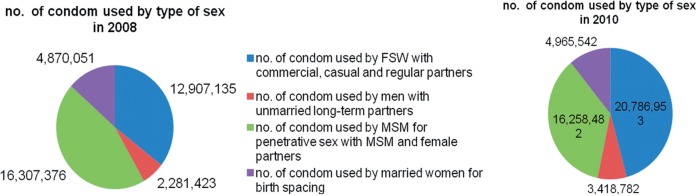
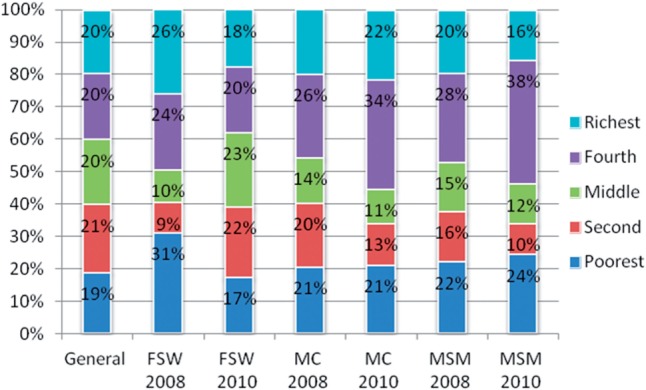
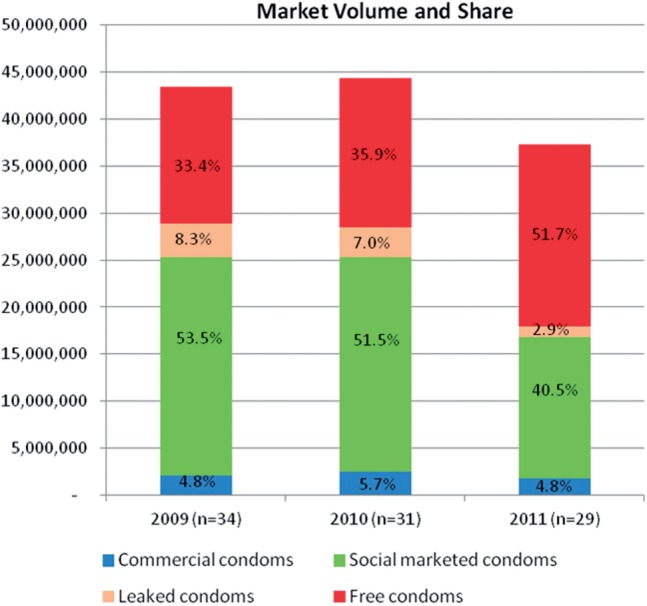
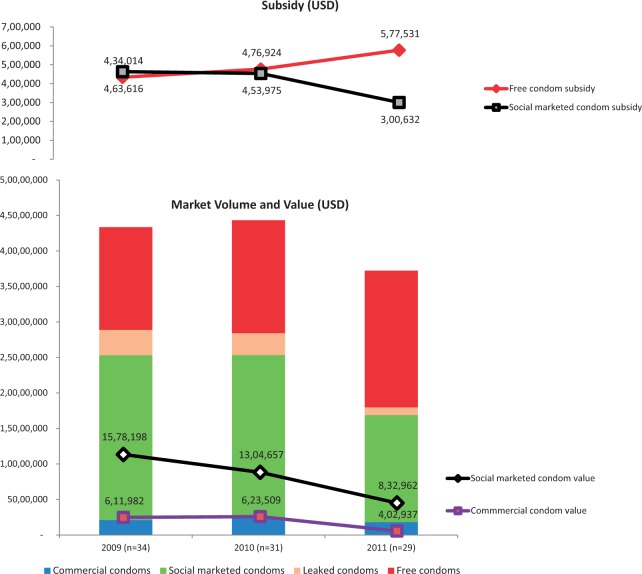
Between 2008 and 2010, the universal need for condoms decreased from 112.9 to 98.2 million while condom use increased from 32 to 46%. Free and socially marketed condoms dominated the market (94%) in 2009-11 with an increase in the proportion of free condoms over time. The retail price of socially marketed condoms was artificially low at 44 kyats ($0.05 USD) in 2011 while the price for commercial condoms was 119-399 kyats ($0.15-$0.49 USD). Equity analyses demonstrated an equal distribution of female sex workers across national wealth quintiles, but 54% of men who have sex with men and 55% of male clients were in the highest two quintiles. Donor subsidies for condoms increased over time; from $434,000 USD in 2009 to $577,000 USD in 2011.
The market for male condoms was stagnant in Myanmar due to: limited demand for condoms among key populations, the dominance of free and socially marketed condoms on the market and a neglected commercial sector. Subsidies for socially marketed and free condoms have prevented the growth of the private sector, an unintended consequence. A TMA is needed to grow and sustain the condom market in Myanmar, which requires close co-ordination between the public, socially marketed and commercial sectors.
对合理定价策略以及补贴避孕套高市场份额的担忧促使国际人口服务组织(PSI)/缅甸采用全面市场方法(TMA)。本文呈现了缅甸避孕套市场的规模和构成数据,识别了低效之处,并推荐了更好地瞄准公共补贴的方法。
避孕套需求和使用的数据来自PSI/缅甸(PSI/M)的行为调查;关键人群社会经济状况概况的数据来自相同调查以及全国结核病患病率调查。避孕套的市场份额、销量、价值和数量的数据来自PSI/M的季度零售审计以及联合国艾滋病规划署(UNAIDS)。
2008年至2010年期间,避孕套的普遍需求从1.129亿降至9820万,而避孕套的使用率从32%增至46%。免费和社会营销的避孕套在2009 - 2011年主导市场(94%),且免费避孕套的比例随时间增加。2011年社会营销避孕套的零售价格人为压低至44缅元(0.05美元),而商业避孕套的价格为119 - 399缅元(0.15 - 0.49美元)。公平性分析表明,女性性工作者在全国财富五等分中分布均匀,但54%的男男性行为者和55%的男性客户处于最高的两个五等分。随着时间推移,对避孕套的捐助补贴增加;从2009年的43.4万美元增至2011年的57.7万美元。
由于关键人群对避孕套的需求有限、免费和社会营销的避孕套在市场上占主导地位以及商业部门被忽视,缅甸男用避孕套市场停滞不前。对社会营销和免费避孕套的补贴阻碍了私营部门的发展,这是一个意外后果。需要采用全面市场方法来发展和维持缅甸的避孕套市场,这需要公共部门、社会营销部门和商业部门之间密切协调。