Torres Alba Fabiola, Nogueira Cleto, Magalhaes Juliana, Costa Igor Santos, Aragao Alessa, Gomes Neto Antero, Martins Filadelfia, Tavora Fabio
Department of Investigative Pathology, Argos Laboratories, 60175-047 Fortaleza, CE, Brazil.
Department of Pathology, Messejana Heart and Lung Hospital, Rua Frei Cirilo 4290, 60846-190 Fortaleza, CE, Brazil.
Anal Cell Pathol (Amst). 2014;2014:352925. doi: 10.1155/2014/352925. Epub 2014 Dec 18.
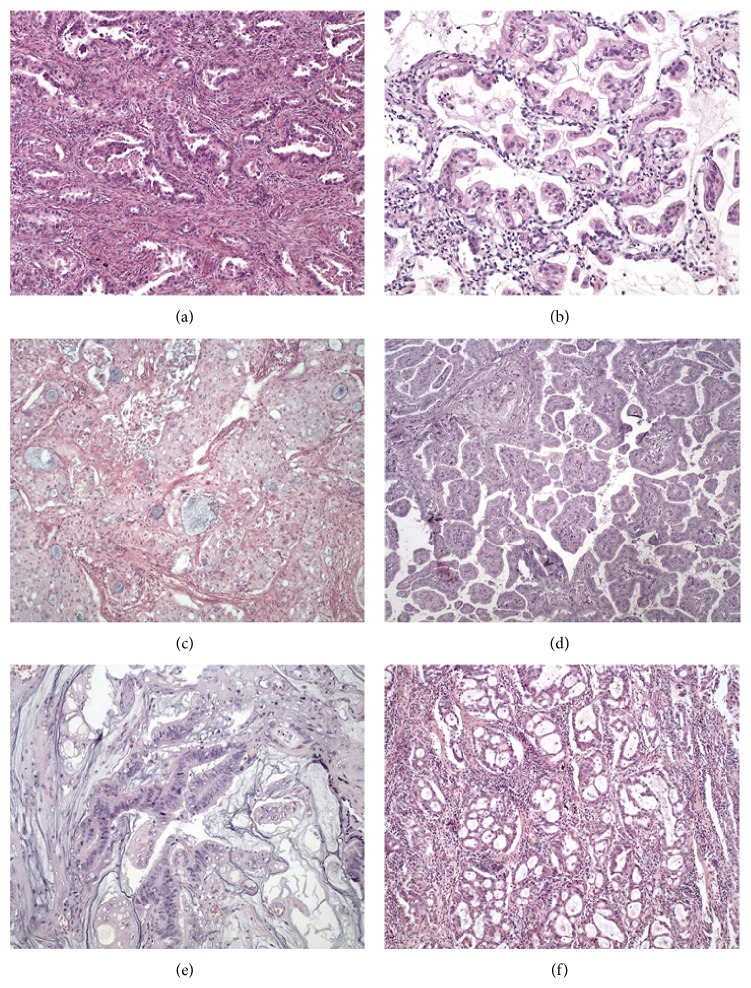
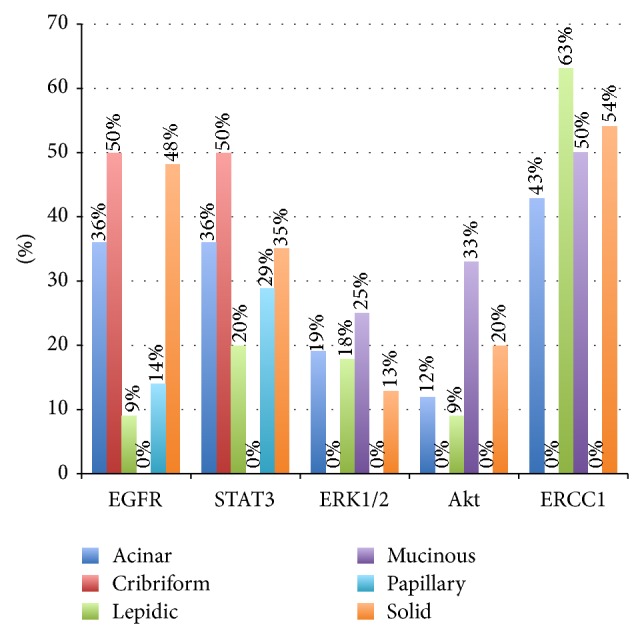
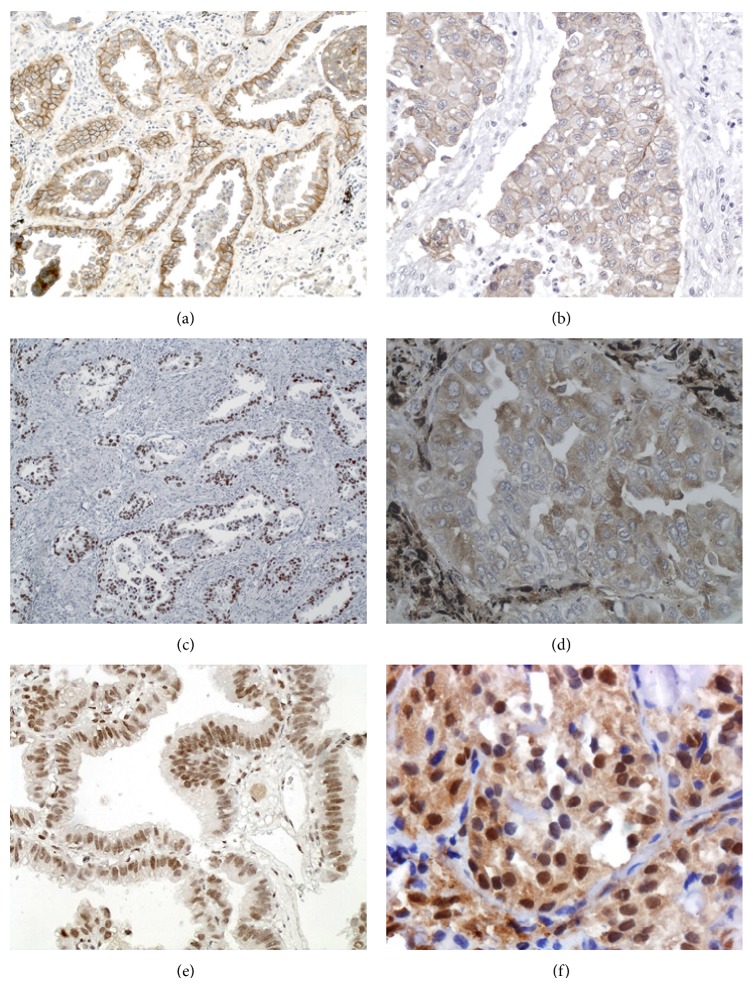
Therapies targeting EGFR are effective in treating tumors that harbor molecular alterations; however, there is heterogeneity in long-term response to these therapies. We retrospectively analyzed protein expression of EGFR, Stat3, phospho-Akt, and phospho-Erk1/2 by immunohistochemistry in a series of resected cases from a single institution, correlated with clinicopathological variables. There were 96 patients, with the majority of cases being of low stage tumors (17 pT1a, 23 pT1b, 30 pT2a, and 18 pT2b). Histologic subtypes were 45 acinar predominant, 2 cribriform, 25 solid, 7 papillary, 11 lepidic, and 4 mucinous tumors. The EGFR score was higher in tumors with vascular invasion (P = 0.013), in solid and cribriform acinar histology, and in high stage tumors (P = 0.006 and P = 0.01). EGFR was more likely overexpressed in solid compared to lepidic tumors (P = 0.02). Acinar tumors had the highest rate of ERK1/2 positivity (19%). There was a strong correlation among positivity for ERCC1 and other markers, including STAT3 (P = 0.003), Akt (P = 0.02), and ERK1/ERK2 (P = 0.0005). Expression of molecules downstream to EGFR varied from 12% to 31% of tumors; however, the expression did not directly correlate to EGFR expression, which may suggest activation of the cascades through different pathways. The correlation of protein expression and the new lung adenocarcinoma classification may help in the understanding of activated pathways of each tumor type, which may act in the oncogenesis and drug resistance of these tumors.
针对表皮生长因子受体(EGFR)的疗法在治疗存在分子改变的肿瘤方面是有效的;然而,这些疗法的长期疗效存在异质性。我们通过免疫组织化学回顾性分析了来自单一机构的一系列切除病例中EGFR、信号转导和转录激活因子3(Stat3)、磷酸化蛋白激酶B(phospho-Akt)和磷酸化细胞外信号调节激酶1/2(phospho-Erk1/2)的蛋白表达,并将其与临床病理变量相关联。共有96例患者,大多数病例为低分期肿瘤(17例pT1a、23例pT1b、30例pT2a和18例pT2b)。组织学亚型包括45例腺泡为主型、2例筛状型、25例实体型、7例乳头型、11例细支气管肺泡型和4例黏液型肿瘤。EGFR评分在伴有血管侵犯的肿瘤中更高(P = 0.013),在实体型和筛状腺泡组织学类型以及高分期肿瘤中也更高(P = 0.006和P = 0.01)。与细支气管肺泡型肿瘤相比,EGFR在实体型肿瘤中更可能过度表达(P = 0.02)。腺泡型肿瘤的ERK1/2阳性率最高(19%)。切除修复交叉互补基因1(ERCC1)与其他标志物(包括STAT3,P = 0.003;Akt,P = 0.02;以及ERK1/ERK2,P = 0.0005)的阳性之间存在强相关性。EGFR下游分子的表达在12%至31%的肿瘤中有所不同;然而,这种表达与EGFR表达没有直接相关性,这可能表明级联反应是通过不同途径激活的。蛋白表达与新的肺腺癌分类之间的相关性可能有助于理解每种肿瘤类型的激活途径,这些途径可能在这些肿瘤的肿瘤发生和耐药性中起作用。