Weber Eva B, Lehtovirta-Morley Laura E, Prosser James I, Gubry-Rangin Cécile
Institute of Biological and Environmental Sciences, Cruickshank Building, St Machar Drive, University of Aberdeen, Aberdeen, AB24 3UU, UK
Institute of Biological and Environmental Sciences, Cruickshank Building, St Machar Drive, University of Aberdeen, Aberdeen, AB24 3UU, UK.
FEMS Microbiol Ecol. 2015 Mar;91(3). doi: 10.1093/femsec/fiv001. Epub 2015 Jan 13.
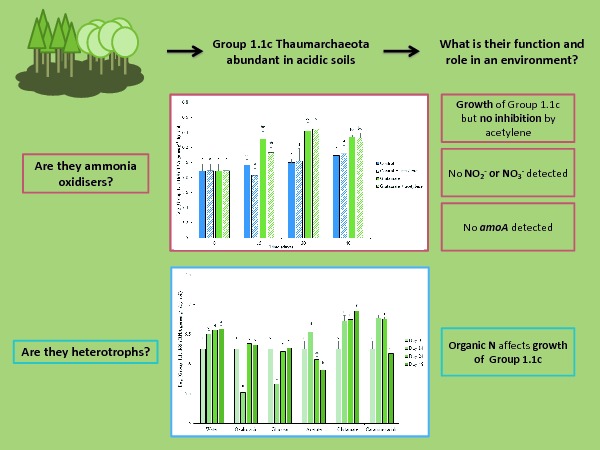
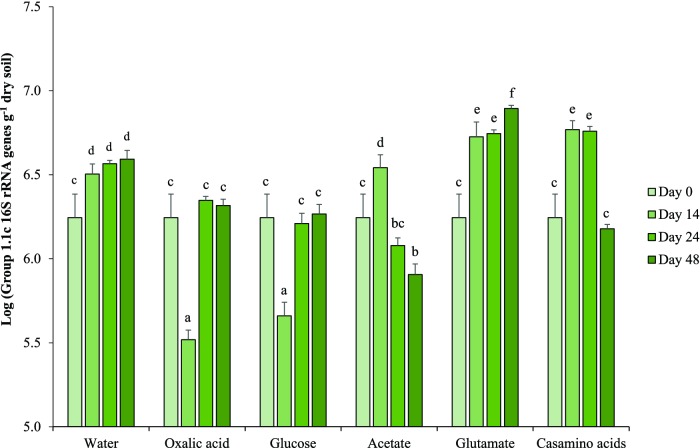
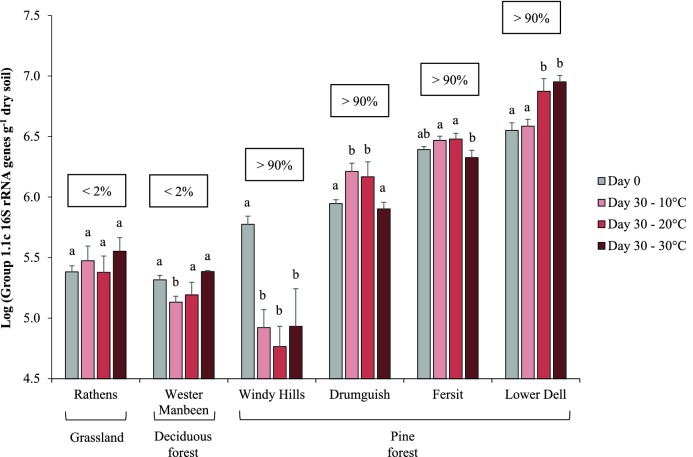
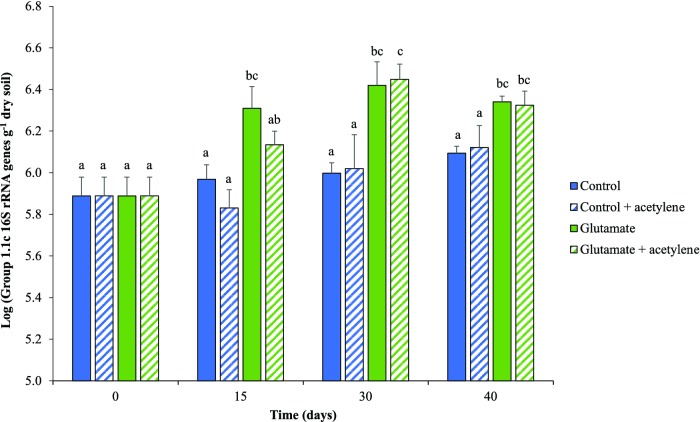
Thaumarchaeota are among the most abundant organisms on Earth and are ubiquitous. Within this phylum, all cultivated representatives of Group 1.1a and Group 1.1b Thaumarchaeota are ammonia oxidizers, and play a key role in the nitrogen cycle. While Group 1.1c is phylogenetically closely related to the ammonia-oxidizing Thaumarchaeota and is abundant in acidic forest soils, nothing is known about its physiology or ecosystem function. The goal of this study was to perform in situ physiological characterization of Group 1.1c Thaumarchaeota by determining conditions that favour their growth in soil. Several acidic grassland, birch and pine tree forest soils were sampled and those with the highest Group 1.1c 16S rRNA gene abundance were incubated in microcosms to determine optimal growth temperature, ammonia oxidation and growth on several organic compounds. Growth of Group 1.1c Thaumarchaeota, assessed by qPCR of Group 1.1c 16S rRNA genes, occurred in soil, optimally at 30°C, but was not associated with ammonia oxidation and the functional gene amoA could not be detected. Growth was also stimulated by addition of organic nitrogen compounds (glutamate and casamino acids) but not when supplemented with organic carbon alone. This is the first evidence for non-ammonia oxidation associated growth of Thaumarchaeota in soil.
奇古菌门是地球上数量最为丰富的生物之一,广泛分布于各处。在这个菌门中,所有已培养的1.1a组和1.1b组奇古菌的代表都是氨氧化菌,在氮循环中发挥着关键作用。虽然1.1c组在系统发育上与氨氧化奇古菌密切相关,且在酸性森林土壤中数量丰富,但对其生理学或生态系统功能却一无所知。本研究的目的是通过确定有利于其在土壤中生长的条件,对1.1c组奇古菌进行原位生理学特征分析。采集了几种酸性草原、桦树和松树森林土壤样本,并将1.1c组16S rRNA基因丰度最高的土壤样本置于微观环境中培养,以确定最佳生长温度、氨氧化情况以及在几种有机化合物上的生长情况。通过对1.1c组16S rRNA基因进行定量PCR评估,发现1.1c组奇古菌在土壤中能够生长,最佳生长温度为30°C,但与氨氧化无关,且未检测到功能基因amoA。添加有机氮化合物(谷氨酸和酪蛋白氨基酸)也能刺激其生长,但仅添加有机碳时则不能。这是奇古菌在土壤中与非氨氧化相关生长的首个证据。