Hossini Amir M, Megges Matthias, Prigione Alessandro, Lichtner Bjoern, Toliat Mohammad R, Wruck Wasco, Schröter Friederike, Nuernberg Peter, Kroll Hartmut, Makrantonaki Eugenia, Zouboulis Christos C, Adjaye James
Departments of Dermatology, Venereology, Allergology and Immunology, Dessau Medical Center, 06847, Dessau, Germany.
Institute for Stem Cell Research and Regenerative Medicine, Heinrich Heine University Duesseldorf, Moorenstr. 5, 40225, Duesseldorf, Germany.
BMC Genomics. 2015 Feb 14;16(1):84. doi: 10.1186/s12864-015-1262-5.
Alzheimer's disease (AD) is a complex, irreversible neurodegenerative disorder. At present there are neither reliable markers to diagnose AD at an early stage nor therapy. To investigate underlying disease mechanisms, induced pluripotent stem cells (iPSCs) allow the generation of patient-derived neuronal cells in a dish.
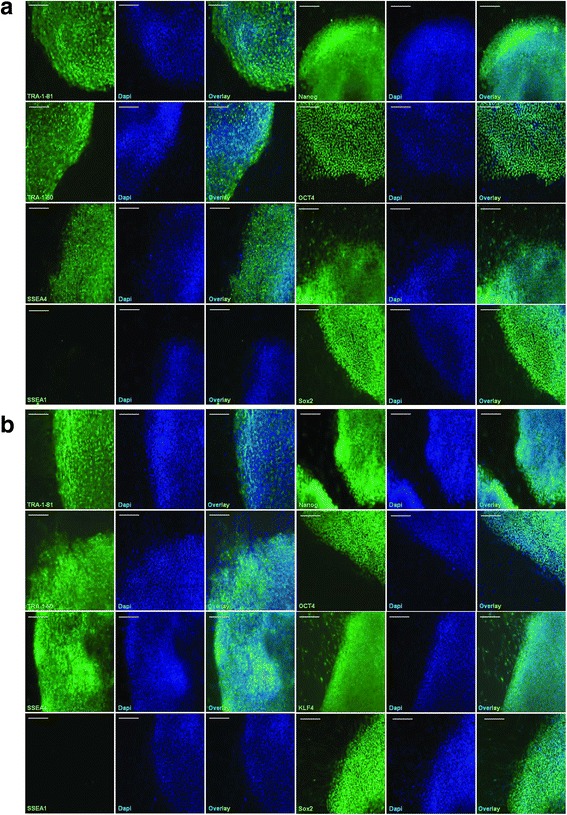
In this study, employing iPS technology, we derived and characterized iPSCs from dermal fibroblasts of an 82-year-old female patient affected by sporadic AD. The AD-iPSCs were differentiated into neuronal cells, in order to generate disease-specific protein association networks modeling the molecular pathology on the transcriptome level of AD, to analyse the reflection of the disease phenotype in gene expression in AD-iPS neuronal cells, in particular in the ubiquitin-proteasome system (UPS), and to address expression of typical AD proteins. We detected the expression of p-tau and GSK3B, a physiological kinase of tau, in neuronal cells derived from AD-iPSCs. Treatment of neuronal cells differentiated from AD-iPSCs with an inhibitor of γ-secretase resulted in the down-regulation of p-tau. Transcriptome analysis of AD-iPS derived neuronal cells revealed significant changes in the expression of genes associated with AD and with the constitutive as well as the inducible subunits of the proteasome complex. The neuronal cells expressed numerous genes associated with sub-regions within the brain thus suggesting the usefulness of our in-vitro model. Moreover, an AD-related protein interaction network composed of APP and GSK3B among others could be generated using neuronal cells differentiated from two AD-iPS cell lines.
Our study demonstrates how an iPSC-based model system could represent (i) a tool to study the underlying molecular basis of sporadic AD, (ii) a platform for drug screening and toxicology studies which might unveil novel therapeutic avenues for this debilitating neuronal disorder.
阿尔茨海默病(AD)是一种复杂的、不可逆的神经退行性疾病。目前,既没有可靠的早期诊断AD的标志物,也没有相应的治疗方法。为了研究潜在的疾病机制,诱导多能干细胞(iPSC)能够在培养皿中生成患者来源的神经元细胞。
在本研究中,我们采用iPS技术,从一名82岁散发性AD女性患者的皮肤成纤维细胞中获得了iPSC并对其进行了表征。将AD-iPSC分化为神经元细胞,以生成疾病特异性蛋白质关联网络,在AD的转录组水平上模拟分子病理学,分析疾病表型在AD-iPS神经元细胞基因表达中的反映,特别是在泛素-蛋白酶体系统(UPS)中的反映,并研究典型AD蛋白的表达。我们在源自AD-iPSC的神经元细胞中检测到了p-tau和tau的生理激酶GSK3B的表达。用γ-分泌酶抑制剂处理源自AD-iPSC的分化神经元细胞导致p-tau下调。对源自AD-iPS的神经元细胞进行转录组分析,发现与AD以及蛋白酶体复合物的组成型和诱导型亚基相关的基因表达有显著变化。这些神经元细胞表达了许多与脑内亚区域相关的基因,从而表明我们的体外模型是有用的。此外,使用从两个AD-iPS细胞系分化而来的神经元细胞,可以生成一个由APP和GSK3B等组成的AD相关蛋白质相互作用网络。
我们的研究证明了基于iPSC的模型系统如何能够(i)作为研究散发性AD潜在分子基础的工具,(ii)作为药物筛选和毒理学研究的平台,这可能为这种使人衰弱的神经疾病揭示新的治疗途径。