Nieweg K, Andreyeva A, van Stegen B, Tanriöver G, Gottmann K
1] Institute of Neuro- and Sensory Physiology, Medical Faculty, Heinrich-Heine-University Düsseldorf, Düsseldorf, Germany [2] Institute of Pharmacology and Clinical Pharmacy, Phillips University, Marburg, Germany.
Institute of Neuro- and Sensory Physiology, Medical Faculty, Heinrich-Heine-University Düsseldorf, Düsseldorf, Germany.
Cell Death Dis. 2015 Apr 2;6(4):e1709. doi: 10.1038/cddis.2015.72.
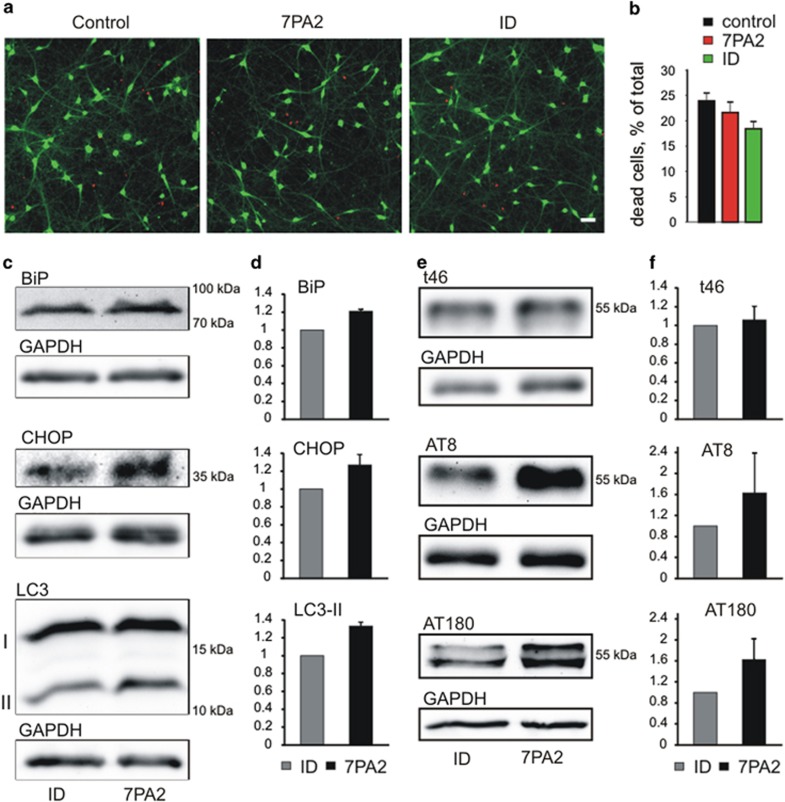
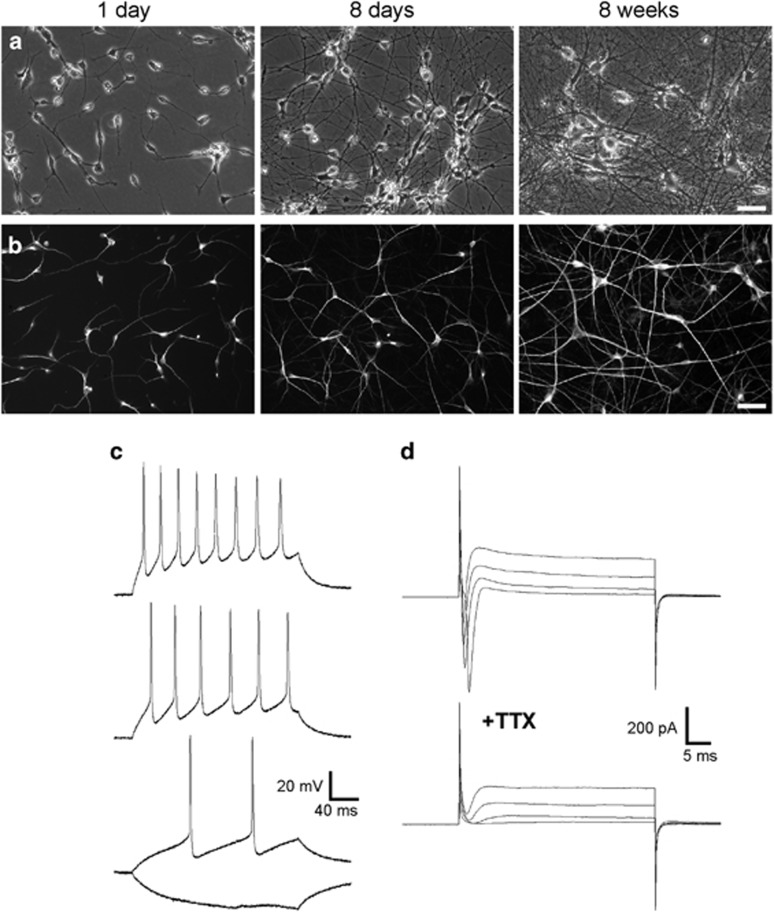
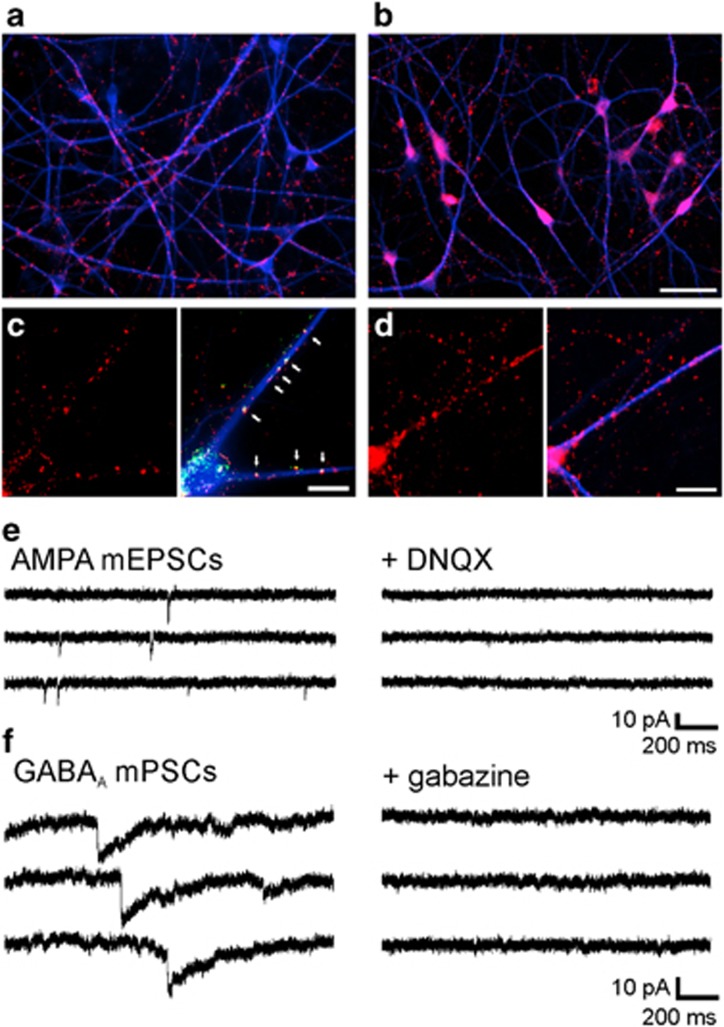
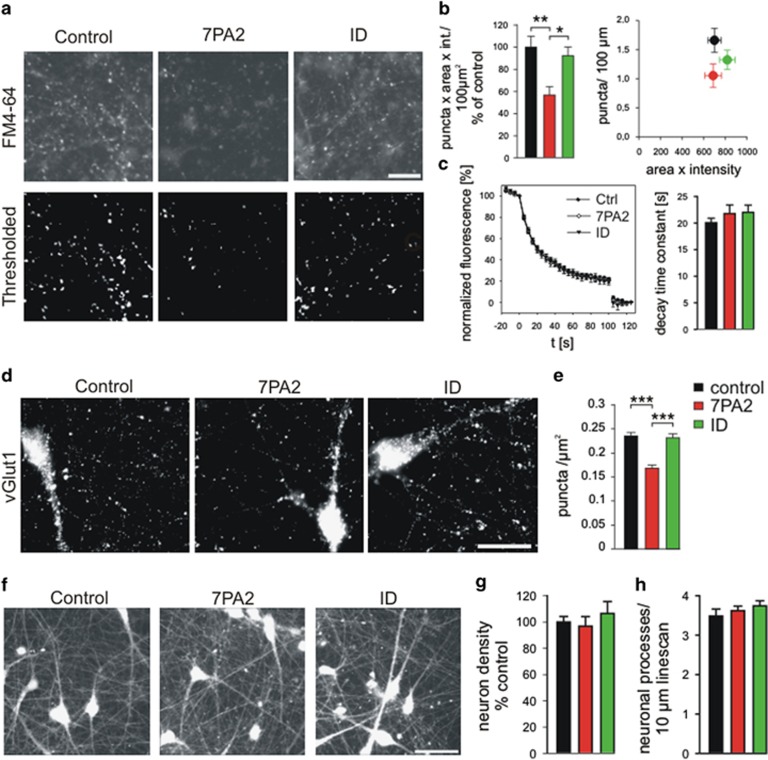
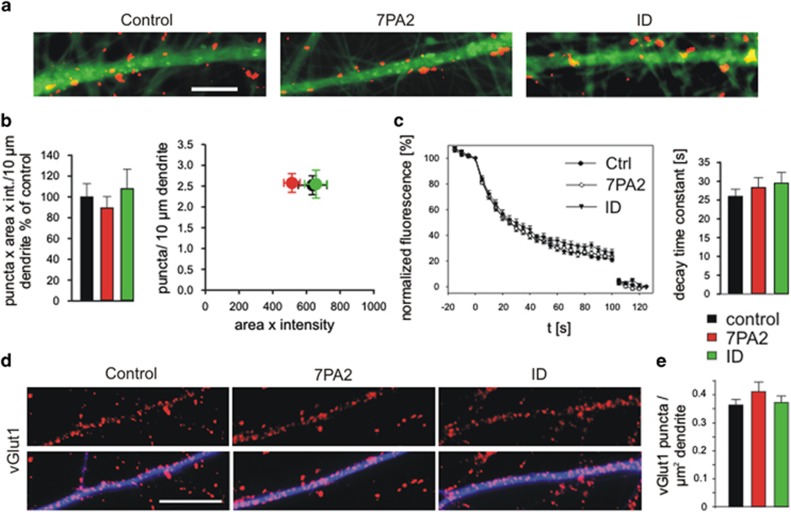
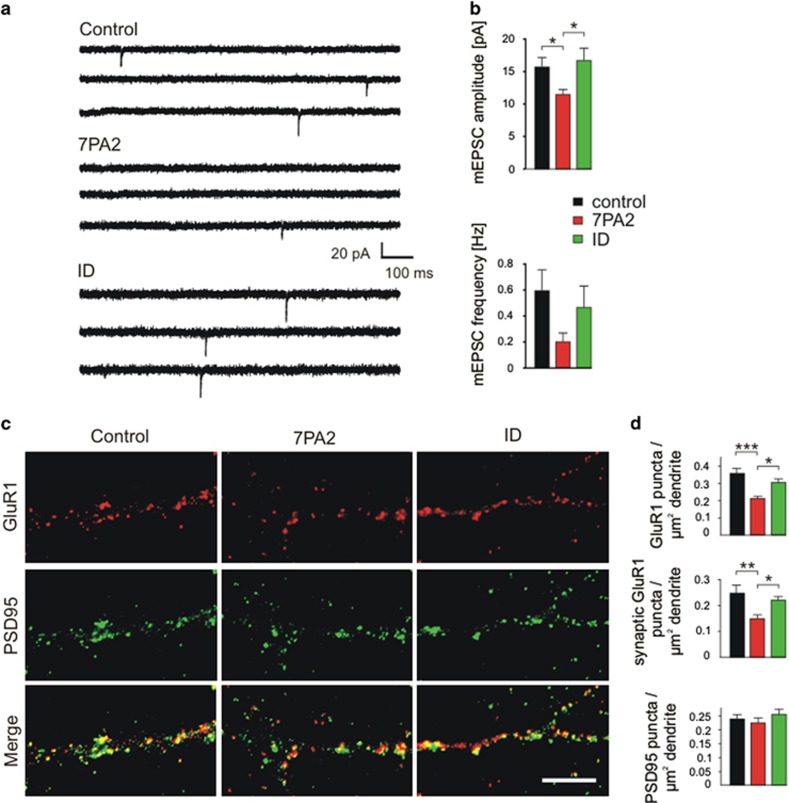
Human induced pluripotent stem cell (iPSC)-derived neurons have been proposed to be a highly valuable cellular model for studying the pathomechanisms of Alzheimer's disease (AD). Studies employing patient-specific human iPSCs as models of familial and sporadic forms of AD described elevated levels of AD-related amyloid-β (Aβ). However, none of the present AD iPSC studies could recapitulate the synaptotoxic actions of Aβ, which are crucial early events in a cascade that eventually leads to vast brain degeneration. Here we established highly reproducible, human iPSC-derived cortical cultures as a cellular model to study the synaptotoxic effects of Aβ. We developed a highly efficient immunopurification procedure yielding immature neurons that express markers of deep layer cortical pyramidal neurons and GABAergic interneurons. Upon long-term cultivation, purified cells differentiated into mature neurons exhibiting the generation of action potentials and excitatory glutamatergic and inhibitory GABAergic synapses. Most interestingly, these iPSC-derived human neurons were strongly susceptible to the synaptotoxic actions of Aβ. Application of Aβ for 8 days led to a reduction in the overall FM4-64 and vGlut1 staining of vesicles in neurites, indicating a loss of vesicle clusters. A selective analysis of presynaptic vesicle clusters on dendrites did not reveal a significant change, thus suggesting that Aβ impaired axonal vesicle clusters. In addition, electrophysiological patch-clamp recordings of AMPA receptor-mediated miniature EPSCs revealed an Aβ-induced reduction in amplitudes, indicating an impairment of postsynaptic AMPA receptors. A loss of postsynaptic AMPA receptor clusters was confirmed by immunocytochemical stainings for GluA1. Incubation with Aβ for 8 days did not result in a significant loss of neurites or cell death. In summary, we describe a highly reproducible cellular AD model based on human iPSC-derived cortical neurons that enables the mechanistic analysis of Aβ-induced synaptic pathomechanisms and the development of novel therapeutic approaches.
人诱导多能干细胞(iPSC)衍生的神经元已被认为是研究阿尔茨海默病(AD)发病机制的极具价值的细胞模型。采用患者特异性人iPSC作为家族性和散发性AD模型的研究表明,与AD相关的淀粉样β蛋白(Aβ)水平升高。然而,目前的AD iPSC研究均无法重现Aβ的突触毒性作用,而这是最终导致大脑广泛退化的一系列事件中的关键早期事件。在此,我们建立了高度可重复的人iPSC衍生的皮质培养物作为细胞模型,以研究Aβ的突触毒性作用。我们开发了一种高效的免疫纯化程序,可产生表达深层皮质锥体神经元和GABA能中间神经元标志物的未成熟神经元。经过长期培养,纯化的细胞分化为成熟神经元,表现出动作电位的产生以及兴奋性谷氨酸能和抑制性GABA能突触。最有趣的是,这些iPSC衍生的人类神经元对Aβ的突触毒性作用高度敏感。应用Aβ 8天导致神经突中囊泡的整体FM4-64和vGlut1染色减少,表明囊泡簇丢失。对树突上突触前囊泡簇的选择性分析未发现显著变化,因此表明Aβ损害了轴突囊泡簇。此外,AMPA受体介导的微小兴奋性突触后电流(mEPSCs)的电生理膜片钳记录显示,Aβ诱导幅度降低,表明突触后AMPA受体受损。通过GluA1免疫细胞化学染色证实了突触后AMPA受体簇的丢失。与Aβ孵育8天未导致神经突显著丢失或细胞死亡。总之,我们描述了一种基于人iPSC衍生的皮质神经元的高度可重复的细胞AD模型,该模型能够对Aβ诱导的突触发病机制进行机制分析,并开发新的治疗方法。