Department of Aerospace and Mechanical Engineering, The University of Arizona, Tucson, Arizona 85721-0119, USA.
1] Department of Endocrinology, Xinqiao Hospital, Third Military Medical University, Chongqing 400037, P.R. China [2] Department of Pharmacology and Toxicology, The University of Arizona, Tucson, Arizona 85724, USA.
Nat Commun. 2015 Mar 13;6:6556. doi: 10.1038/ncomms7556.
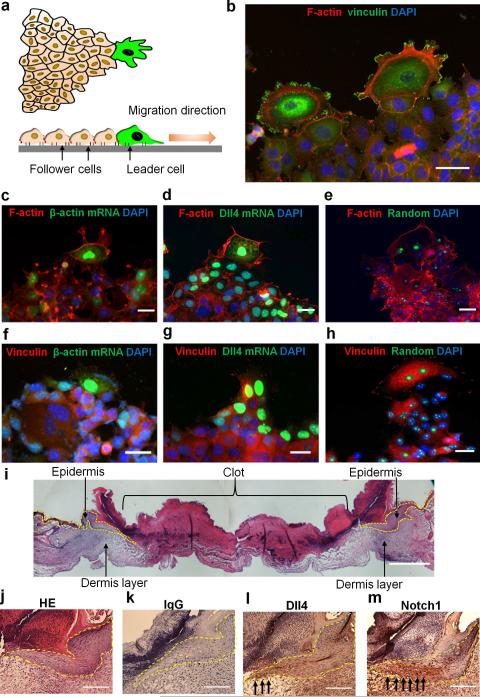
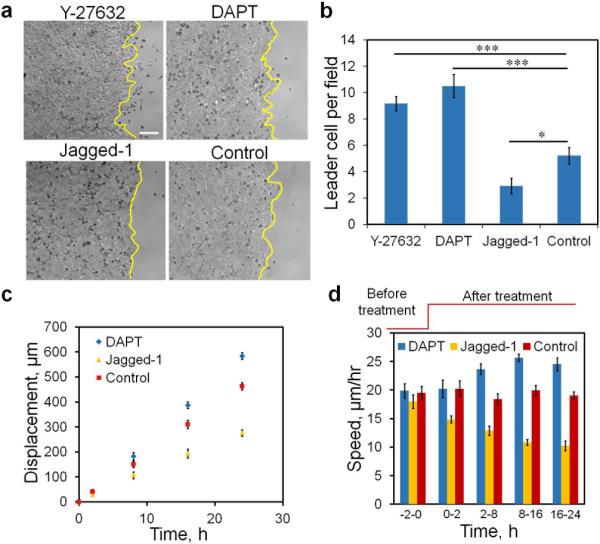
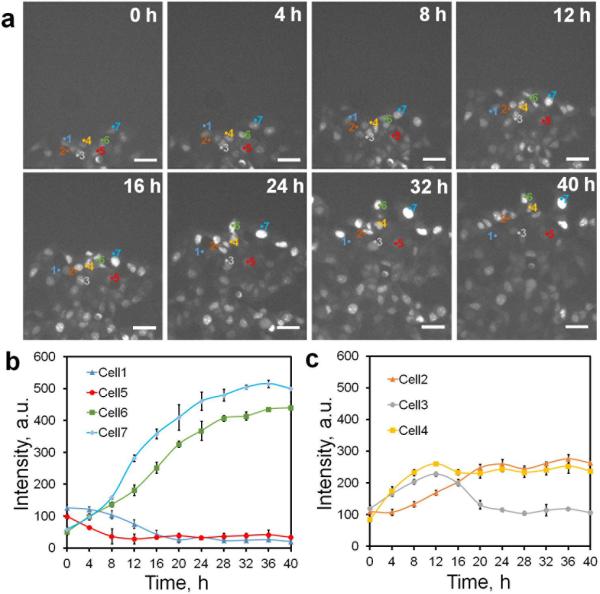
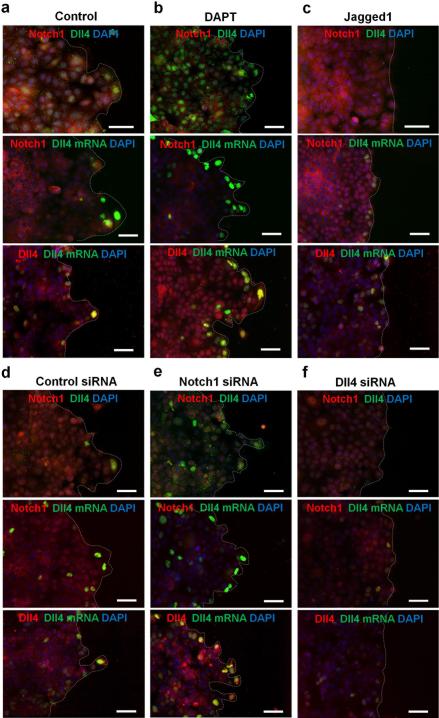
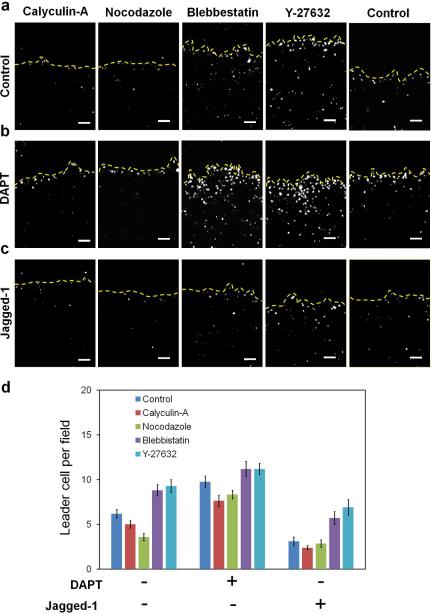
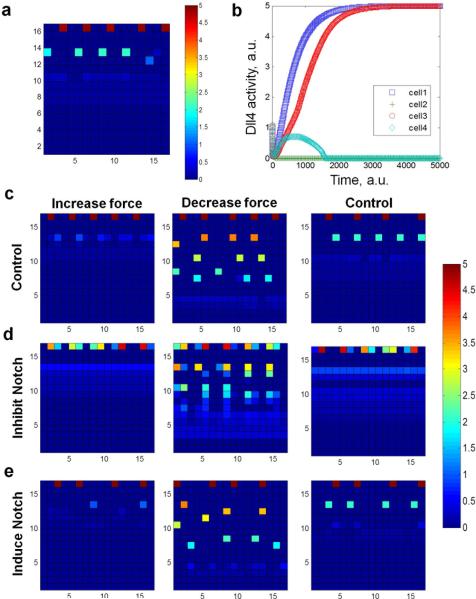
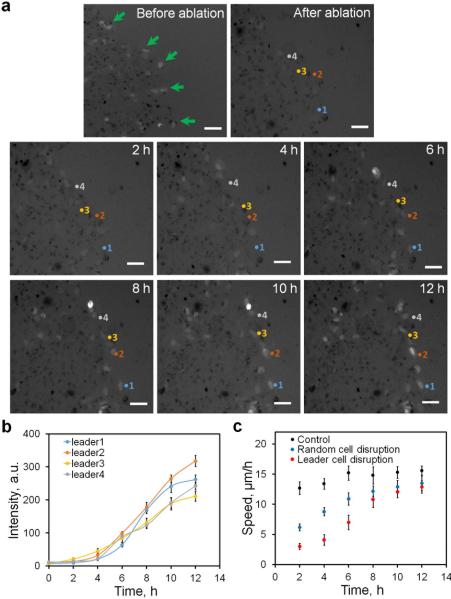
At the onset of collective cell migration, a subset of cells within an initially homogenous population acquires a distinct 'leader' phenotype with characteristic morphology and motility. However, the factors driving the leader cell formation as well as the mechanisms regulating leader cell density during the migration process remain to be determined. Here we use single-cell gene expression analysis and computational modelling to show that the leader cell identity is dynamically regulated by Dll4 signalling through both Notch1 and cellular stress in a migrating epithelium. Time-lapse microscopy reveals that Dll4 is induced in leader cells after the creation of the cell-free region and leader cells are regulated via Notch1-Dll4 lateral inhibition. Furthermore, mechanical stress inhibits Dll4 expression and leader cell formation in the monolayer. Collectively, our findings suggest that a reduction of mechanical force near the boundary promotes Notch1-Dll4 signalling to dynamically regulate the density of leader cells during collective cell migration.
在细胞集体迁移开始时,最初同质群体中的一部分细胞获得了独特的“领导者”表型,具有特征性的形态和运动能力。然而,驱动领导者细胞形成的因素以及在迁移过程中调节领导者细胞密度的机制仍有待确定。在这里,我们使用单细胞基因表达分析和计算建模来表明,通过 Notch1 和细胞应激,Dll4 信号动态调节迁移上皮中的领导者细胞身份。延时显微镜观察表明,在无细胞区域形成后,Dll4 被诱导在领导者细胞中产生,并且领导者细胞通过 Notch1-Dll4 侧向抑制来调节。此外,机械应激抑制单层中的 Dll4 表达和领导者细胞的形成。总的来说,我们的研究结果表明,边界附近机械力的降低促进了 Notch1-Dll4 信号的传递,从而在细胞集体迁移过程中动态调节领导者细胞的密度。