Departments of Cell Biology and Oncology, Center for Cell Dynamics, School of Medicine, Johns Hopkins University, Baltimore, MD 21205, USA.
Department of Pathology, School of Medicine, Johns Hopkins University, Baltimore, MD 21205, USA.
Cell. 2013 Dec 19;155(7):1639-51. doi: 10.1016/j.cell.2013.11.029. Epub 2013 Dec 12.
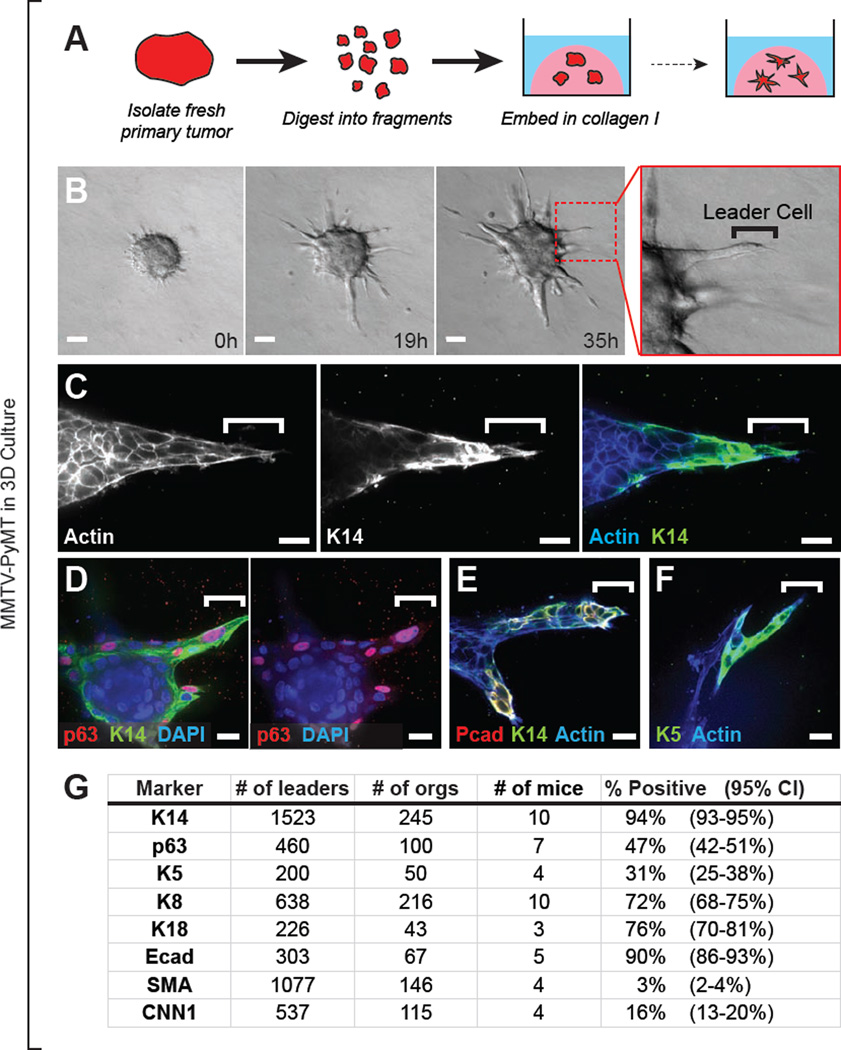
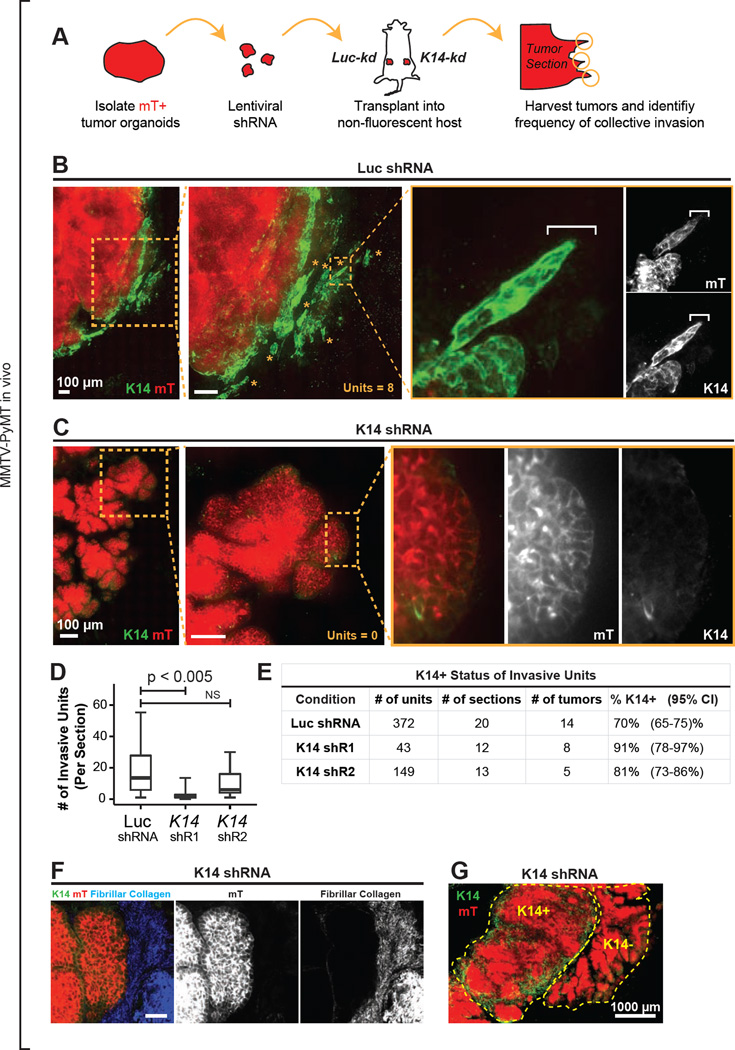
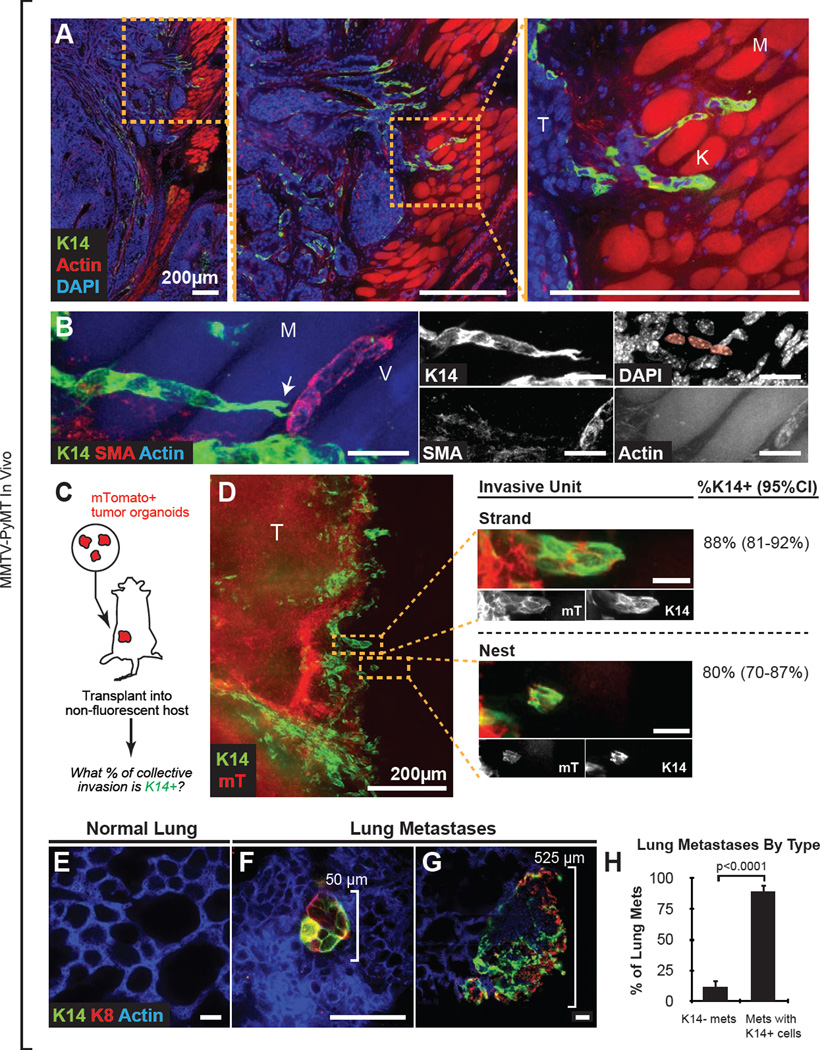
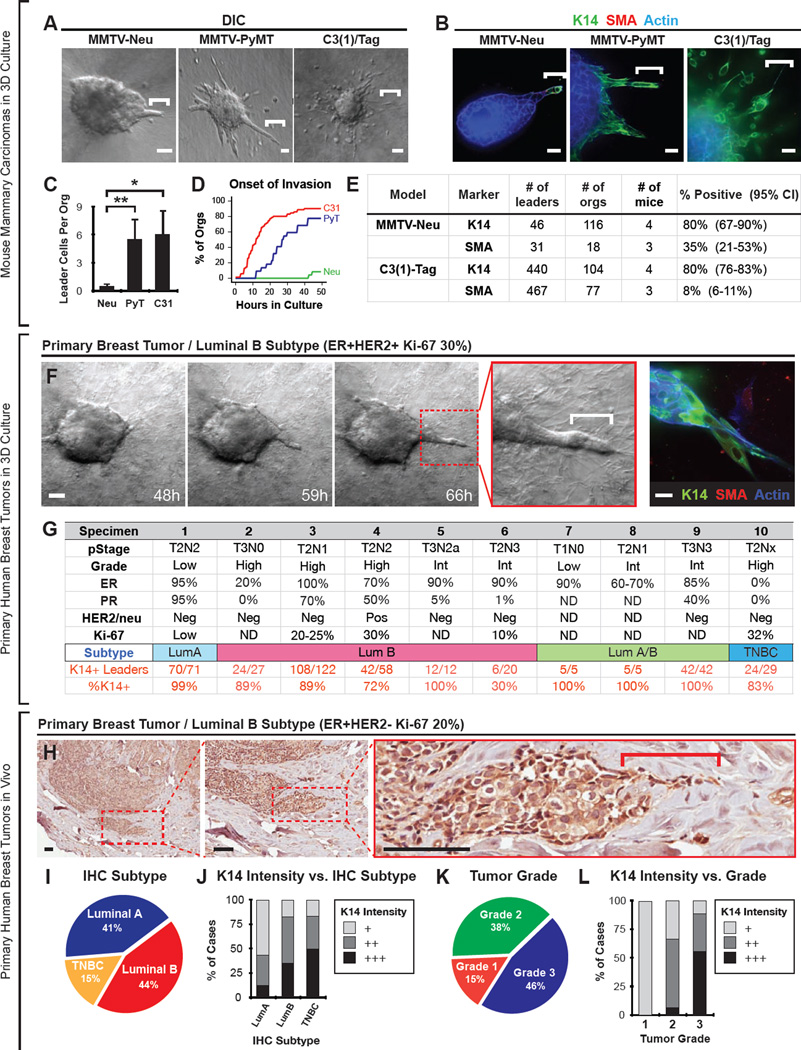
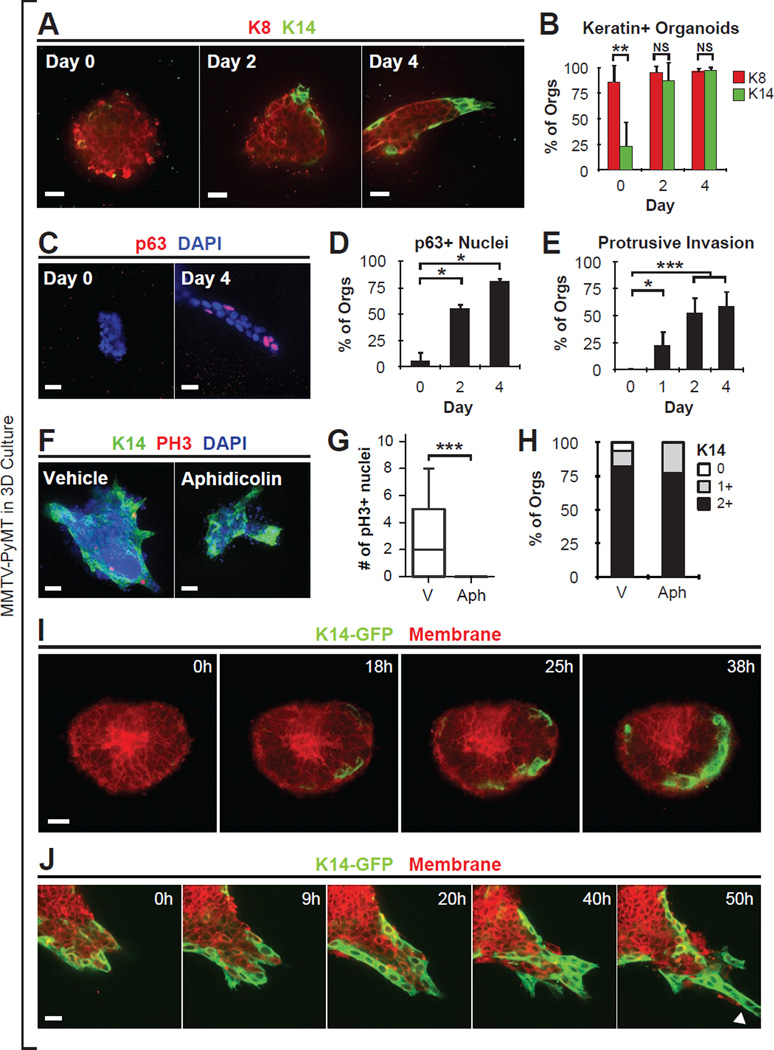
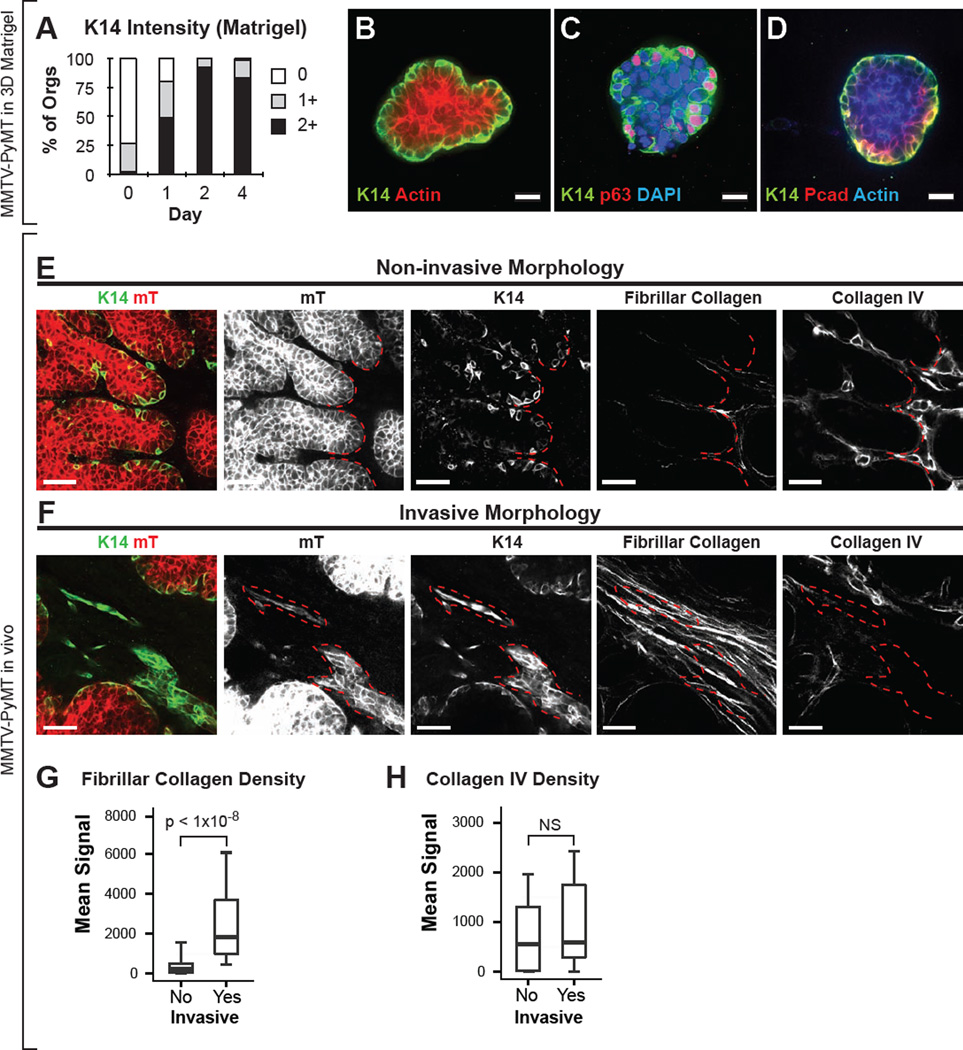
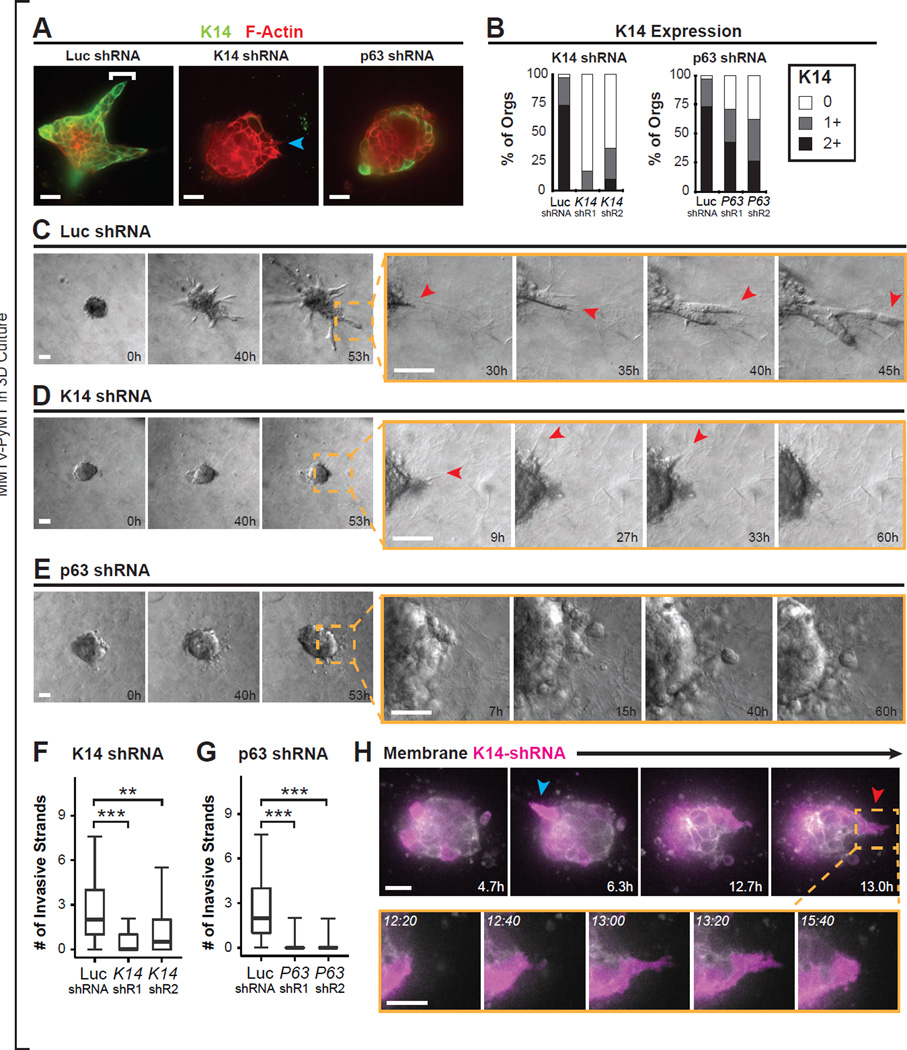
Carcinomas typically invade as a cohesive multicellular unit, a process termed collective invasion. It remains unclear how different subpopulations of cancer cells contribute to this process. We developed three-dimensional (3D) organoid assays to identify the most invasive cancer cells in primary breast tumors. Collective invasion was led by specialized cancer cells that were defined by their expression of basal epithelial genes, such as cytokeratin-14 (K14) and p63. Furthermore, K14+ cells led collective invasion in the major human breast cancer subtypes. Importantly, luminal cancer cells were observed to convert phenotypically to invasive leaders following induction of basal epithelial genes. Although only a minority of cells within luminal tumors expressed basal epithelial genes, knockdown of either K14 or p63 was sufficient to block collective invasion. Our data reveal that heterotypic interactions between epithelial subpopulations are critical to collective invasion. We suggest that targeting the basal invasive program could limit metastatic progression.
癌通常以一个有凝聚力的多细胞单位的形式侵袭,这个过程被称为集体侵袭。目前尚不清楚不同亚群的癌细胞如何促进这一过程。我们开发了三维(3D)类器官测定法来鉴定原发性乳腺癌中最具侵袭性的癌细胞。集体侵袭是由特定的癌细胞主导的,这些癌细胞的特征是表达基底上皮基因,如角蛋白-14(K14)和 p63。此外,K14+细胞在主要的人类乳腺癌亚型中主导集体侵袭。重要的是,在诱导基底上皮基因后,观察到腔癌细胞表型转化为侵袭性的主导细胞。尽管在腔型肿瘤中只有少数细胞表达基底上皮基因,但敲低 K14 或 p63 足以阻止集体侵袭。我们的数据表明,上皮亚群之间的异质相互作用对集体侵袭至关重要。我们建议靶向基底侵袭程序可能限制转移进展。