Welsh Christopher L, DiBella Edward V R, Hsu Edward W
IEEE Trans Med Imaging. 2015 Sep;34(9):1843-53. doi: 10.1109/TMI.2015.2411571. Epub 2015 Mar 9.
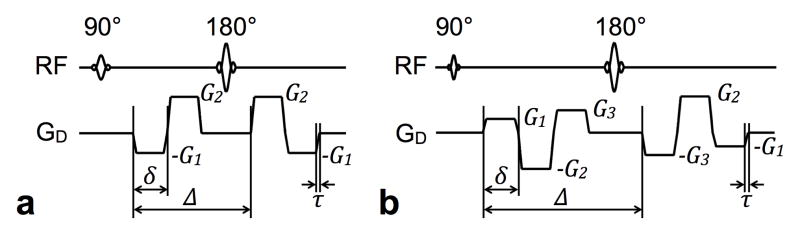
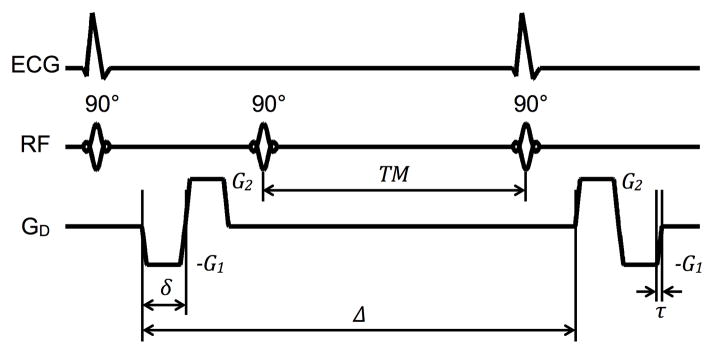
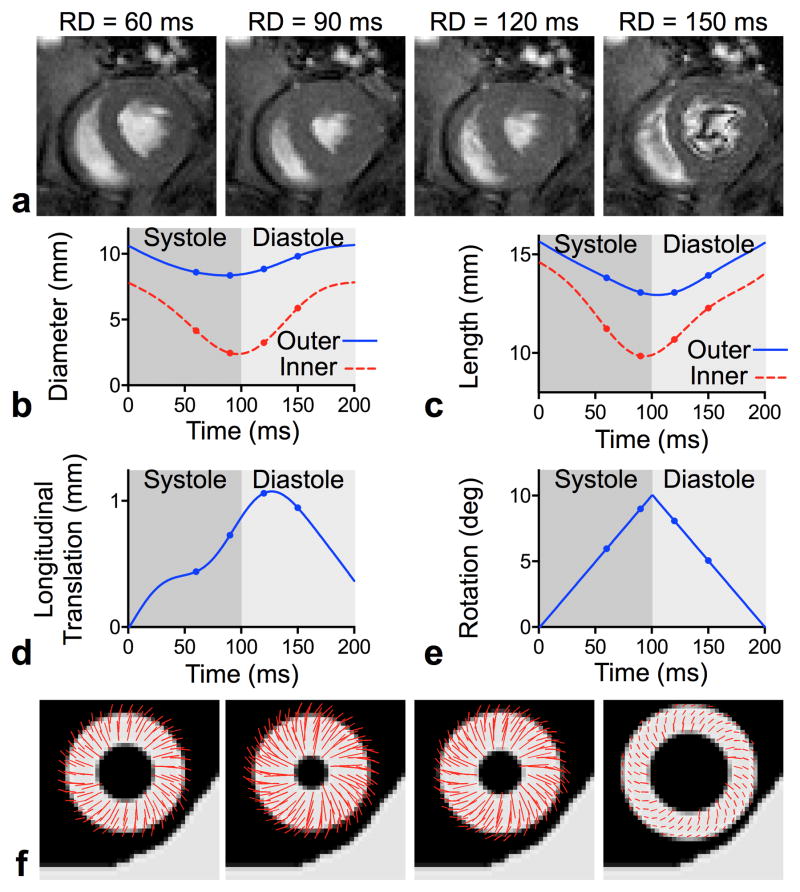
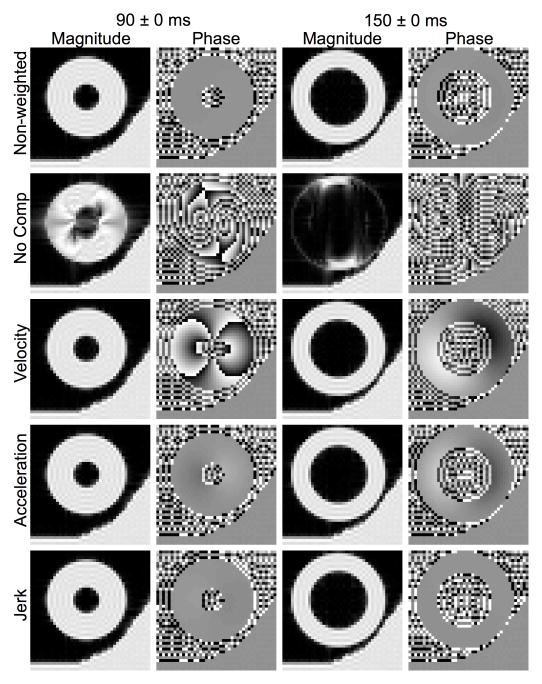
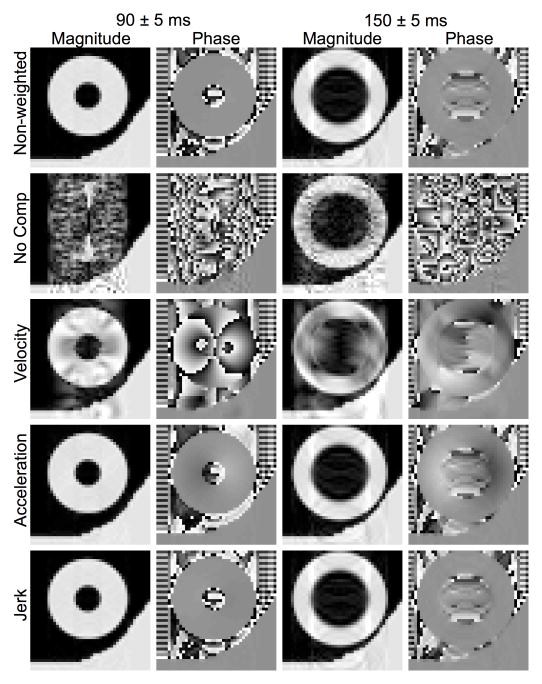
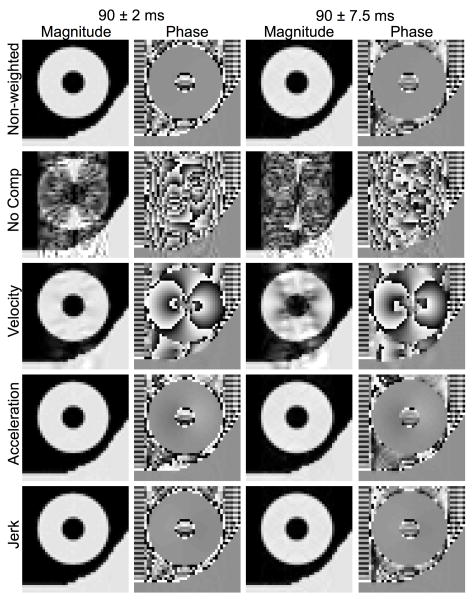
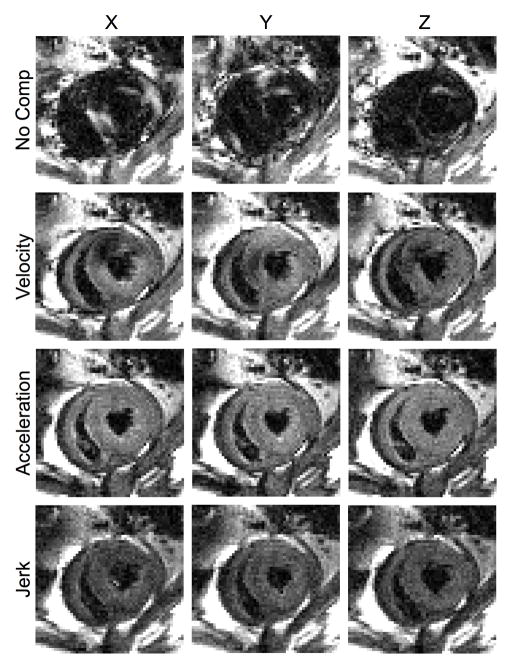
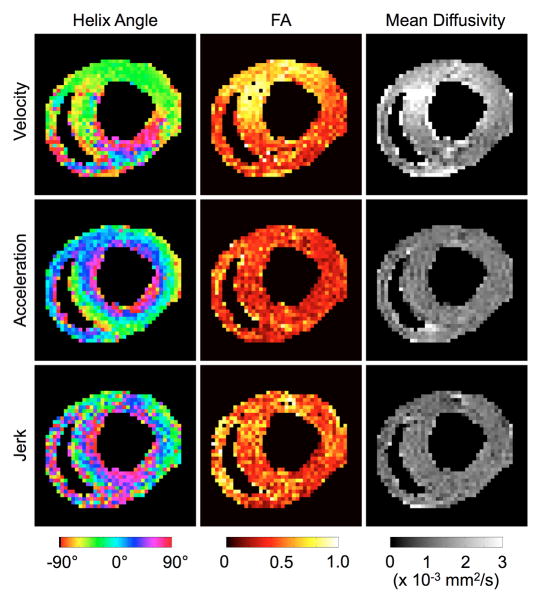
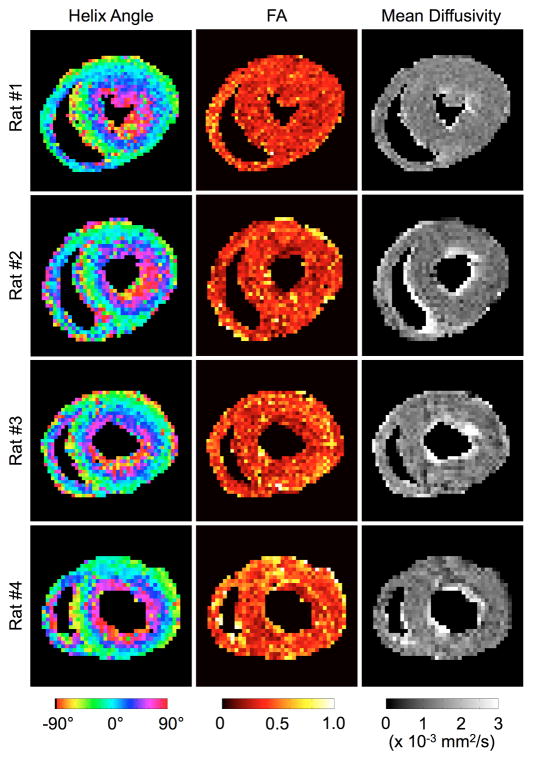
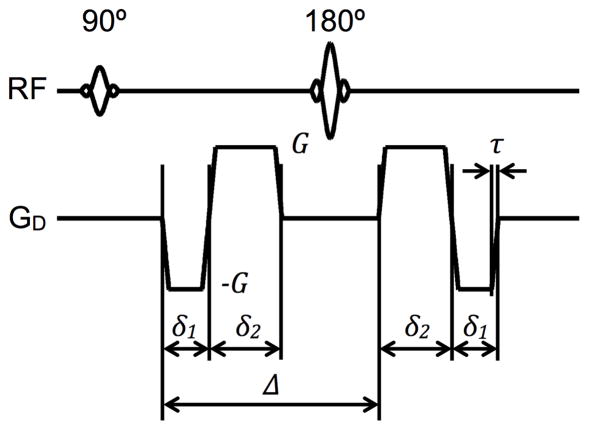
Motion of the heart has complicated in vivo applications of cardiac diffusion MRI and diffusion tensor imaging (DTI), especially in small animals such as rats where ultra-high-performance gradient sets are currently not available. Even with velocity compensation via, for example, bipolar encoding pulses, the variable shot-to-shot residual motion-induced spin phase can still give rise to pronounced artifacts. This study presents diffusion-encoding schemes that are designed to compensate for higher-order motion components, including acceleration and jerk, which also have the desirable practical features of minimal TEs and high achievable b-values. The effectiveness of these schemes was verified numerically on a realistic beating heart phantom, and demonstrated empirically with in vivo cardiac diffusion MRI in rats. Compensation for acceleration, and lower motion components, was found to be both necessary and sufficient for obtaining diffusion-weighted images of acceptable quality and SNR, which yielded the first in vivo cardiac DTI demonstrated in the rat. These findings suggest that compensation for higher order motion, particularly acceleration, can be an effective alternative solution to high-performance gradient hardware for improving in vivo cardiac DTI.
心脏的运动使心脏扩散磁共振成像(MRI)和扩散张量成像(DTI)的体内应用变得复杂,尤其是在大鼠等小动物中,目前尚无超高性能梯度设备。即使通过例如双极编码脉冲进行速度补偿,每次扫描之间可变的残余运动诱导自旋相位仍会产生明显的伪影。本研究提出了扩散编码方案,旨在补偿包括加速度和急动度在内的高阶运动分量,这些方案还具有最小回波时间(TE)和高可达b值等理想的实际特性。这些方案的有效性在逼真的跳动心脏模型上进行了数值验证,并通过大鼠体内心脏扩散MRI进行了实证验证。结果发现,对加速度和较低阶运动分量进行补偿对于获得质量和信噪比可接受的扩散加权图像是必要且充分的,这首次在大鼠体内实现了心脏DTI。这些发现表明,对高阶运动,特别是加速度进行补偿,可以成为高性能梯度硬件的有效替代解决方案,以改善体内心脏DTI。