Sharma S, Javadekar S M, Pandey M, Srivastava M, Kumari R, Raghavan S C
Department of Biochemistry, Indian Institute of Science, Bangalore 560012, India.
Cell Death Dis. 2015 Mar 19;6(3):e1697. doi: 10.1038/cddis.2015.58.
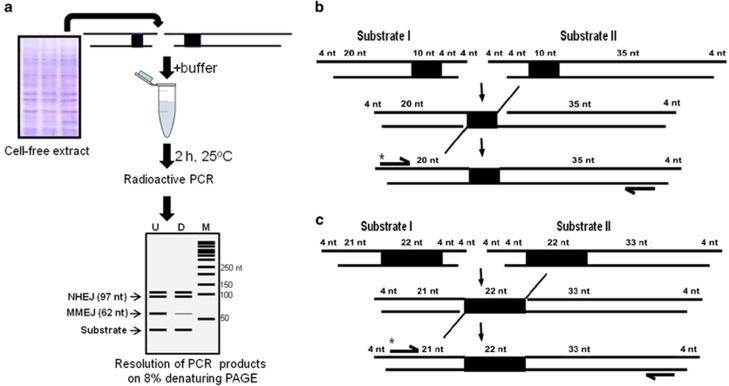
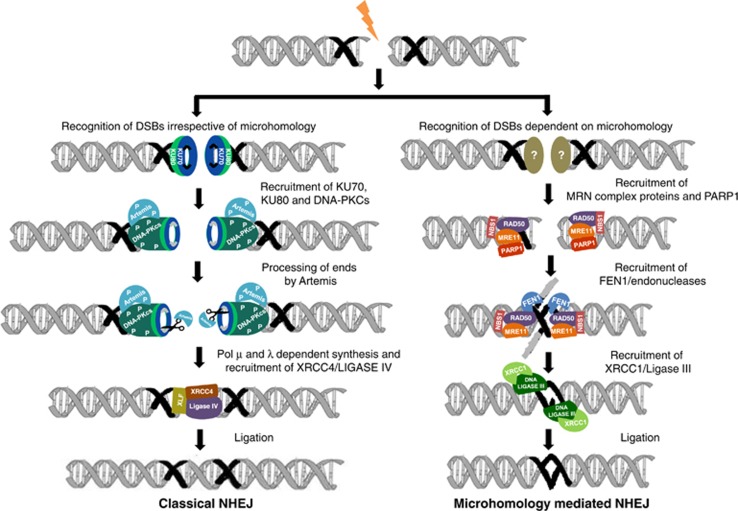
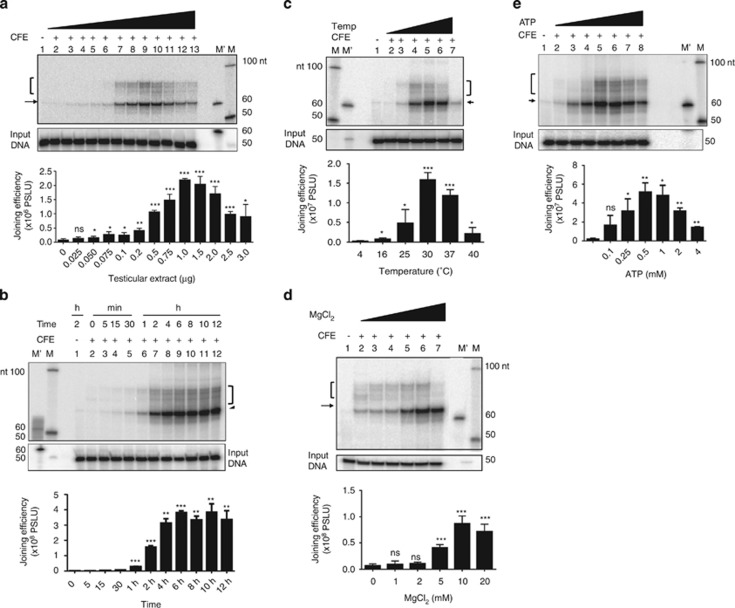
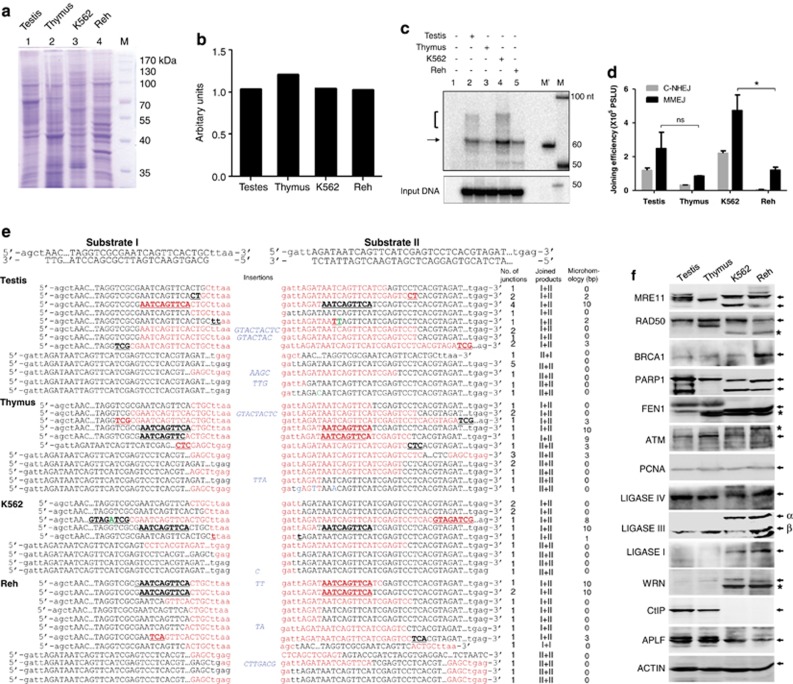
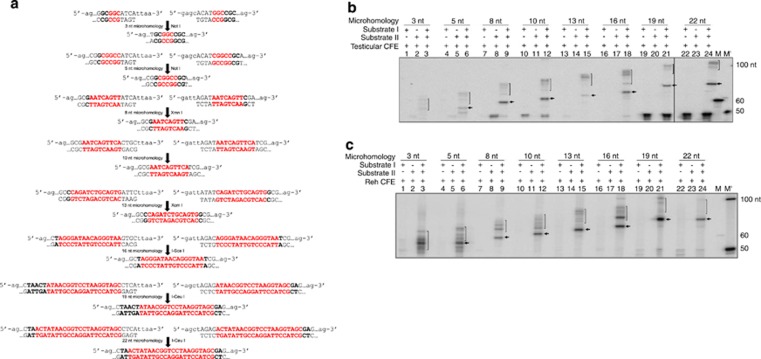
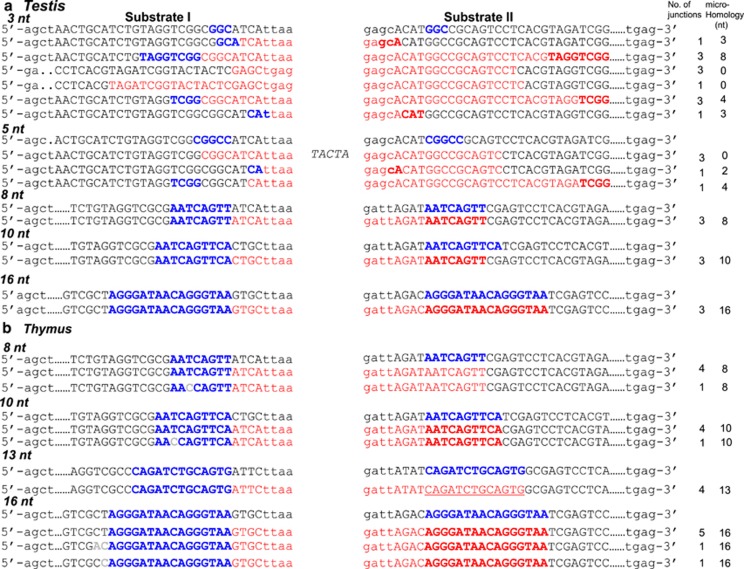
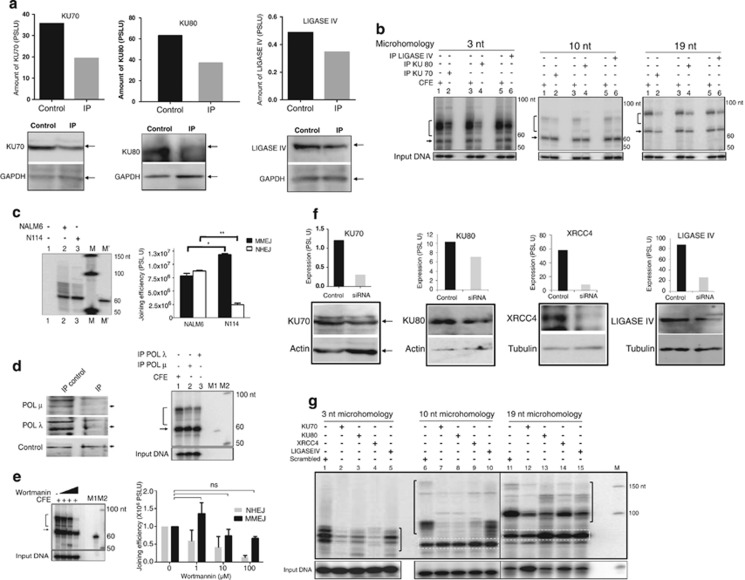
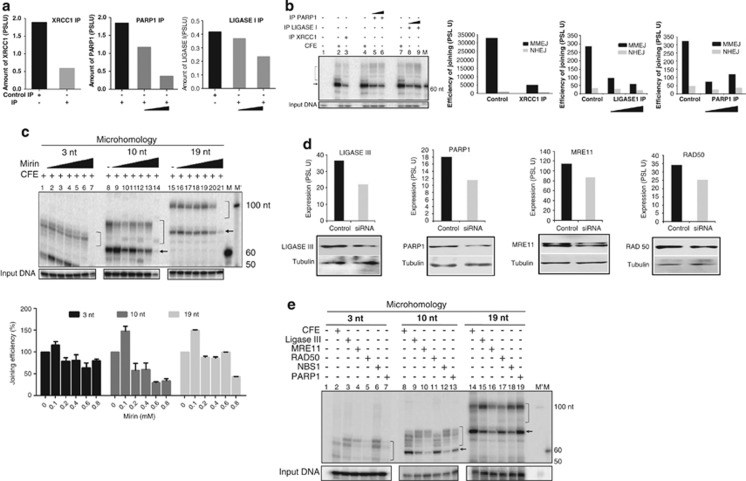
Nonhomologous DNA end joining (NHEJ) is one of the major double-strand break (DSB) repair pathways in higher eukaryotes. Recently, it has been shown that alternative NHEJ (A-NHEJ) occurs in the absence of classical NHEJ and is implicated in chromosomal translocations leading to cancer. In the present study, we have developed a novel biochemical assay system utilizing DSBs flanked by varying lengths of microhomology to study microhomology-mediated alternative end joining (MMEJ). We show that MMEJ can operate in normal cells, when microhomology is present, irrespective of occurrence of robust classical NHEJ. Length of the microhomology determines the efficiency of MMEJ, 5 nt being obligatory. Using this biochemical approach, we show that products obtained are due to MMEJ, which is dependent on MRE11, NBS1, LIGASE III, XRCC1, FEN1 and PARP1. Thus, we define the enzymatic machinery and microhomology requirements of alternative NHEJ using a well-defined biochemical system.
非同源DNA末端连接(NHEJ)是高等真核生物中主要的双链断裂(DSB)修复途径之一。最近研究表明,在经典NHEJ缺失的情况下会发生替代性NHEJ(A-NHEJ),且其与导致癌症的染色体易位有关。在本研究中,我们开发了一种新型生化检测系统,该系统利用两侧带有不同长度微同源序列的DSB来研究微同源介导的替代性末端连接(MMEJ)。我们发现,当存在微同源序列时,无论强大的经典NHEJ是否发生,MMEJ均可在正常细胞中发挥作用。微同源序列的长度决定了MMEJ的效率,5个核苷酸是必需的。通过这种生化方法,我们证明所获得的产物源自MMEJ,其依赖于MRE11、NBS1、连接酶III、XRCC1、FEN1和PARP1。因此,我们使用一个定义明确的生化系统确定了替代性NHEJ的酶促机制和微同源序列要求。