Robijn Stef, Vervaet Benjamin A, D'Haese Patrick C, Verhulst Anja
Laboratory of Pathophysiology, University of Antwerp, Antwerp, Belgium.
PLoS One. 2015 Mar 19;10(3):e0116590. doi: 10.1371/journal.pone.0116590. eCollection 2015.
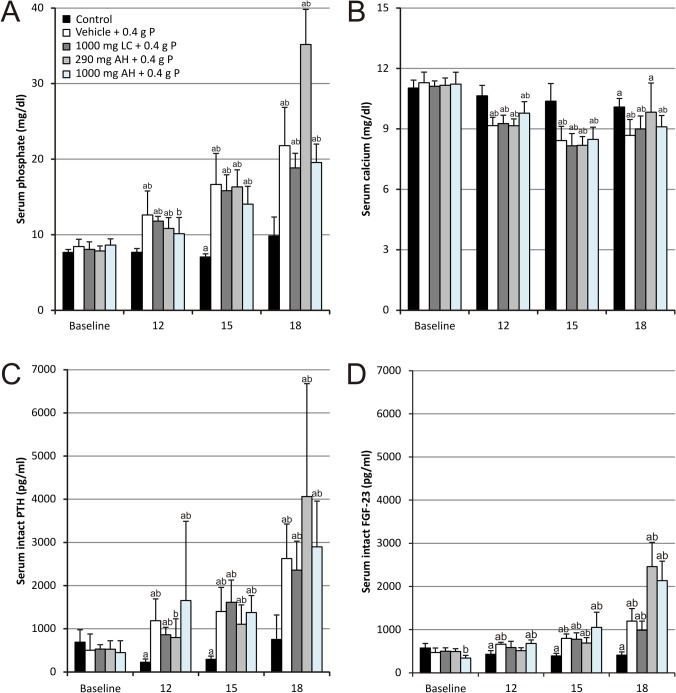
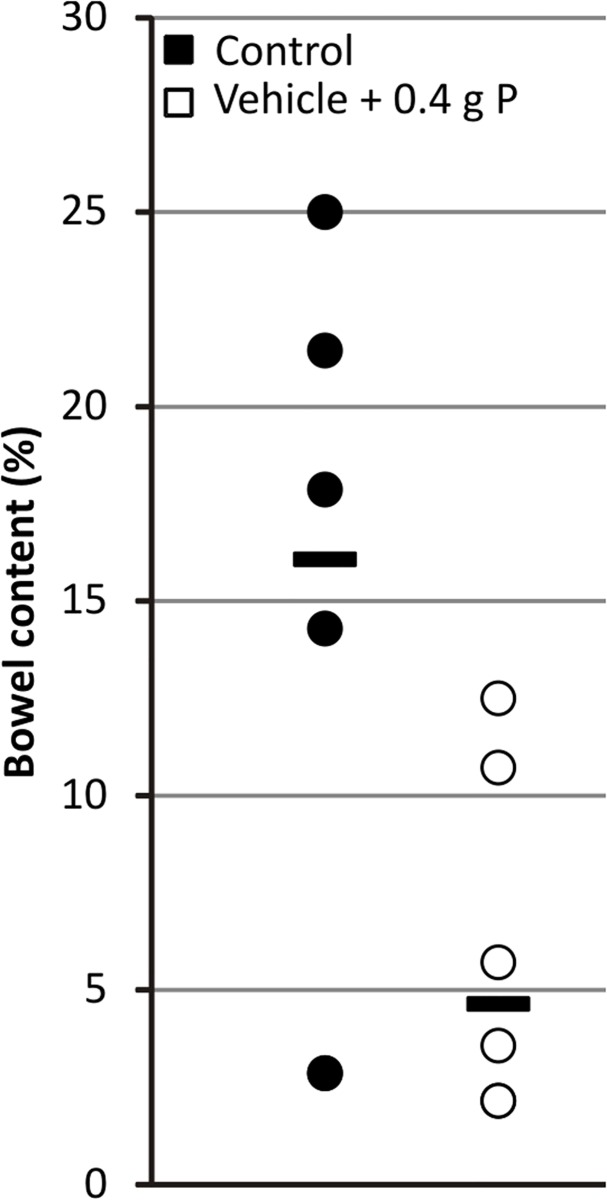
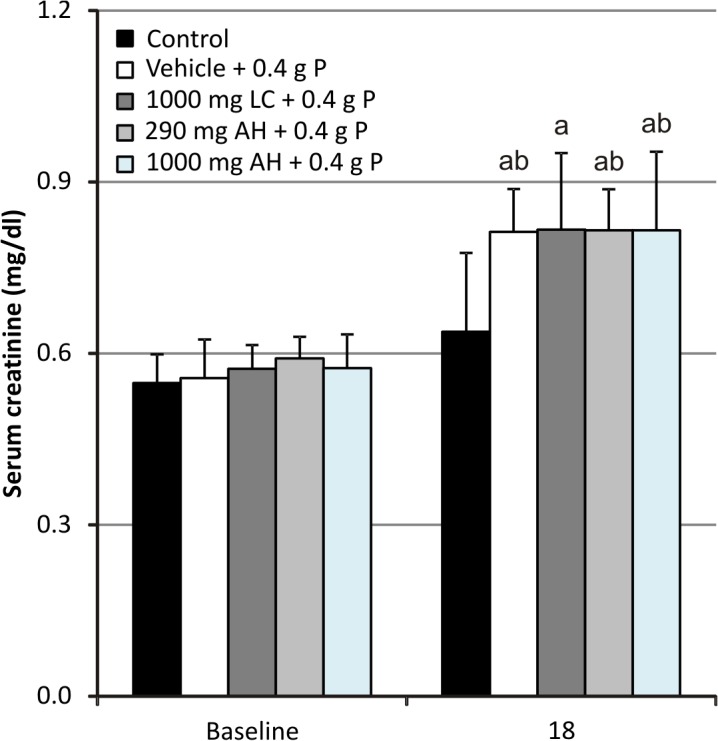
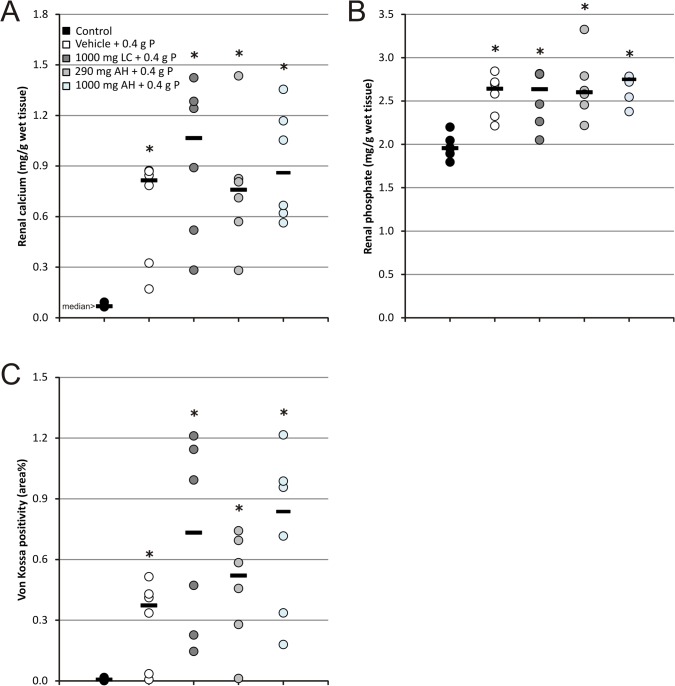
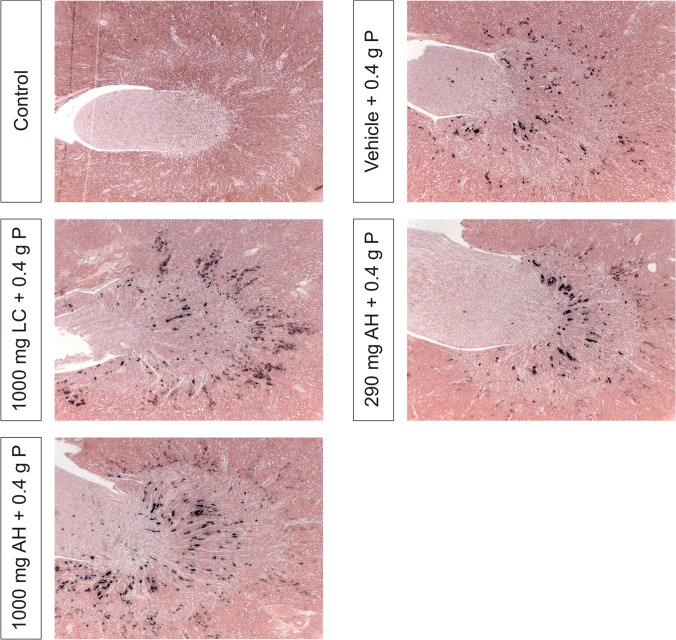
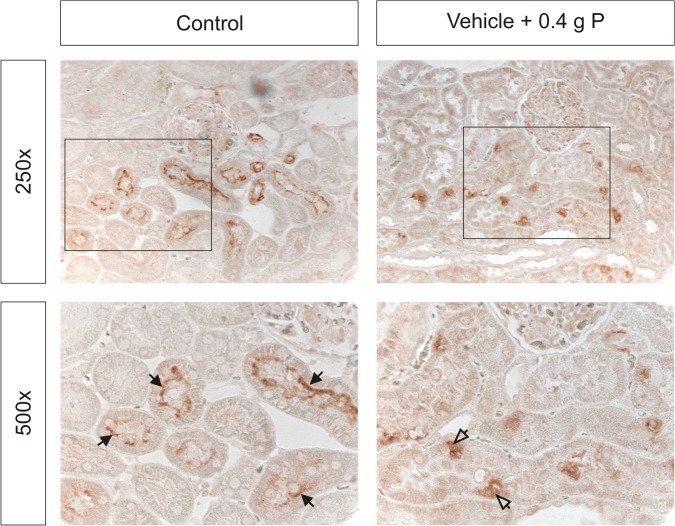
Prior to colonoscopy, bowel cleansing is performed for which frequently oral sodium phosphate (OSP) is used. OSP results in significant hyperphosphatemia and cases of acute kidney injury (AKI) referred to as acute phosphate nephropathy (APN; characterized by nephrocalcinosis) are reported after OSP use, which led to a US-FDA warning. To improve the safety profile of OSP, it was evaluated whether the side-effects of OSP could be prevented with intestinal phosphate binders. Hereto a Wistar rat model of APN was developed. OSP administration (2 times 1.2 g phosphate by gavage) with a 12h time interval induced bowel cleansing (severe diarrhea) and significant hyperphosphatemia (21.79 ± 5.07 mg/dl 6h after the second OSP dose versus 8.44 ± 0.97 mg/dl at baseline). Concomitantly, serum PTH levels increased fivefold and FGF-23 levels showed a threefold increase, while serum calcium levels significantly decreased from 11.29 ± 0.53 mg/dl at baseline to 8.68 ± 0.79 mg/dl after OSP. OSP administration induced weaker NaPi-2a staining along the apical proximal tubular membrane. APN was induced: serum creatinine increased (1.5 times baseline) and nephrocalcinosis developed (increased renal calcium and phosphate content and calcium phosphate deposits on Von Kossa stained kidney sections). Intestinal phosphate binding (lanthanum carbonate or aluminum hydroxide) was not able to attenuate the OSP induced side-effects. In conclusion, a clinically relevant rat model of APN was developed. Animals showed increased serum phosphate levels similar to those reported in humans and developed APN. No evidence was found for an improved safety profile of OSP by using intestinal phosphate binders.
在进行结肠镜检查之前,需要进行肠道清洁,常用的是口服磷酸钠(OSP)。OSP会导致显著的高磷血症,并且在使用OSP后有急性肾损伤(AKI)病例被报道,这些病例被称为急性磷酸盐肾病(APN;以肾钙质沉着为特征),这导致了美国食品药品监督管理局(US-FDA)发出警告。为了改善OSP的安全性,研究人员评估了肠道磷酸盐结合剂是否可以预防OSP的副作用。为此建立了APN的Wistar大鼠模型。以12小时的时间间隔通过灌胃给予OSP(2次,每次1.2 g磷酸盐)可诱导肠道清洁(严重腹泻)和显著的高磷血症(第二次OSP给药后6小时为21.79±5.07 mg/dl,而基线时为8.44±0.97 mg/dl)。与此同时,血清甲状旁腺激素(PTH)水平增加了五倍,成纤维细胞生长因子23(FGF-23)水平增加了三倍,而血清钙水平从基线时的11.29±0.53 mg/dl显著下降至OSP给药后的8.68±0.79 mg/dl。OSP给药导致沿近端肾小管顶端膜的钠磷协同转运蛋白2a(NaPi-2a)染色减弱。诱导了APN:血清肌酐升高(为基线的1.5倍),并且出现了肾钙质沉着(肾脏钙和磷含量增加以及Von Kossa染色的肾脏切片上有磷酸钙沉积)。肠道磷酸盐结合(碳酸镧或氢氧化铝)无法减轻OSP诱导的副作用。总之,建立了一种具有临床相关性的APN大鼠模型。动物表现出血清磷酸盐水平升高,类似于人类报道的情况,并发展为APN。没有发现使用肠道磷酸盐结合剂能改善OSP安全性的证据。