Humphries R K, Dover G, Young N S, Moore J G, Charache S, Ley T, Nienhuis A W
J Clin Invest. 1985 Feb;75(2):547-57. doi: 10.1172/JCI111731.
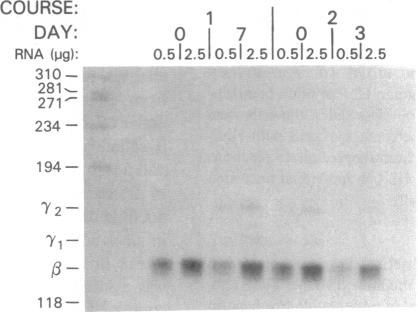
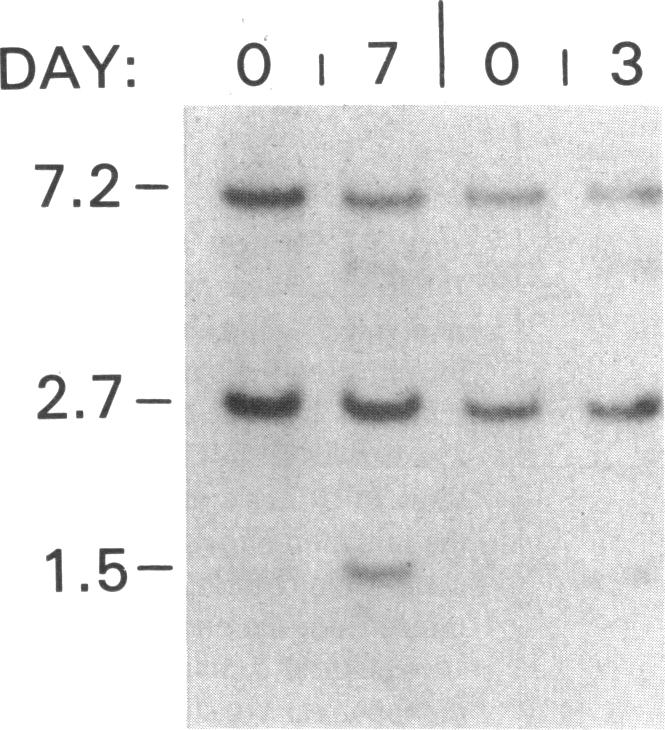
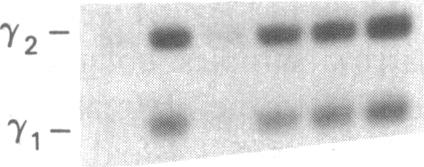
The effect of 5-azacytidine on erythroid precursors and progenitors was studied in nine patients with sickle cell anemia or severe thalassemia. Each patient received the drug intravenously for 5 or 7 d. 5-Azacytidine caused a four- to sixfold increase in gamma-messenger RNA concentration in bone marrow cells of eight of the nine patients and decreased the methylation frequency of a specific cytosine residue in the gamma-globin gene promoter in all nine patients. Within 2 d of the start of drug treatment there was a rise in the percentage of reticulocytes containing fetal hemoglobin (HbF; F-reticulocytes) without a significant change in the total number of reticulocytes, which suggested that there was a direct action of 5-azacytidine on erythroid precursors. Late erythroid progenitors (CFU-E), present in bone marrow after 2 d of drug administration, formed colonies containing an increased amount of HbF as compared with control colonies. Moreover, the number of CFU-E derived colonies was not decreased at these early times, which suggested that there was a direct action of 5-azacytidine on erythroid progenitors in the absence of cytotoxicity. Exposure of normal bone marrow cells in tissue culture to 5-azacytidine for 24 h reproduced both of these effects as judged during subsequent colony formation. The combined direct effects of 5-azacytidine on both the erythroid precursor and progenitor compartments resulted in an increase in HbF synthesis that was sustained for 2-3 wk. Toxicity to bone marrow as reflected by cytoreduction was evident after treatment in some patients but was not accompanied by an increase in HbF production. A correlation was found between the effects of 5-azacytidine on bone marrow, as assessed by in vitro measurements, and the hematological response of the individual patients to drug treatment.
在9例镰状细胞贫血或重型地中海贫血患者中研究了5-氮杂胞苷对红系前体细胞和祖细胞的作用。每位患者静脉注射该药物5或7天。5-氮杂胞苷使9例患者中的8例骨髓细胞中γ-信使RNA浓度增加了4至6倍,并使所有9例患者γ-珠蛋白基因启动子中特定胞嘧啶残基的甲基化频率降低。在药物治疗开始后的2天内,含有胎儿血红蛋白(HbF;F-网织红细胞)的网织红细胞百分比上升,而网织红细胞总数无显著变化,这表明5-氮杂胞苷对红系前体细胞有直接作用。给药2天后骨髓中存在的晚期红系祖细胞(CFU-E)形成的集落与对照集落相比,含有增加量的HbF。此外,在这些早期,CFU-E衍生集落的数量并未减少,这表明5-氮杂胞苷在无细胞毒性的情况下对红系祖细胞有直接作用。在组织培养中将正常骨髓细胞暴露于5-氮杂胞苷24小时,在随后的集落形成过程中判断,这两种作用均得以重现。5-氮杂胞苷对红系前体细胞和祖细胞区室的联合直接作用导致HbF合成增加,并持续2至3周。在一些患者治疗后,细胞减少所反映的对骨髓的毒性明显,但并未伴随HbF产生的增加。通过体外测量评估的5-氮杂胞苷对骨髓的作用与个体患者对药物治疗的血液学反应之间存在相关性。