Yang Bin, Feng Lu, Wang Fang, Wang Lei
1] TEDA Institute of Biological Sciences and Biotechnology, Nankai University, TEDA, Tianjin 300457, P.R. China [2] Key Laboratory of Molecular Microbiology and Technology, Ministry of Education, Tianjin 300071, P.R. China.
1] TEDA Institute of Biological Sciences and Biotechnology, Nankai University, TEDA, Tianjin 300457, P.R. China [2] Key Laboratory of Molecular Microbiology and Technology, Ministry of Education, Tianjin 300071, P.R. China [3] Tianjin Key Laboratory of Microbial Functional Genomics, Tianjin 300457, P.R. China [4] State Key Laboratory of Medicinal Chemical Biology, Nankai University, Tianjin 300071, P.R. China [5] SynBio Research Platform, Collaborative Innovation Center of Chemical Science and Engineering (Tianjin), Tianjin 300072, P.R. China.
Nat Commun. 2015 Mar 20;6:6592. doi: 10.1038/ncomms7592.
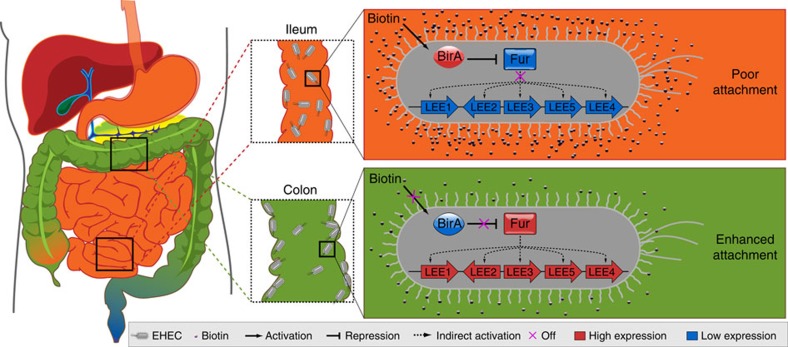
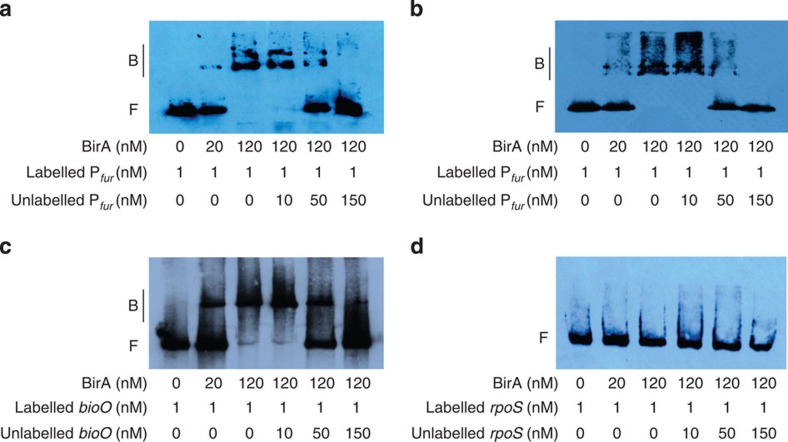
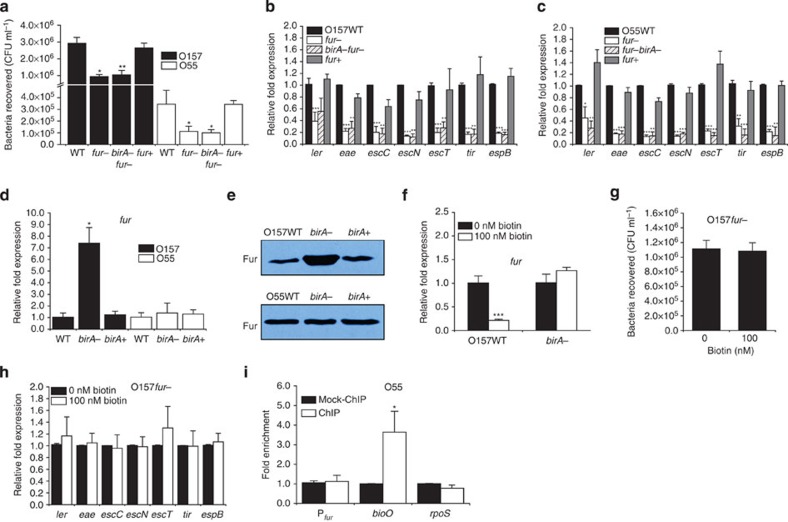
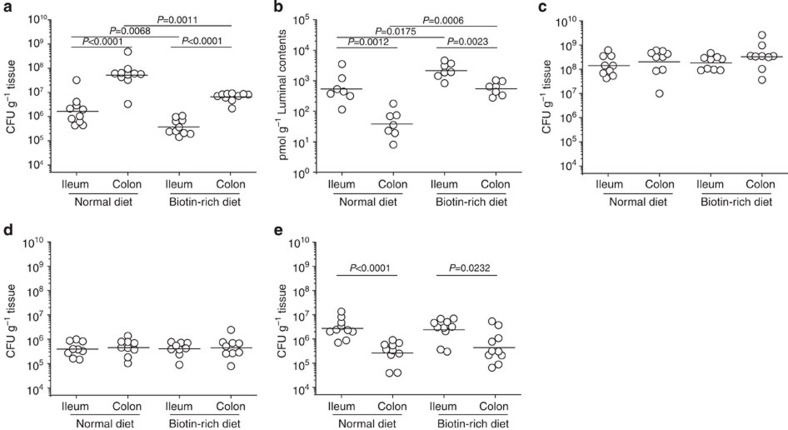
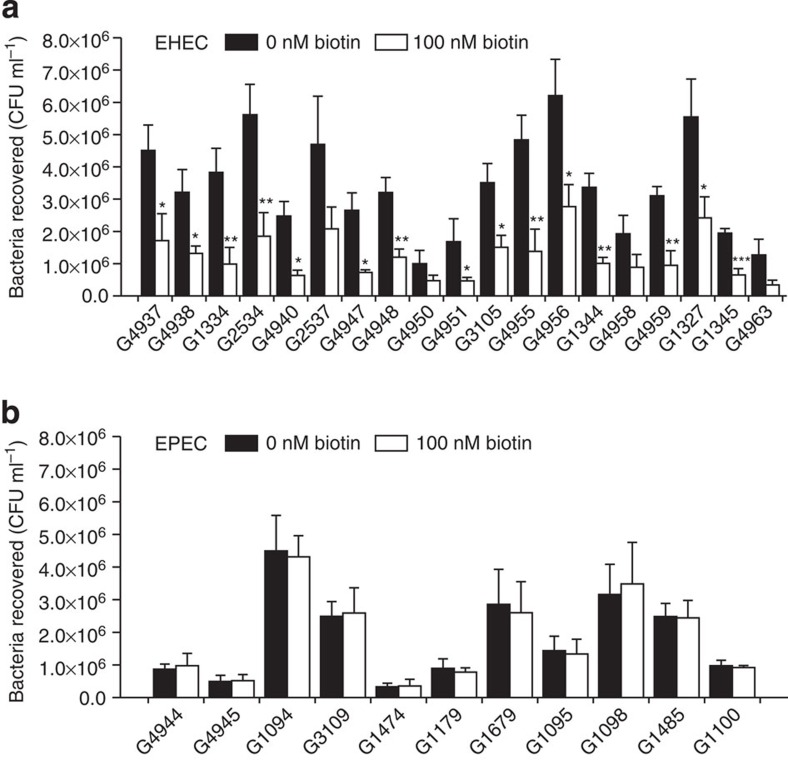
Enterohemorrhagic Escherichia coli (EHEC) is an important foodborne pathogen that infects humans by colonizing the large intestine. Here we identify a virulence-regulating pathway in which the biotin protein ligase BirA signals to the global regulator Fur, which in turn activates LEE (locus of enterocyte effacement) genes to promote EHEC adherence in the low-biotin large intestine. LEE genes are repressed in the high-biotin small intestine, thus preventing adherence and ensuring selective colonization of the large intestine. The presence of this pathway in all nine EHEC serotypes tested indicates that it is an important evolutionary strategy for EHEC. The pathway is incomplete in closely related small-intestinal enteropathogenic E. coli due to the lack of the Fur response to BirA. Mice fed with a biotin-rich diet show significantly reduced EHEC adherence, indicating that biotin might be useful to prevent EHEC infection in humans.
肠出血性大肠杆菌(EHEC)是一种重要的食源性病原体,通过在大肠定殖来感染人类。在此,我们鉴定出一条毒力调节途径,其中生物素蛋白连接酶BirA向全局调节因子Fur发出信号,Fur进而激活肠细胞脱落位点(LEE)基因,以促进EHEC在低生物素的大肠中黏附。LEE基因在高生物素的小肠中受到抑制,从而防止黏附并确保在大肠中选择性定殖。在所有测试的9种EHEC血清型中均存在该途径,这表明它是EHEC的一种重要进化策略。由于缺乏Fur对BirA的反应,密切相关的小肠致病性大肠杆菌中的该途径不完整。喂食富含生物素饮食的小鼠显示EHEC黏附显著减少,这表明生物素可能有助于预防人类EHEC感染。