Lopalco Antonio, Ali Hazem, Denora Nunzio, Rytting Erik
Department of Obstretrics and Gynecology, University of Texas Medical Branch, Galveston, TX, USA ; Department of Pharmaceutical Chemistry, University of Kansas, Lawrence, KS, USA ; Department of Pharmacy - Drug Sciences, University of Bari Aldo Moro, Bari, Italy.
Department of Obstretrics and Gynecology, University of Texas Medical Branch, Galveston, TX, USA.
Int J Nanomedicine. 2015 Mar 11;10:1985-96. doi: 10.2147/IJN.S77498. eCollection 2015.
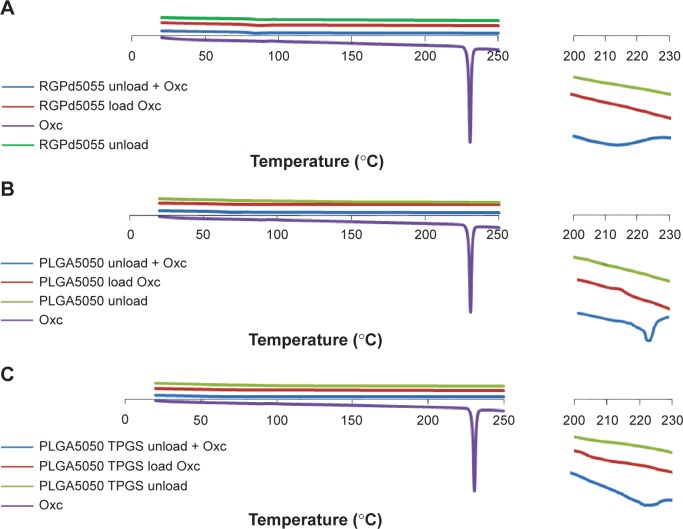
Encapsulation of antiepileptic drugs (AEDs) into nanoparticles may offer promise for treating pregnant women with epilepsy by improving brain delivery and limiting the transplacental permeability of AEDs to avoid fetal exposure and its consequent undesirable adverse effects. Oxcarbazepine-loaded nanoparticles were prepared by a modified solvent displacement method from biocompatible polymers (poly(lactic-co-glycolic acid) [PLGA] with or without surfactant and PEGylated PLGA [Resomer(®) RGPd5055]). The physical properties of the developed nanoparticles were determined with subsequent evaluation of their permeability across in vitro models of the blood-brain barrier (hCMEC/D3 cells) and human placental trophoblast cells (BeWo b30 cells). Oxcarbazepine-loaded nanoparticles with encapsulation efficiency above 69% were prepared with sizes ranging from 140-170 nm, polydispersity indices below 0.3, and zeta potential values below -34 mV. Differential scanning calorimetry and X-ray diffraction studies confirmed the amorphous state of the nanoencapsulated drug. The apparent permeability (Pe ) values of the free and nanoencapsulated oxcarbazepine were comparable across both cell types, likely due to rapid drug release kinetics. Transport studies using fluorescently-labeled nanoparticles (loaded with coumarin-6) demonstrated increased permeability of surfactant-coated nanoparticles. Future developments in enzyme-prodrug therapy and targeted delivery are expected to provide improved options for pregnant patients with epilepsy.
将抗癫痫药物(AEDs)封装到纳米颗粒中,可能为治疗癫痫孕妇带来希望,通过改善脑部给药并限制AEDs的胎盘通透性,以避免胎儿暴露及其随之而来的不良副作用。采用改良的溶剂置换法,由生物相容性聚合物(聚乳酸-乙醇酸共聚物[PLGA],有无表面活性剂以及聚乙二醇化PLGA[Resomer(®)RGPd5055])制备了载奥卡西平纳米颗粒。测定了所制备纳米颗粒的物理性质,随后评估了它们在血脑屏障体外模型(hCMEC/D3细胞)和人胎盘滋养层细胞(BeWo b30细胞)中的通透性。制备了包封率高于69%的载奥卡西平纳米颗粒,其尺寸范围为140-170nm,多分散指数低于0.3,ζ电位值低于-34mV。差示扫描量热法和X射线衍射研究证实了纳米包封药物的非晶态。游离和纳米包封奥卡西平在两种细胞类型中的表观渗透率(Pe)值相当,这可能是由于药物快速释放动力学。使用荧光标记纳米颗粒(负载香豆素-6)的转运研究表明,表面活性剂包被的纳米颗粒通透性增加。预计酶前药疗法和靶向递送的未来发展将为癫痫孕妇患者提供更好的选择。