Koo Junghui, Wang Xuerong, Owonikoko Taofeek K, Ramalingam Suresh S, Khuri Fadlo R, Sun Shi-Yong
Department of Hematology and Medical Oncology, Emory University School of Medicine and Winship Cancer Institute, Atlanta, GA, USA.
Department of Pharmacology, Nanjing Medical University, Nanjing, Jiangsu, China.
Oncotarget. 2015 Apr 20;6(11):8974-87. doi: 10.18632/oncotarget.3291.
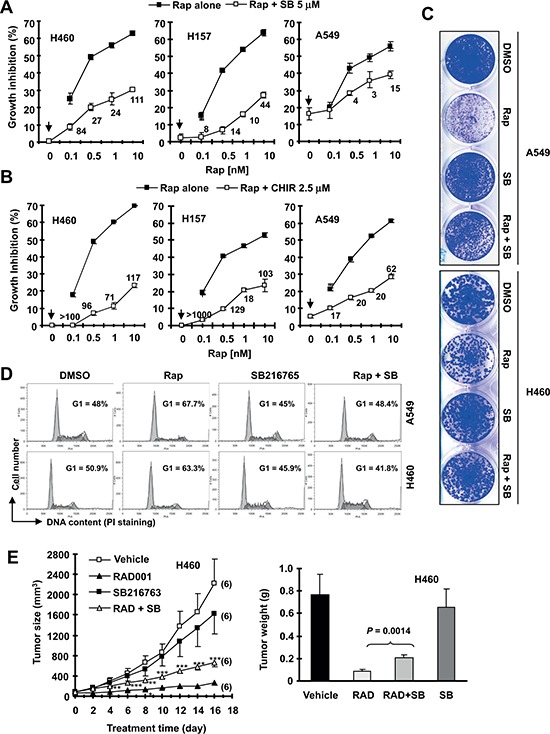
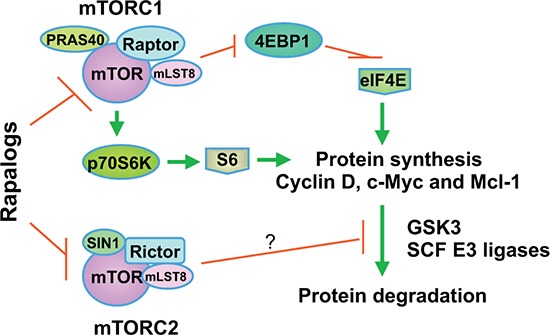
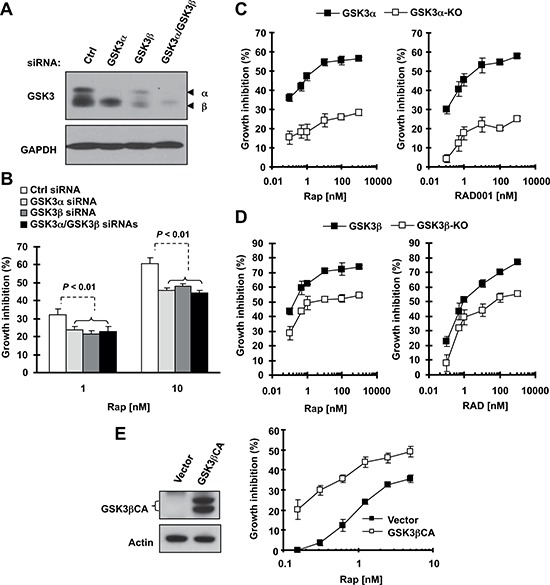
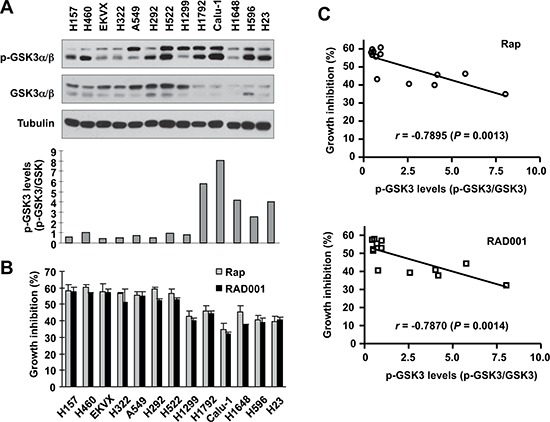
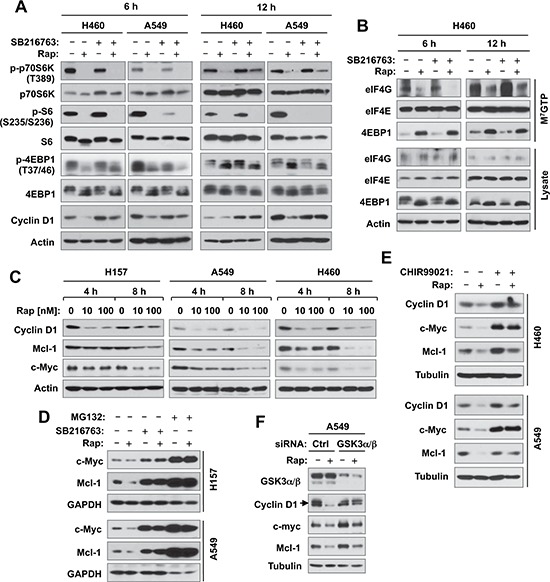
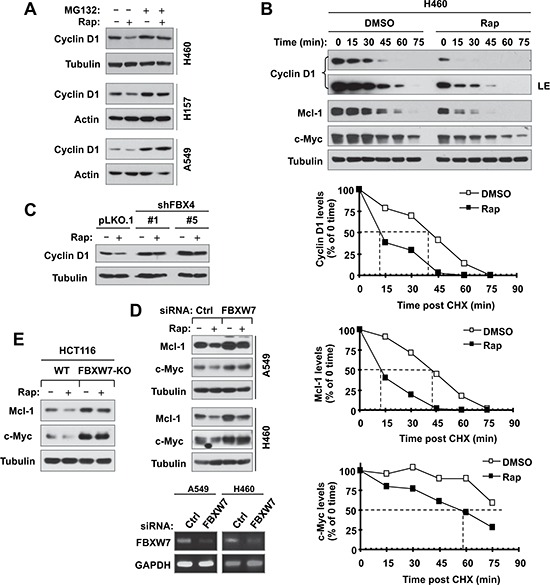
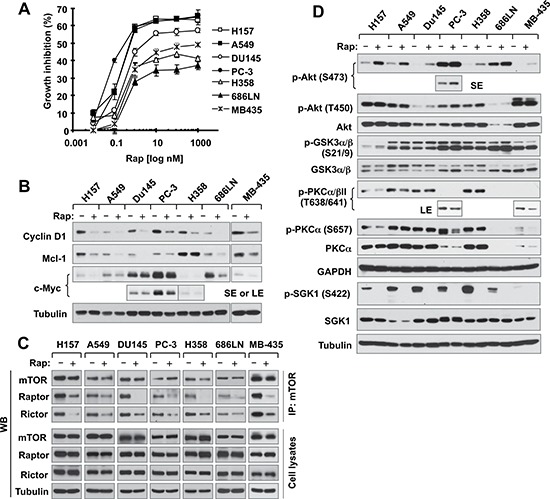
The single-agent activity of rapalogs (rapamycin and its analogues) in most tumor types has been modest at best. The underlying mechanisms are largely unclear. In this report, we have uncovered a critical role of GSK3 in regulating degradation of some oncogenic proteins induced by rapalogs and cell sensitivity to rapalogs. The basal level of GSK3 activity was positively correlated with cell sensitivity of lung cancer cell lines to rapalogs. GSK3 inhibition antagonized rapamycin's growth inhibitory effects both in vitro and in vivo, while enforced activation of GSK3β sensitized cells to rapamycin. GSK3 inhibition rescued rapamcyin-induced reduction of several oncogenic proteins such as cyclin D1, Mcl-1 and c-Myc, without interfering with the ability of rapamycin to suppress mTORC1 signaling and cap binding. Interestingly, rapamycin induces proteasomal degradation of these oncogenic proteins, as evidenced by their decreased stabilities induced by rapamcyin and rescue of their reduction by proteasomal inhibition. Moreover, acute or short-time rapamycin treatment dissociated not only raptor, but also rictor from mTOR in several tested cell lines, suggesting inhibition of both mTORC1 and mTORC2. Thus, induction of GSK3-dependent degradation of these oncogenic proteins is likely secondary to mTORC2 inhibition; this effect should be critical for rapamycin to exert its anticancer activity.
雷帕霉素及其类似物(rapalog)在大多数肿瘤类型中的单药活性充其量只能说是一般。其潜在机制在很大程度上尚不清楚。在本报告中,我们发现了糖原合成酶激酶3(GSK3)在调节雷帕霉素诱导的某些致癌蛋白降解以及细胞对雷帕霉素敏感性方面的关键作用。GSK3活性的基础水平与肺癌细胞系对雷帕霉素的细胞敏感性呈正相关。抑制GSK3在体外和体内均拮抗雷帕霉素的生长抑制作用,而强制激活GSK3β则使细胞对雷帕霉素敏感。抑制GSK3可挽救雷帕霉素诱导的细胞周期蛋白D1、髓细胞白血病-1(Mcl-1)和c-Myc等几种致癌蛋白的减少,而不影响雷帕霉素抑制哺乳动物雷帕霉素靶蛋白复合物1(mTORC1)信号传导和帽结合的能力。有趣的是,雷帕霉素诱导这些致癌蛋白的蛋白酶体降解,这可通过雷帕霉素诱导的它们稳定性降低以及蛋白酶体抑制对其减少的挽救来证明。此外,在几个测试细胞系中,急性或短期雷帕霉素处理不仅使雷帕霉素靶蛋白(raptor),而且使rictor与mTOR解离,提示同时抑制了mTORC1和哺乳动物雷帕霉素靶蛋白复合物2(mTORC2)。因此,诱导GSK3依赖的这些致癌蛋白降解可能继发于mTORC2抑制;这种效应可能对雷帕霉素发挥其抗癌活性至关重要。