Juengel Eva, Najafi Ramin, Rutz Jochen, Maxeiner Sebastian, Makarevic Jasmina, Roos Frederik, Tsaur Igor, Haferkamp Axel, Blaheta Roman A
Department of Urology, Goethe-University, Frankfurt am Main, Germany.
Current address: Department of Urology and Pediatric Urology, Mainz University Medical Center, Mainz, Germany.
Oncotarget. 2017 Nov 6;8(66):110016-110028. doi: 10.18632/oncotarget.22454. eCollection 2017 Dec 15.
Although the mechanistic target of rapamycin (mTOR) might be a promising molecular target to treat advanced bladder cancer, resistance develops under chronic exposure to an mTOR inhibitor (everolimus, temsirolimus). Based on earlier studies, we proposed that histone deacetylase (HDAC) blockade might circumvent resistance and investigated whether HDAC inhibition has an impact on growth of bladder cancer cells with acquired resistance towards temsirolimus.
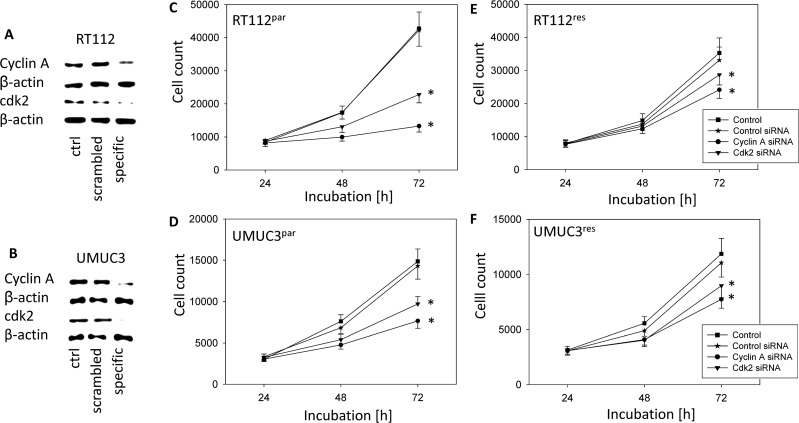
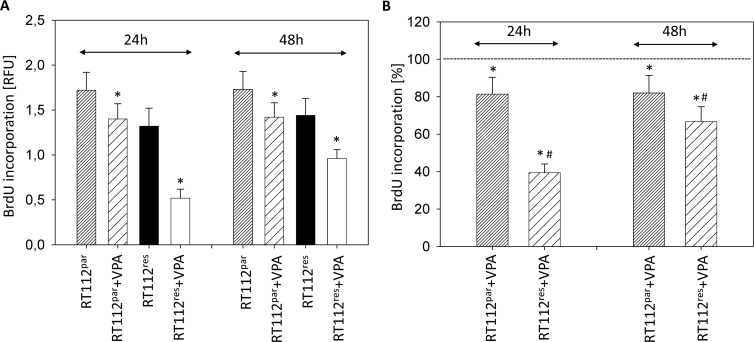
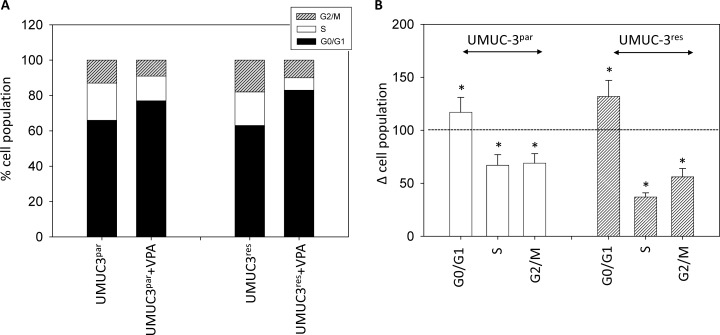
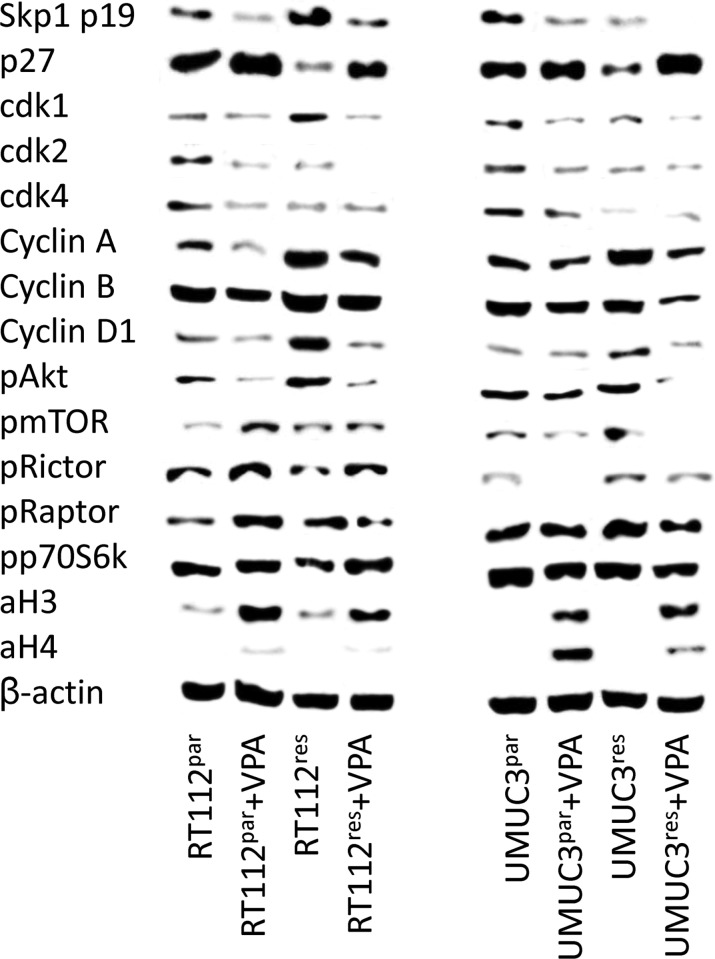
The HDAC inhibitor valproic acid (VPA) significantly inhibited growth, proliferation and caused G0/G1 phase arrest in RT112 and UMUC-3. cdk1, cyclin B, cdk2, cyclin A and Skp1 p19 were down-regulated, p27 was elevated. Akt-mTOR signaling was deactivated, whereas acetylation of histone H3 and H4 in RT112 and UMUC-3 increased in the presence of VPA. Knocking down cdk2 or cyclin A resulted in a significant growth blockade of RT112 and UMUC-3.
Parental (par) and resistant (res) RT112 and UMUC-3 cells were exposed to the HDAC inhibitor VPA. Tumor cell growth, proliferation, cell cycling and expression of cell cycle regulating proteins were then evaluated. siRNA blockade was used to investigate the functional impact of the proteins.
HDAC inhibition induced a strong response of temsirolimus-resistant bladder cancer cells. Therefore, the temsirolimus-VPA-combination might be an innovative strategy for bladder cancer treatment.
尽管雷帕霉素的作用机制靶点(mTOR)可能是治疗晚期膀胱癌的一个有前景的分子靶点,但在长期暴露于mTOR抑制剂(依维莫司、替西罗莫司)的情况下会产生耐药性。基于早期研究,我们提出组蛋白去乙酰化酶(HDAC)阻断可能会规避耐药性,并研究了HDAC抑制对已获得对替西罗莫司耐药性的膀胱癌细胞生长的影响。
HDAC抑制剂丙戊酸(VPA)显著抑制了RT112和UMUC-3细胞的生长、增殖,并导致G0/G1期阻滞。细胞周期蛋白依赖性激酶1(cdk1)、细胞周期蛋白B、细胞周期蛋白依赖性激酶2(cdk2)、细胞周期蛋白A和Skp1 p19下调,p27升高。Akt-mTOR信号通路失活,而在VPA存在的情况下,RT112和UMUC-3中组蛋白H3和H4的乙酰化增加。敲低cdk2或细胞周期蛋白A导致RT112和UMUC-3细胞显著生长阻滞。
将亲代(par)和耐药(res)的RT112和UMUC-3细胞暴露于HDAC抑制剂VPA。然后评估肿瘤细胞的生长、增殖、细胞周期以及细胞周期调节蛋白的表达。使用小干扰RNA(siRNA)阻断来研究这些蛋白的功能影响。
HDAC抑制诱导了对替西罗莫司耐药的膀胱癌细胞产生强烈反应。因此,替西罗莫司与VPA联合使用可能是一种创新的膀胱癌治疗策略。