Lualdi Marta, Pedrini Edoardo, Rea Katia, Monti Laura, Scaldaferri Debora, Gariboldi Marzia, Camporeale Annalisa, Ghia Paolo, Monti Elena, Tomassetti Antonella, Acquati Francesco, Taramelli Roberto
Department of Theoretical and Applied Sciences, Università degli Studi dell'Insubria, Varese, Italy.
Unit of Molecular Therapies, Department of Experimental Oncology and Molecular Medicine, Fondazione IRCCS Istituto Nazionale dei Tumori, Milan, Italy.
Oncotarget. 2015 Apr 10;6(10):7851-65. doi: 10.18632/oncotarget.3490.
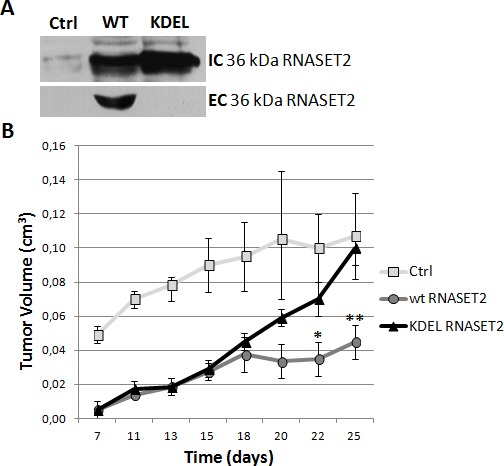
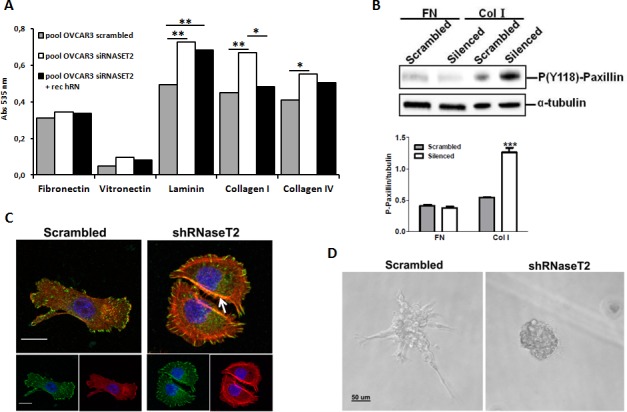
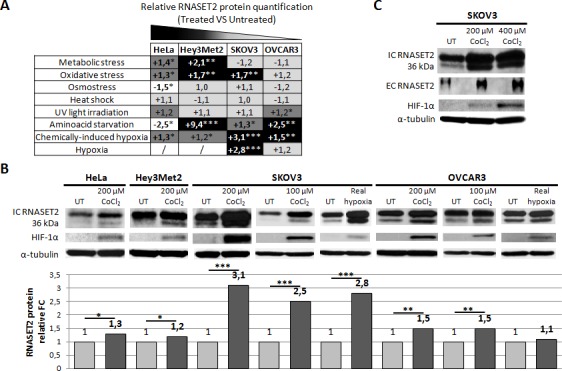
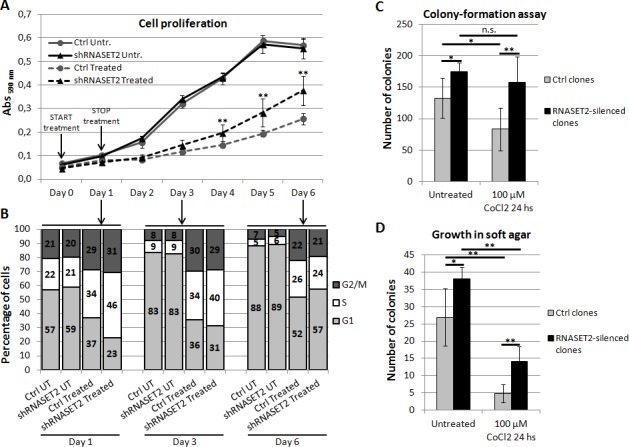
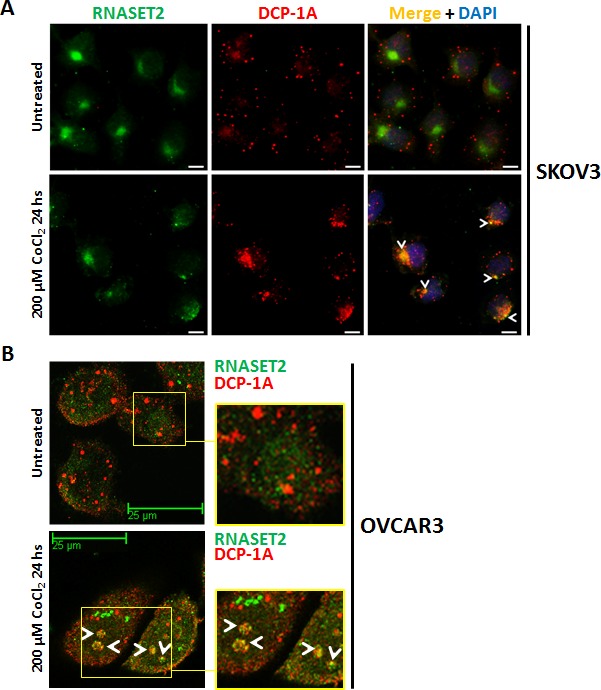
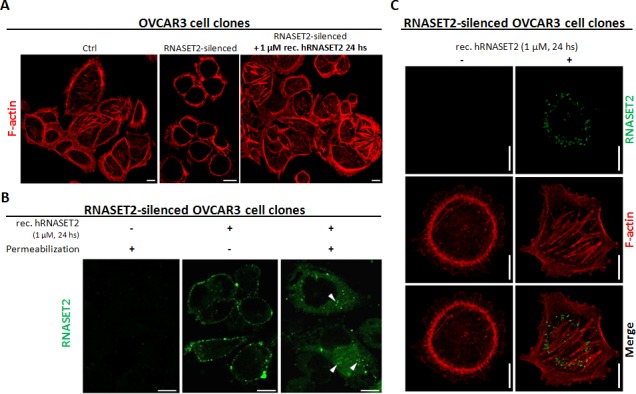
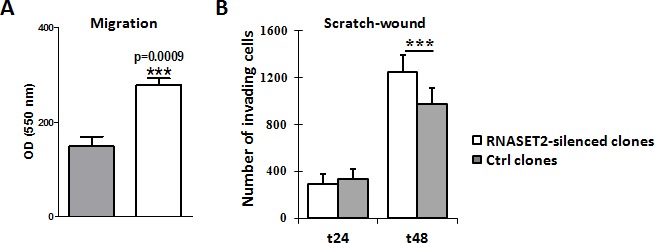
As widely recognized, tumor growth entails a close and complex cross-talk among cancer cells and the surrounding tumor microenvironment. We recently described the human RNASET2 gene as one key player of such microenvironmental cross-talk. Indeed, the protein encoded by this gene is an extracellular RNase which is able to control cancer growth in a non-cell autonomous mode by inducing a sustained recruitment of immune-competent cells belonging to the monocyte/macrophage lineage within a growing tumor mass. Here, we asked whether this oncosuppressor gene is sensitive to stress challenges and whether it can trigger cell-intrinsic processes as well. Indeed, RNASET2 expression levels were consistently found to increase following stress induction. Moreover, changes in RNASET2 expression levels turned out to affect several cancer-related parameters in vitro in an ovarian cancer cell line model. Of note, a remarkable rearrangement of the actin cytoskeleton organization, together with changes in cell adhesion and motility, emerged as putative mechanisms by which such cell-autonomous role could occur. Altogether, these biological features allow to put forward the hypothesis that the RNASET2 protein can act as a molecular barrier for limiting the damages and tissue remodeling events occurring during the earlier step of cell transformation.
众所周知,肿瘤生长需要癌细胞与周围肿瘤微环境之间进行密切而复杂的相互作用。我们最近将人类RNASET2基因描述为这种微环境相互作用的一个关键参与者。事实上,该基因编码的蛋白质是一种细胞外核糖核酸酶,它能够通过诱导免疫活性细胞(属于单核细胞/巨噬细胞谱系)持续募集到生长中的肿瘤块内,以非细胞自主模式控制癌症生长。在此,我们询问这种肿瘤抑制基因是否对应激挑战敏感,以及它是否也能触发细胞内在过程。事实上,在应激诱导后,RNASET2的表达水平持续升高。此外,在卵巢癌细胞系模型中,RNASET2表达水平的变化在体外影响了几个与癌症相关的参数。值得注意的是,肌动蛋白细胞骨架组织的显著重排,以及细胞黏附和运动性的变化,被认为是这种细胞自主作用可能发生的机制。总之,这些生物学特征使得我们能够提出这样的假设:RNASET2蛋白可以作为一种分子屏障,限制细胞转化早期阶段发生的损伤和组织重塑事件。