Institute of Experimental Hematology and Transfusion Medicine, University of Bonn, Sigmund-Freud Str. 25, 53127 Bonn, Germany.
Department of Urology, Medical Faculty, Heinrich-Heine-University, Moorenstr. 5, 40225 Düsseldorf, Germany.
Clin Epigenetics. 2015 Mar 1;7(1):17. doi: 10.1186/s13148-015-0051-y. eCollection 2015.
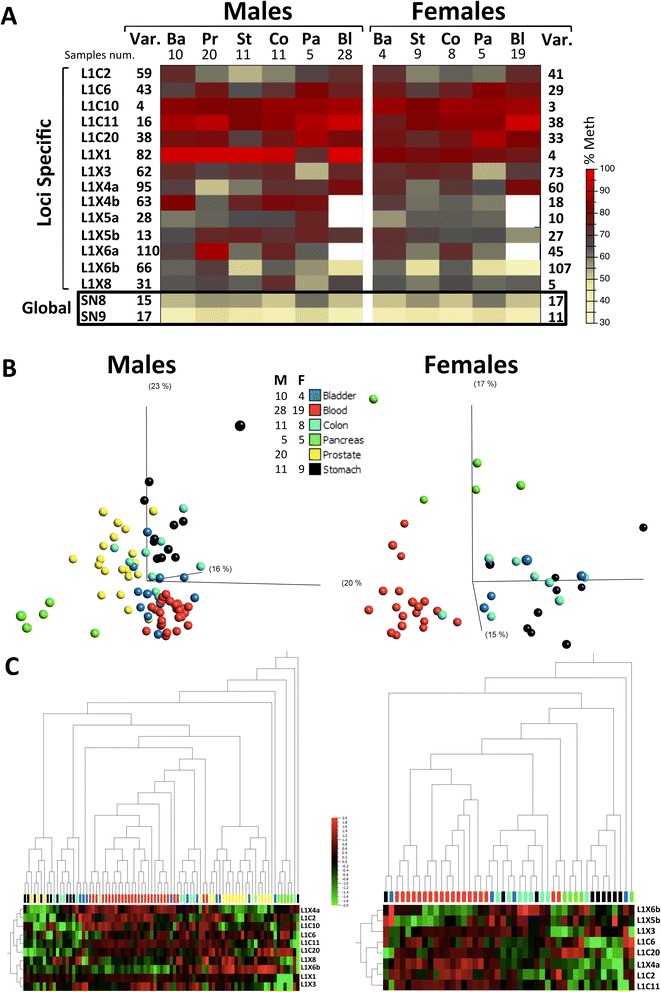
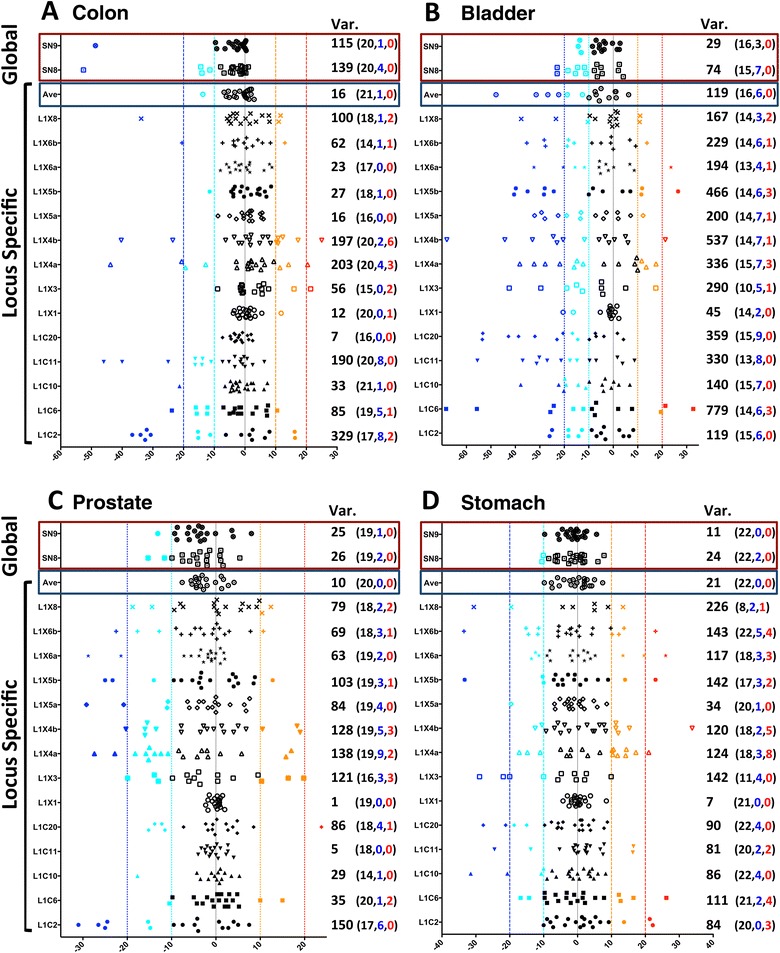
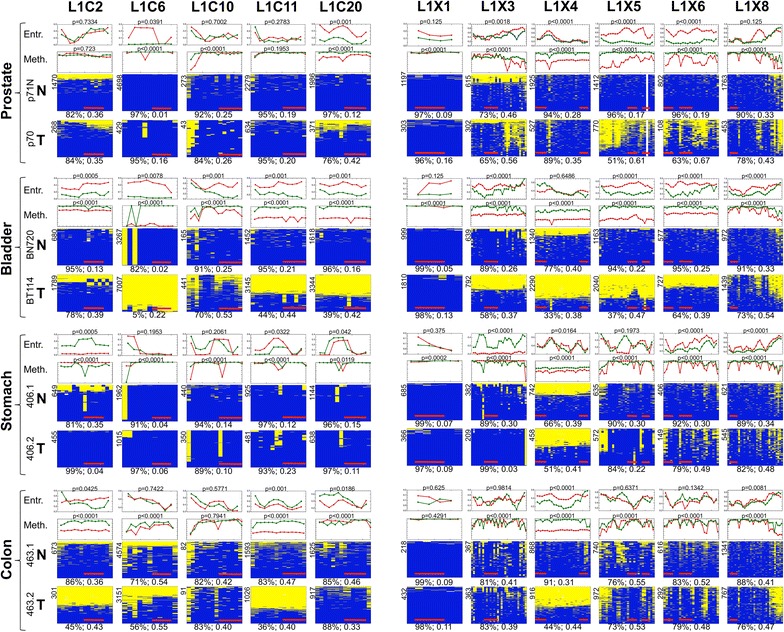
Hypomethylation of long interspersed element (LINE)-1 has been observed in tumorigenesis when using degenerate assays, which provide an average across all repeats. However, it is unknown whether individual LINE-1 loci or different CpGs within one specific LINE-1 promoter are equally affected by methylation changes. Conceivably, studying methylation changes at specific LINE-1 may be more informative than global assays for cancer diagnostics. Therefore, with the aim of mapping methylation at individual LINE-1 loci at single-CpG resolution and exploring the diagnostic potential of individual LINE-1 locus methylation, we analyzed methylation at 11 loci by pyrosequencing, next-generation bisulfite sequencing as well as global LINE-1 methylation in bladder, colon, pancreas, prostate, and stomach cancers compared to paired normal tissues and in blood samples from some of the patients compared to healthy donors.
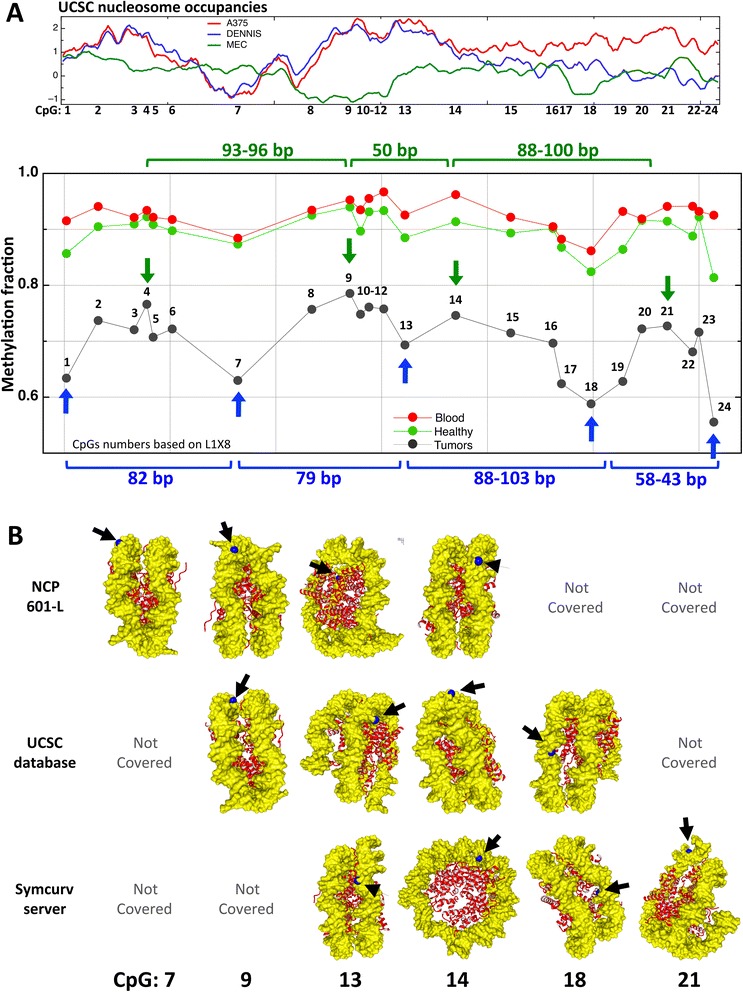
Most (72/80) tumor samples harbored significant methylation changes at at least one locus. Notably, our data revealed not only the expected hypomethylation but also hypermethylation at some loci. Specific CpGs within the LINE-1 consensus sequence appeared preferentially hypomethylated suggesting that these could act as seeds for hypomethylation. In silico analysis revealed that these CpG sites more likely faced the histones in the nucleosome. Multivariate logistic regression analysis did not reveal a significant clinical advantage of locus-specific methylation markers over global methylation markers in distinguishing tumors from normal tissues.
Methylation changes at individual LINE-1 loci are heterogeneous, whereas specific CpGs within the consensus sequence appear to be more prone to hypomethylation. With a broader selection of loci, locus-specific LINE-1 methylation could become a tool for tumor detection.
使用简并检测时,在肿瘤发生时观察到长散布元件 (LINE)-1 的低甲基化,该检测提供了所有重复序列的平均值。然而,尚不清楚单个 LINE-1 基因座或同一特定 LINE-1 启动子内的不同 CpG 是否受到甲基化变化的同等影响。可以想象,研究特定 LINE-1 上的甲基化变化可能比癌症诊断的全局检测更具信息性。因此,为了以单 CpG 分辨率绘制单个 LINE-1 基因座上的甲基化图谱,并探索单个 LINE-1 基因座甲基化的诊断潜力,我们通过焦磷酸测序、下一代亚硫酸氢盐测序以及膀胱癌、结肠癌、胰腺癌、前列腺癌和胃癌与配对正常组织进行了 11 个基因座的甲基化分析,并在一些患者的血液样本中与健康供体进行了比较。
大多数(72/80)肿瘤样本在至少一个基因座上存在显著的甲基化变化。值得注意的是,我们的数据不仅揭示了预期的低甲基化,还揭示了一些基因座的高甲基化。LINE-1 保守序列内的特定 CpG 似乎优先低甲基化,表明这些 CpG 可能作为低甲基化的种子。计算机分析表明,这些 CpG 位点更有可能面临核小体中的组蛋白。多元逻辑回归分析表明,在区分肿瘤与正常组织方面,基因座特异性甲基化标记物并没有比全局甲基化标记物具有显著的临床优势。
单个 LINE-1 基因座上的甲基化变化是异质的,而保守序列内的特定 CpG 似乎更容易发生低甲基化。随着基因座选择的增加,基因座特异性 LINE-1 甲基化可能成为肿瘤检测的一种工具。