Dalton Desiré L, Linden Birthe, Wimberger Kirsten, Nupen Lisa Jane, Tordiffe Adrian S W, Taylor Peter John, Madisha M Thabang, Kotze Antoinette
National Zoological Gardens of South Africa, Pretoria, South Africa; Genetics Department, University of the Free State, Bloemfontein, South Africa.
Department of Zoology, School of Mathematical & Natural Sciences, University of Venda, Thohoyandou, South Africa; SARChI Chair on Biodiversity Value & Change in the Vhembe Biosphere Reserve & Core Member of Centre for Invasion Biology, School of Mathematical & Natural Sciences, University of Venda, Thohoyandou, South Africa.
PLoS One. 2015 Mar 23;10(3):e0117003. doi: 10.1371/journal.pone.0117003. eCollection 2015.
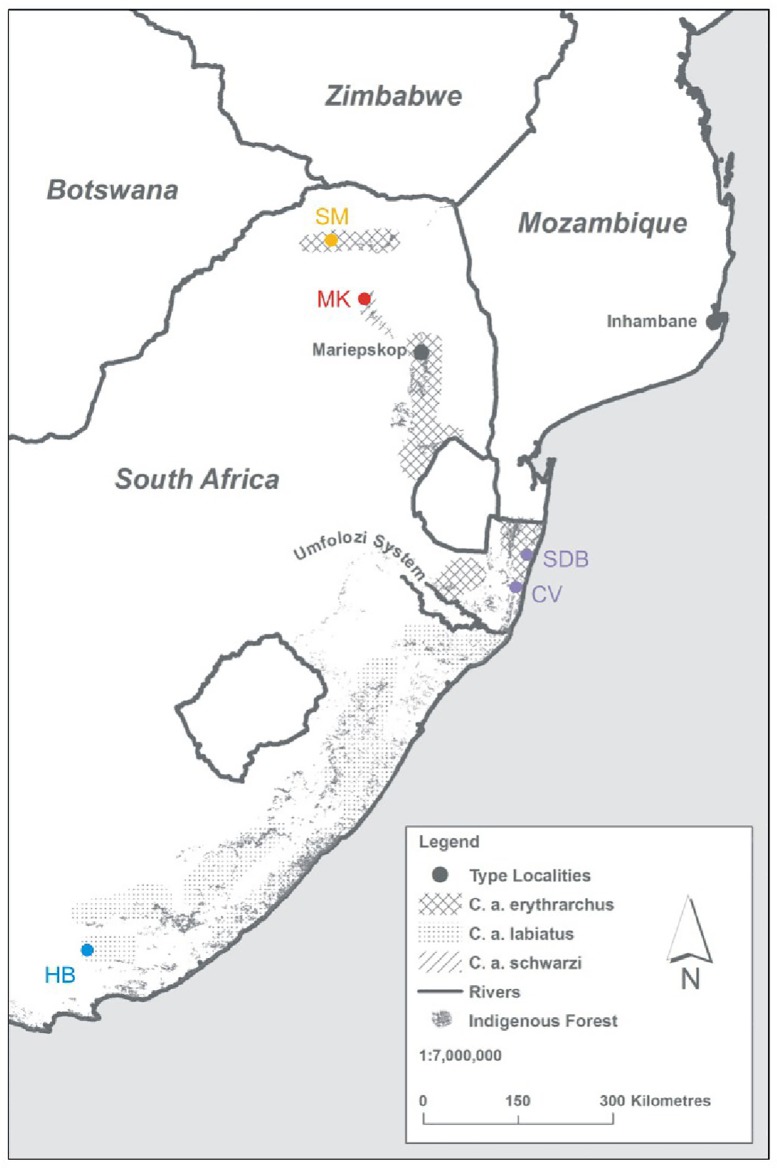
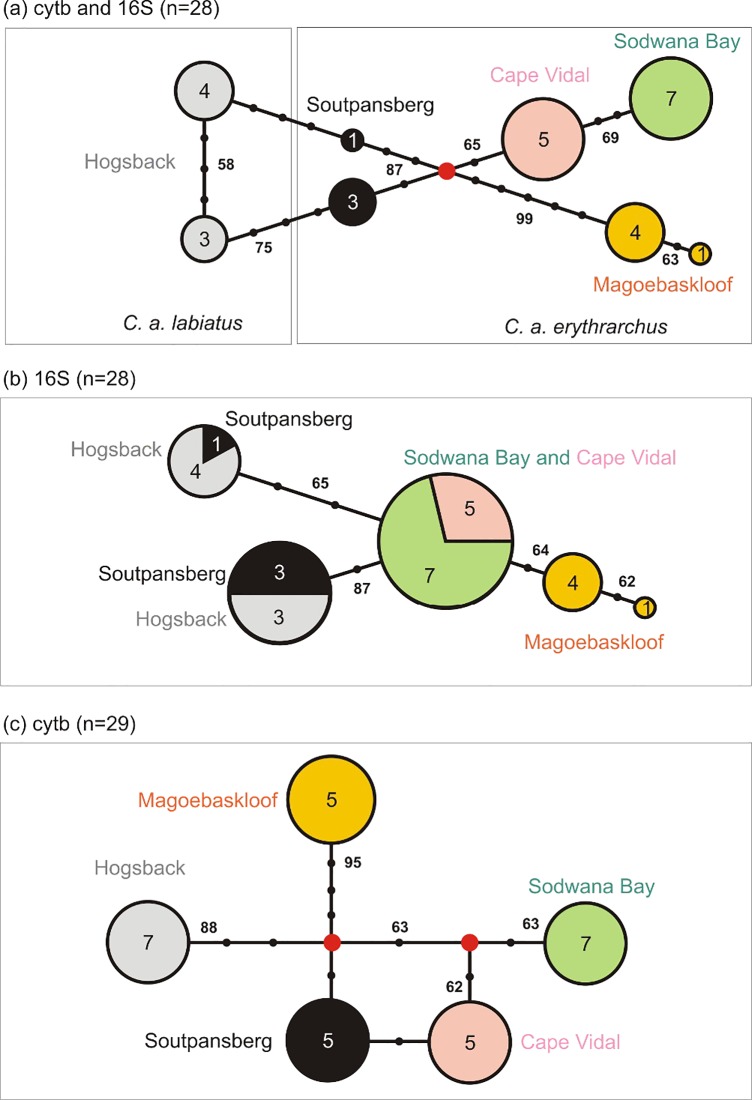
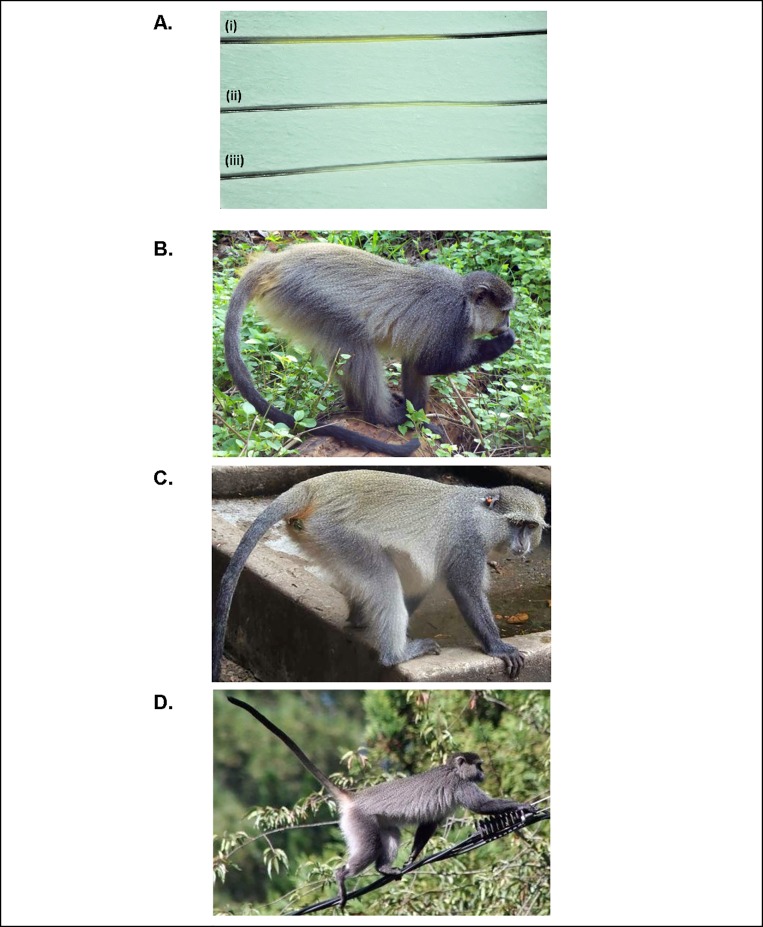
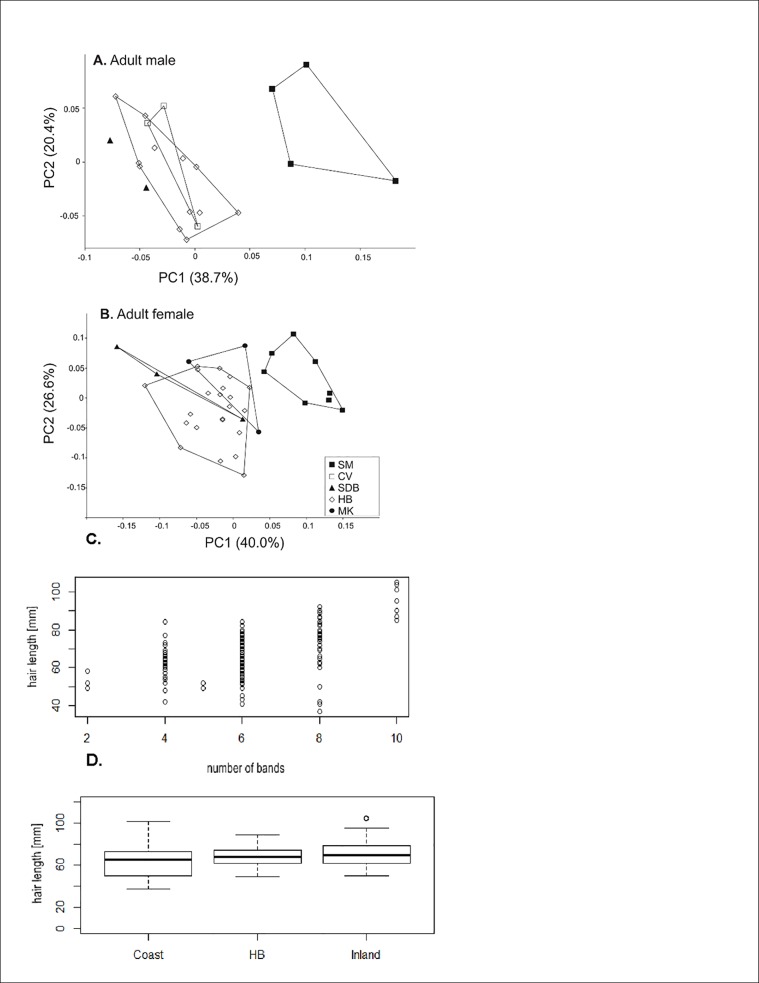
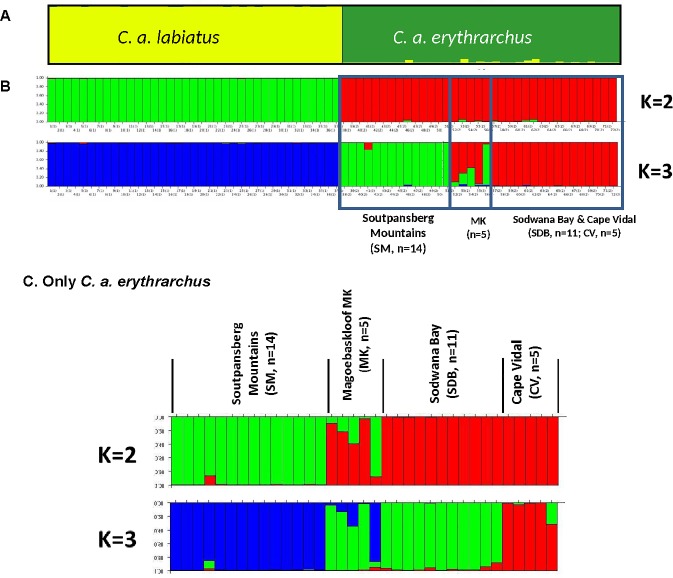
The samango monkey is South Africa's only exclusively forest dwelling primate and represents the southernmost extent of the range of arboreal guenons in Africa. The main threats to South Africa's forests and thus to the samango are linked to increasing land-use pressure and increasing demands for forest resources, resulting in deforestation, degradation and further fragmentation of irreplaceable habitats. The species belongs to the highly polytypic Cercopithecus nictitans group which is sometimes divided into two species C. mitis and C. albogularis. The number of subspecies of C. albogularis is also under debate and is based only on differences in pelage colouration and thus far no genetic research has been undertaken on South African samango monkey populations. In this study we aim to further clarify the number of samango monkey subspecies, as well as their respective distributions in South Africa by combining molecular, morphometric and pelage data. Overall, our study provides the most comprehensive view to date into the taxonomic description of samango monkeys in South Africa. Our data supports the identification of three distinct genetic entities namely; C. a. labiatus, C. a. erythrarchus and C. a. schwarzi and argues for separate conservation management of the distinct genetic entities defined by this study.
桑曼戈猴是南非唯一完全栖息于森林的灵长类动物,代表了非洲树栖长尾猴分布范围的最南端。南非森林以及桑曼戈猴面临的主要威胁与土地利用压力增加和对森林资源需求不断上升有关,这导致了森林砍伐、退化以及不可替代栖息地的进一步碎片化。该物种属于高度多型的白领白脸猴组,该组有时被分为两个物种,即白领白脸猴和白喉白脸猴。白喉白脸猴的亚种数量也存在争议,且仅基于毛色差异划分,迄今为止尚未对南非桑曼戈猴种群进行基因研究。在本研究中,我们旨在通过结合分子、形态测量和毛色数据,进一步阐明桑曼戈猴亚种的数量及其在南非的各自分布。总体而言,我们的研究提供了迄今为止对南非桑曼戈猴分类描述最全面的观点。我们的数据支持识别出三个不同的基因实体,即白唇白脸猴、红颊白脸猴和施氏白脸猴,并主张对本研究定义的不同基因实体进行单独的保护管理。