Rajput Ali H, Rajput Alex
Saskatchewan Movement Disorders Program,Neurology Division,University of Saskatchewan and Saskatoon Health Region.
Can J Neurol Sci. 2015 Mar;42(2):74-87. doi: 10.1017/cjn.2015.13.
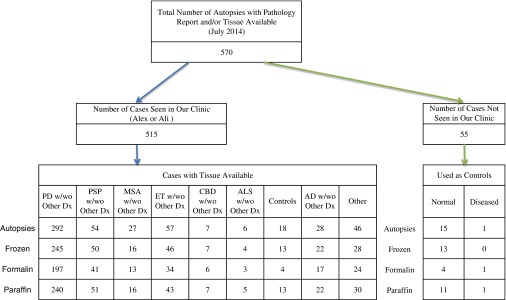
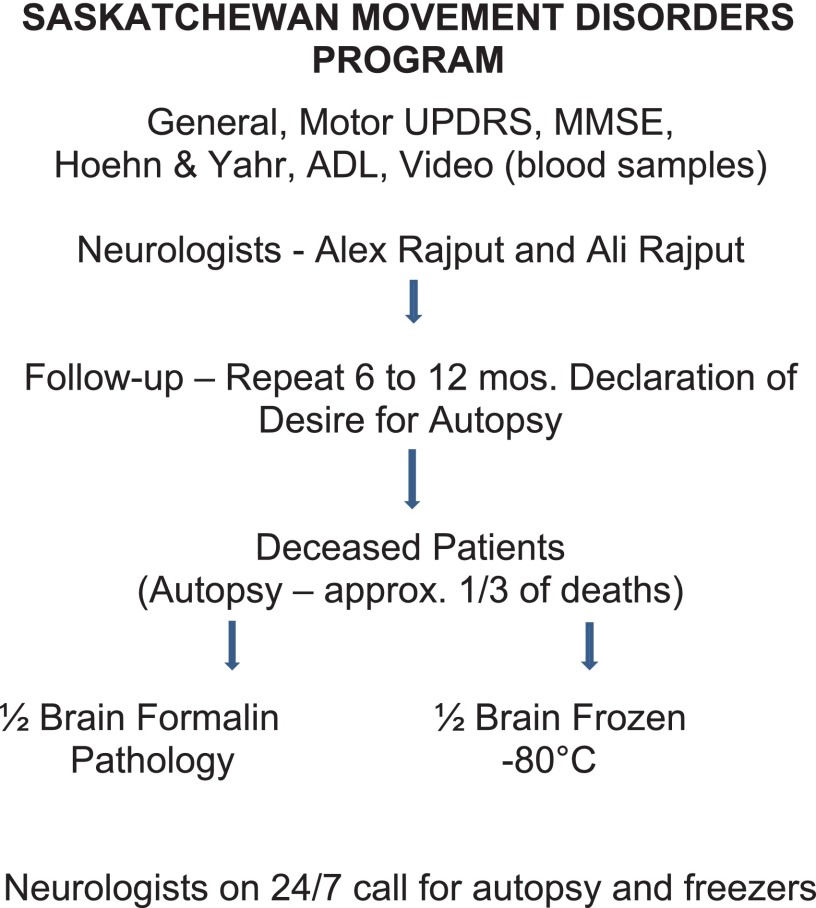
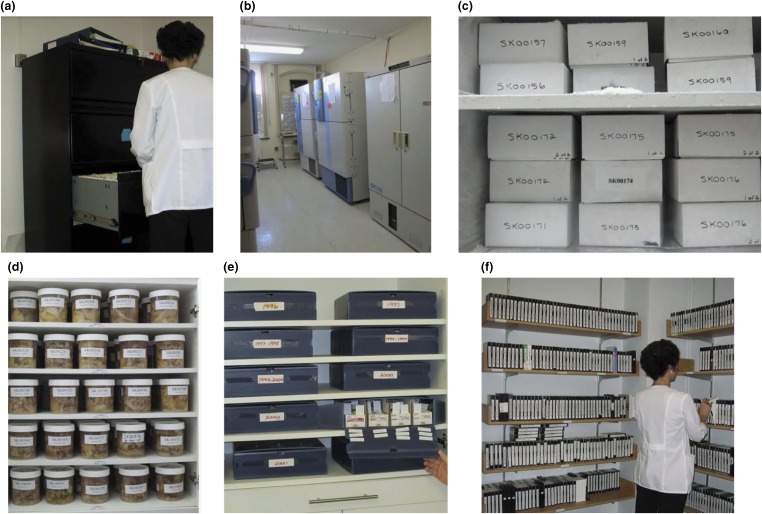
We review the Saskatchewan Movement Disorders Program, which started in 1968 and has had the dual goals of patient care and research. The clinics are structured to collect research-worthy data including videos, longitudinal follow-up, and autopsy studies of patients seen in the clinics. At every clinic visit, the patient is evaluated by one or both authors. A total of 25% to 30% of the deceased come to autopsy. Frozen half-brain and formalin-fixed remnants from autopsy are preserved in our laboratories. Patients not seen in our clinic are not included in research, which makes it different from brain banks. So far, 515 cases have come to autopsy. So far, there have been 17 collaborating scientific teams from Canada, the United States, Europe, and Japan. The collaborators are not charged for access to our resources. This program offers a unique opportunity to study multiple aspects of movement disorder patients seen in clinical practice.
我们回顾了萨斯喀彻温运动障碍项目,该项目始于1968年,兼具患者护理和研究双重目标。诊所的架构旨在收集具有研究价值的数据,包括视频、纵向随访以及对诊所患者的尸检研究。每次门诊时,患者均由一位或两位作者进行评估。共有25%至30%的逝者接受了尸检。尸检获取的冷冻半脑和福尔马林固定的残余组织保存在我们的实验室中。未在我们诊所就诊的患者不纳入研究,这使其有别于脑库。到目前为止,已有515例进行了尸检。到目前为止,已有来自加拿大、美国、欧洲和日本的17个合作科研团队。合作者使用我们的资源不收取费用。该项目为研究临床实践中所见运动障碍患者的多个方面提供了独特机会。