Wang Hui, Fu Yangyang, Feng Yanmei, Guan Jian, Yin Shankai
Department of Otolaryngology, Shanghai Jiao Tong University Affiliated Sixth People's Hospital, Shanghai, China, 200233.
Department of Otolaryngology, Dalian Municipal Central Hospital, 826 Xinan Road, Dalian, 116033 China.
PLoS One. 2015 Mar 25;10(3):e0121500. doi: 10.1371/journal.pone.0121500. eCollection 2015.
Tonsillotomy has gained popular acceptance as an alternative to the traditional tonsillectomy in the management of sleep-disordered breathing in children. Many studies have evaluated the outcomes of the two techniques, but uncertainty remains with regard to the efficacy and complications of tonsillotomy versus a traditional tonsillectomy. This study was designed to investigate the efficacy and complications of tonsillotomy versus tonsillectomy, in terms of the short- and long-term results.
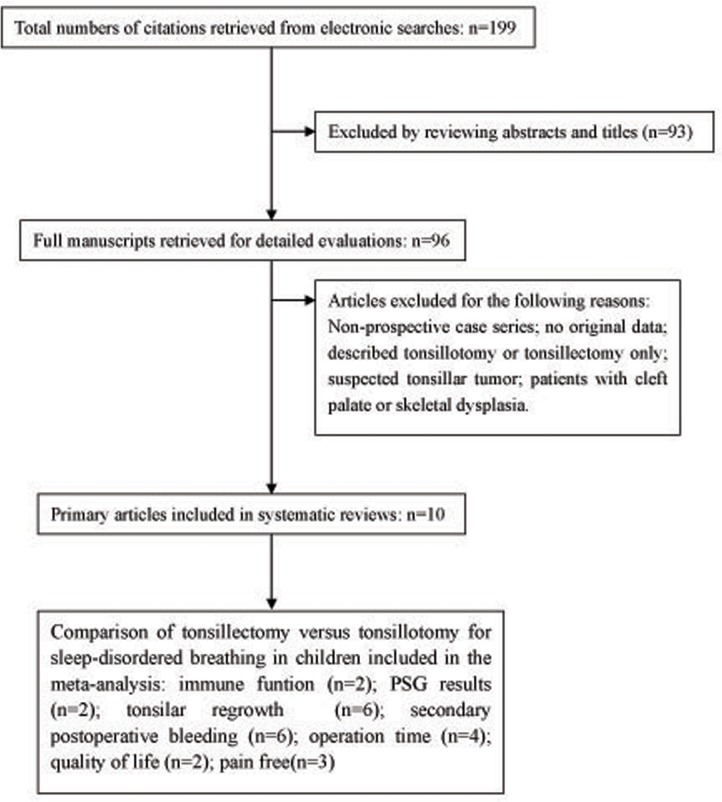
We collected data from electronic databases including MEDLINE, EMBASE, and the Cochrane Library. The following inclusion criteria were applied: English language, children, and prospective studies that directly compared tonsillotomy and tonsillectomy in the management of sleep disordered breathing. Subgroup analysis was then performed.
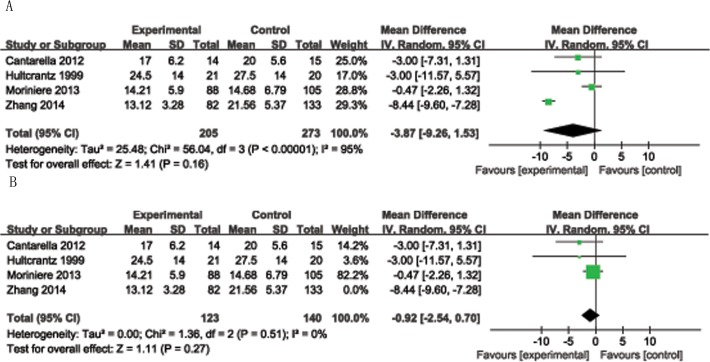
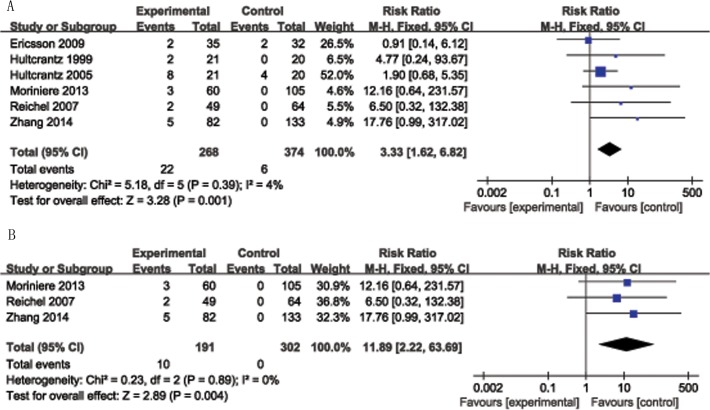
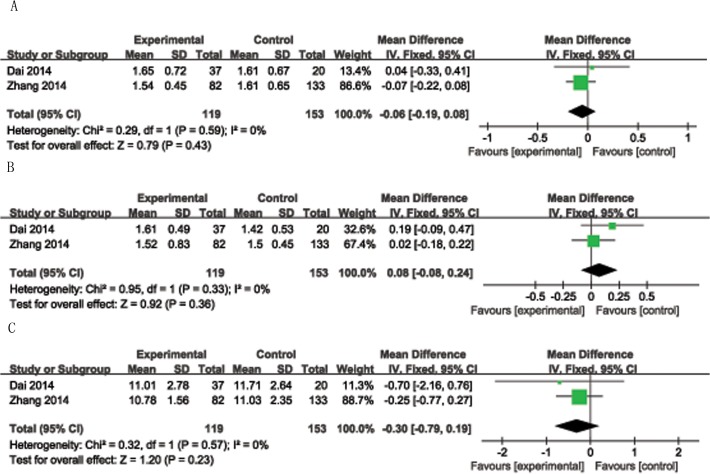
In total, 10 eligible studies with 1029 participants were included. Tonsillotomy was shown to be advantageous over tonsillectomy in short-term measures, such as a lower hemorrhage rate, shorter operation time, and faster pain relief. In long-term follow-up, there was no significant difference in resolution of upper-airway obstructive symptoms, the quality of life, or postoperative immune function between the tonsillotomy and tonsillectomy groups. The risk ratio of SDB recurrence was 3.33 (95% confidence interval = 1.62 6.82, P = 0.001), favoring tonsillectomy at an average follow-up of 31 months.
Tonsillotomy may be advantageous over tonsillectomy in the short term measures and there are no significant difference of resolving obstructive symptoms, quality of life and postoperative immune function. For the long run, the dominance of tonsillotomy may be less than tonsillectomy with regard to the rate of sleep-disordered breathing recurrence.
扁桃体切开术作为治疗儿童睡眠呼吸障碍的传统扁桃体切除术的替代方法已得到广泛认可。许多研究评估了这两种技术的效果,但扁桃体切开术与传统扁桃体切除术的疗效和并发症仍存在不确定性。本研究旨在从短期和长期结果方面调查扁桃体切开术与扁桃体切除术的疗效和并发症。
我们从包括MEDLINE、EMBASE和Cochrane图书馆在内的电子数据库中收集数据。应用以下纳入标准:英文文献、儿童以及直接比较扁桃体切开术和扁桃体切除术治疗睡眠呼吸障碍的前瞻性研究。然后进行亚组分析。
总共纳入了10项符合条件的研究,共1029名参与者。扁桃体切开术在短期指标方面显示出优于扁桃体切除术,如出血率更低、手术时间更短和疼痛缓解更快。在长期随访中,扁桃体切开术组和扁桃体切除术组在上气道阻塞症状的缓解、生活质量或术后免疫功能方面没有显著差异。睡眠呼吸障碍复发的风险比为3.33(95%置信区间 = 1.62至6.82,P = 0.001),在平均31个月的随访中,扁桃体切除术更具优势。
扁桃体切开术在短期指标方面可能优于扁桃体切除术,在缓解阻塞性症状、生活质量和术后免疫功能方面没有显著差异。从长远来看,在睡眠呼吸障碍复发率方面,扁桃体切开术的优势可能小于扁桃体切除术。