Nie Shengjun, Yue Haiyun, Zhou Jun, Xing Da
MOE Key Laboratory of Laser Life Science & Institute of Laser Life Science, College of Biophotonics, South China Normal University, Guangzhou, China.
PLoS One. 2015 Mar 26;10(3):e0119853. doi: 10.1371/journal.pone.0119853. eCollection 2015.
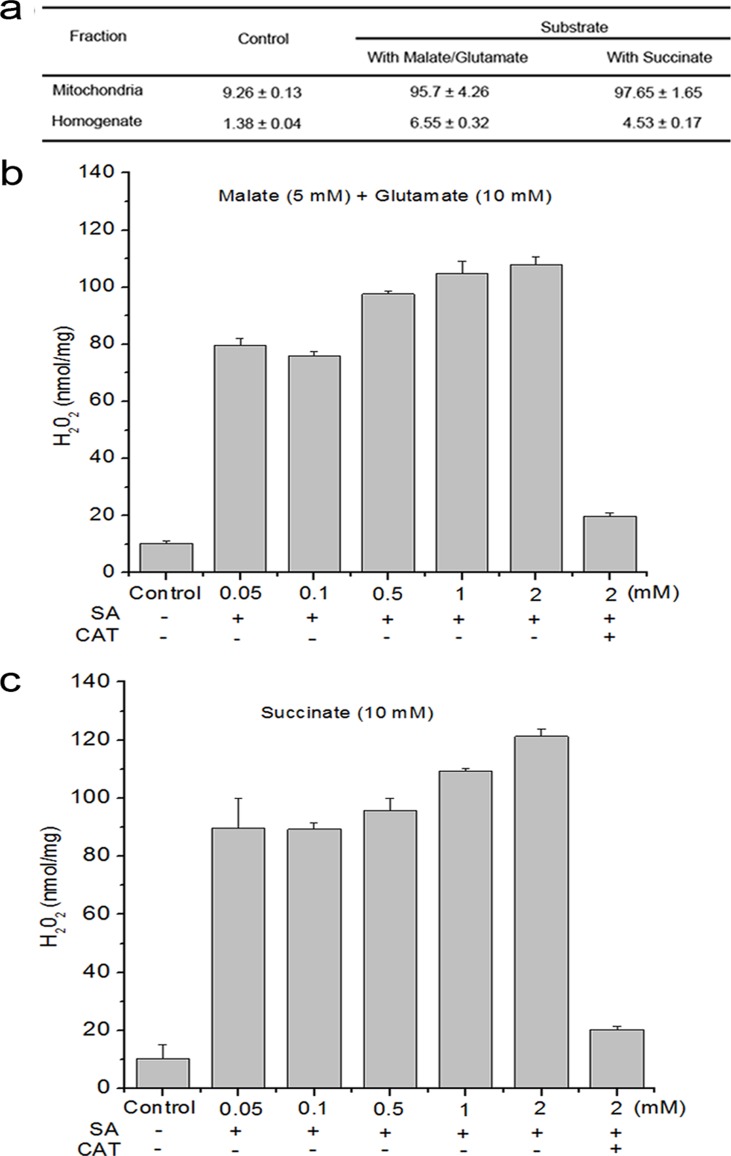
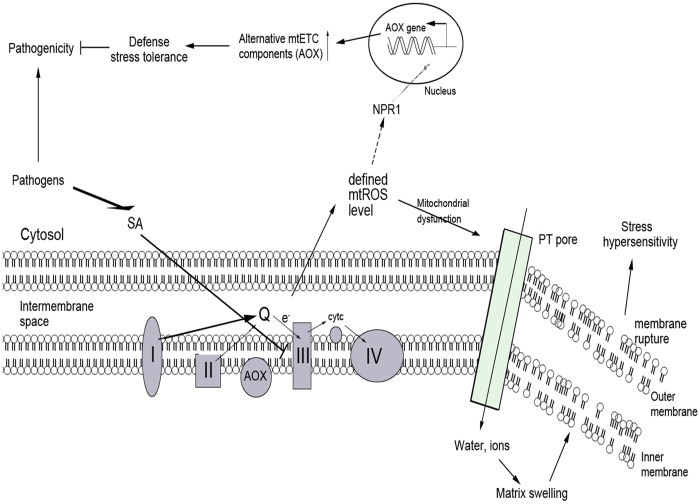
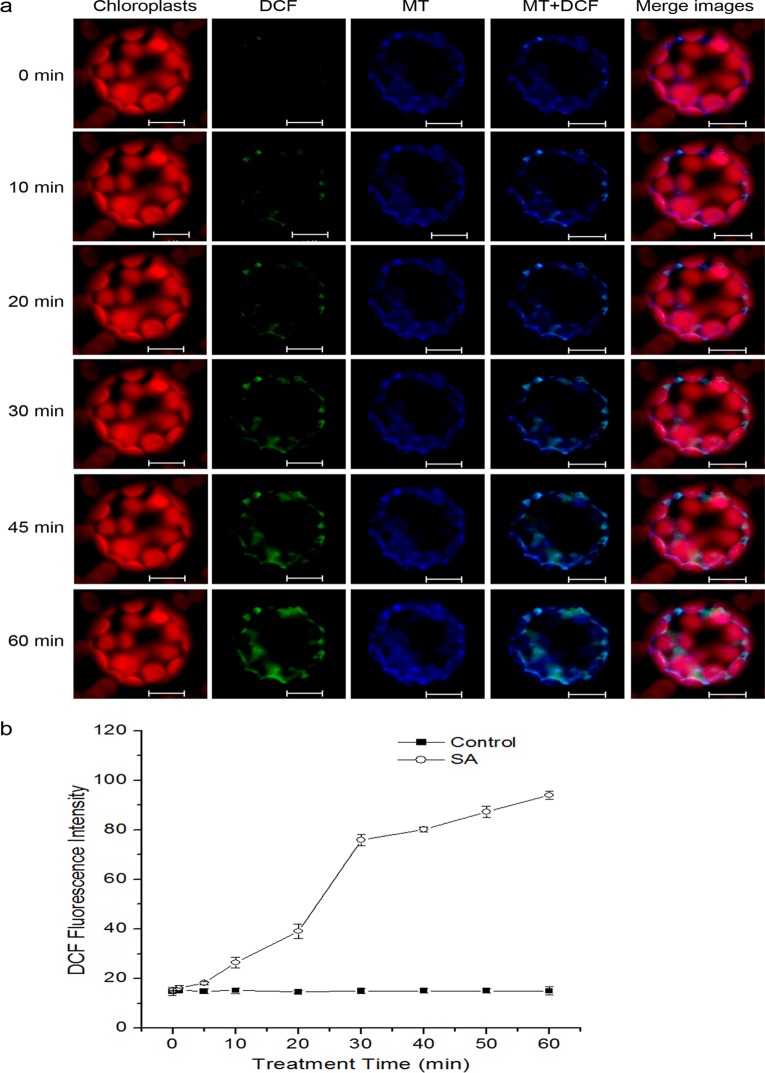
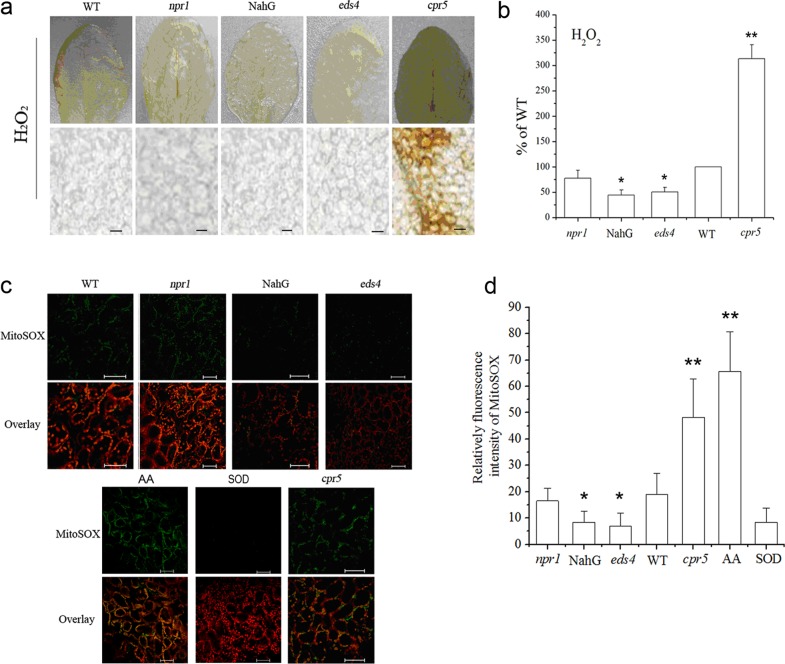
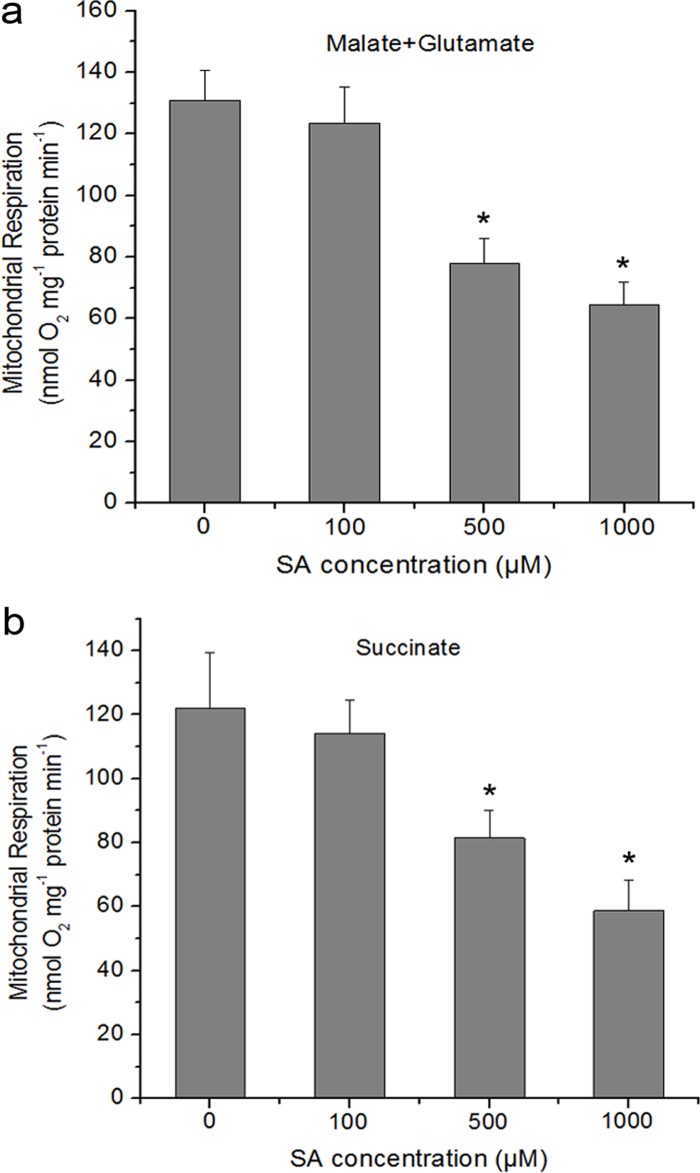
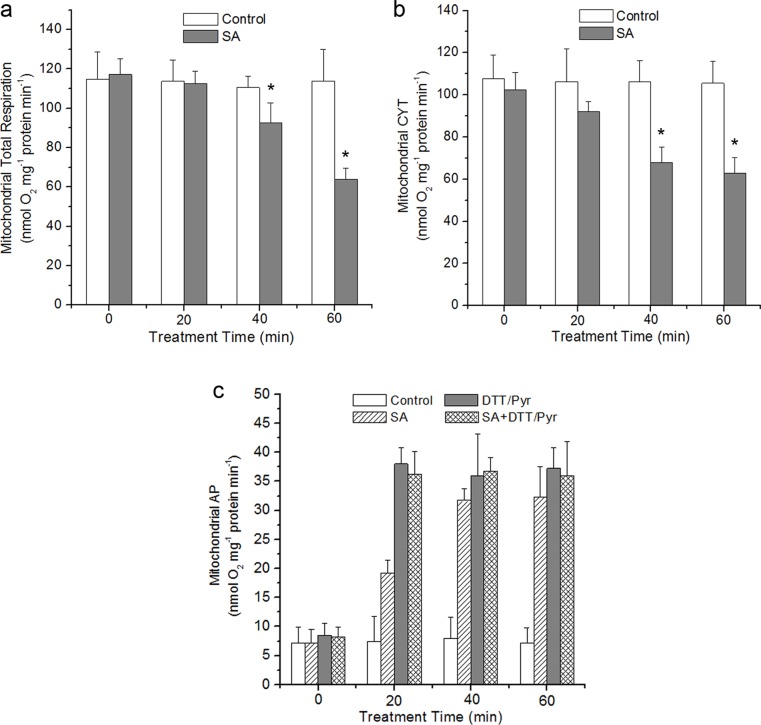
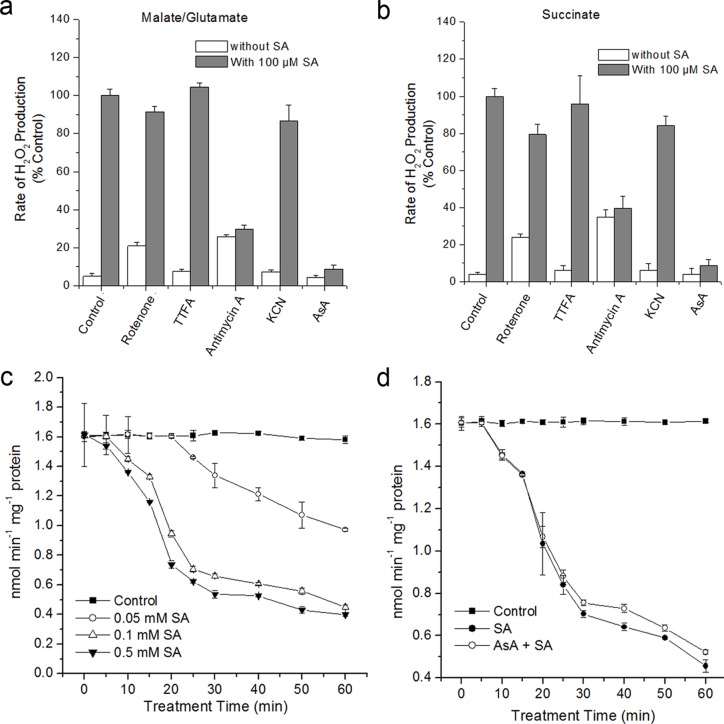
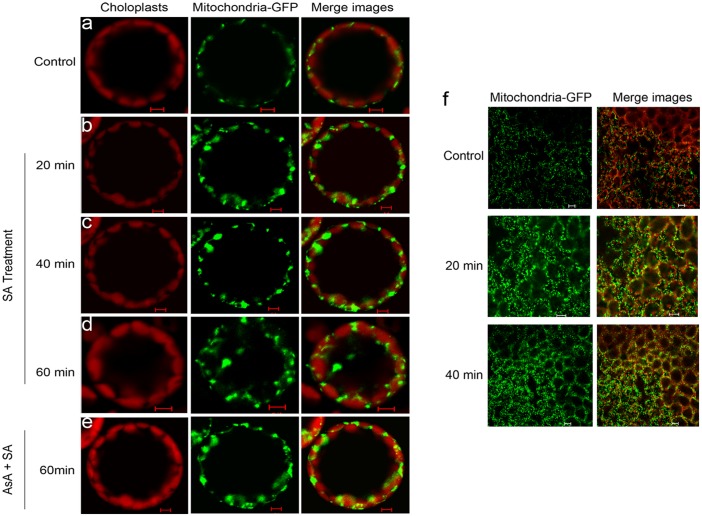
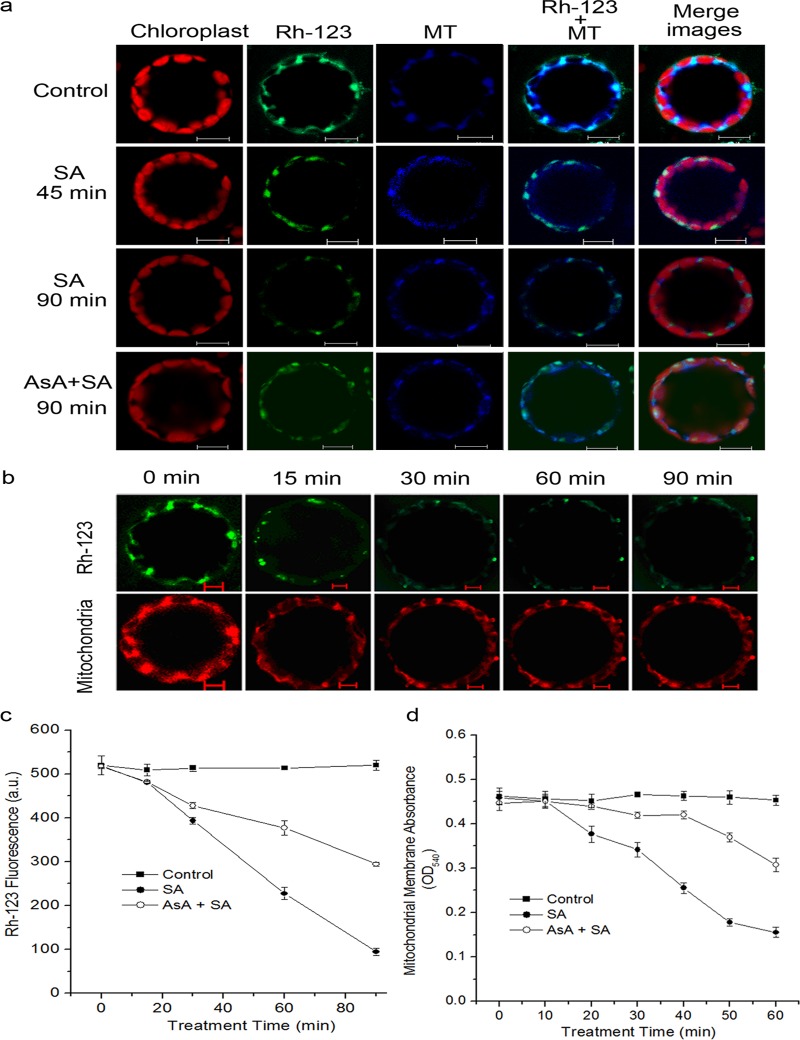
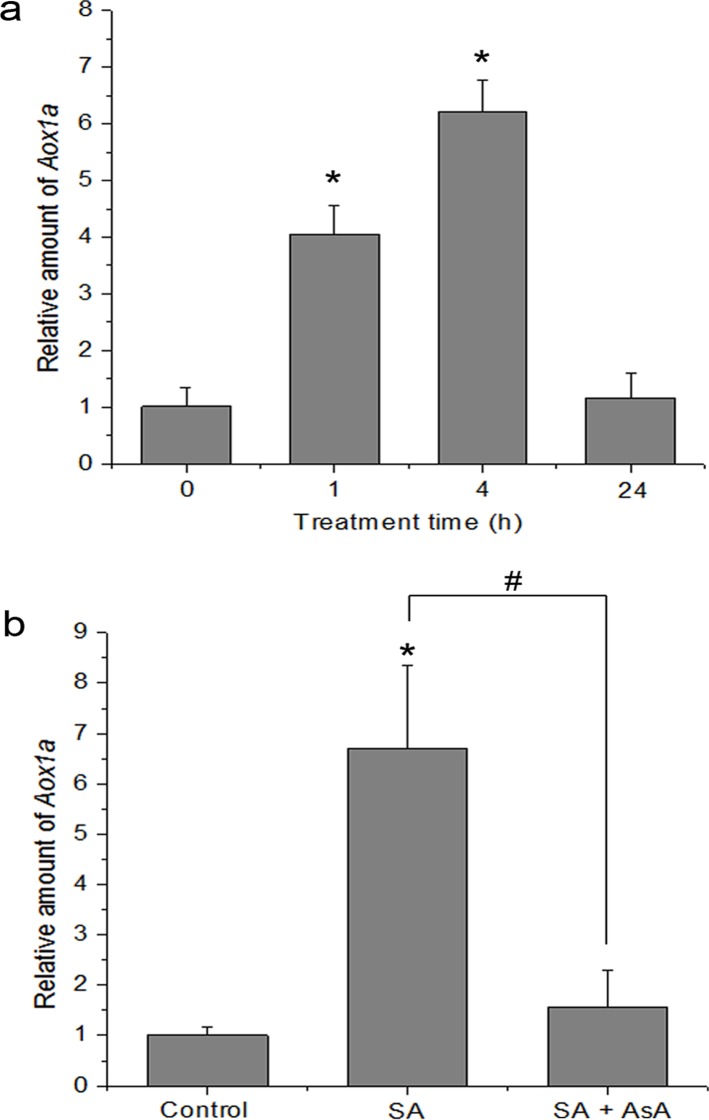
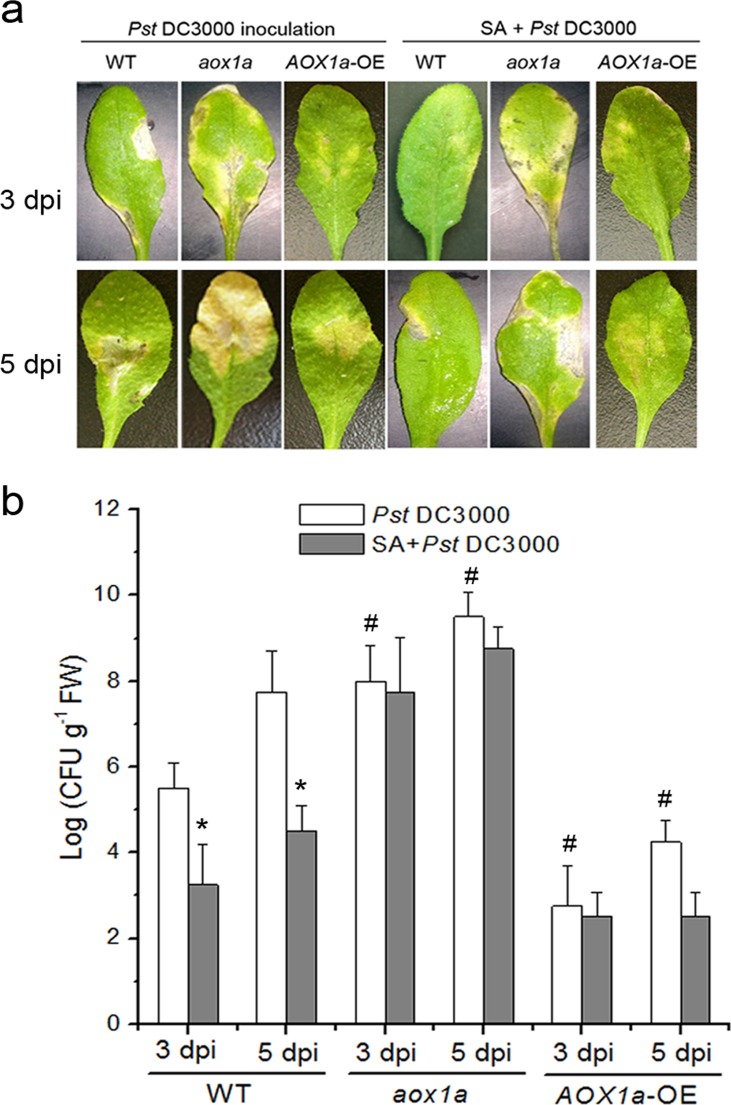
Plant mitochondria constitute a major source of ROS and are proposed to act as signaling organelles in the orchestration of defense response. At present, the signals generated and then integrated by mitochondria are still limited. Here, fluorescence techniques were used to monitor the events of mitochondria in vivo, as well as the induction of mitochondrial signaling by a natural defensive signal chemical salicylic acid (SA). An inhibition of respiration was observed in isolated mitochondria subjected to SA. The cytochrome reductase activity analysis in isolated mitochondria demonstrated that SA might act directly on the complex III in the respiration chain by inhibiting the activity. With this alteration, a quick burst of mitochondrial ROS (mtROS) was stimulated. SA-induced mtROS caused mitochondrial morphology transition in leaf tissue or protoplasts expressing mitochondria-GFP (43C5) and depolarization of membrane potential. However, the application of AsA, an H2O2 scavenger, significantly prevented both events, indicating that both of them are attributable to ROS accumulation. In parallel, SA-induced mtROS up-regulated AOX1a transcript abundance and this induction was correlated with the disease resistance, whereas AsA-pretreatment interdicted this effect. It is concluded that mitochondria play an essential role in the signaling pathway of SA-induced ROS generation, which possibly provided new insight into the SA-mediated biological processes, including plant defense response.
植物线粒体是活性氧的主要来源,被认为在防御反应的协调中作为信号细胞器发挥作用。目前,由线粒体产生并整合的信号仍然有限。在此,利用荧光技术监测体内线粒体的活动,以及天然防御信号化学物质水杨酸(SA)对线粒体信号的诱导。在经SA处理的分离线粒体中观察到呼吸抑制。分离线粒体中的细胞色素还原酶活性分析表明,SA可能通过抑制活性直接作用于呼吸链中的复合物III。伴随这种变化,刺激线粒体活性氧(mtROS)快速爆发。SA诱导的mtROS导致表达线粒体绿色荧光蛋白(43C5)的叶片组织或原生质体中线粒体形态转变和膜电位去极化。然而,H2O2清除剂抗坏血酸(AsA)的应用显著阻止了这两个事件,表明它们都归因于ROS积累。同时,SA诱导的mtROS上调了AOX1a转录本丰度,并且这种诱导与抗病性相关,而AsA预处理则阻断了这种效应。得出的结论是,线粒体在SA诱导的ROS产生信号通路中起重要作用,这可能为SA介导的生物学过程,包括植物防御反应,提供新的见解。