Lee Dai-Jen, Du Fei, Chen Shih-Wei, Nakasaki Manando, Rana Isha, Shih Vincent F S, Hoffmann Alexander, Jamora Colin
Section of Cell and Developmental Biology, Division of Biological Sciences, University of California, San Diego, La Jolla, California, USA.
IFOM-inSTEM Joint Research Laboratory, Institute for Stem Cell Biology and Regenerative Medicine, Centre for Inflammation and Tissue Homeostasis, Bangalore, India.
J Invest Dermatol. 2015 Aug;135(8):2012-2020. doi: 10.1038/jid.2015.119. Epub 2015 Mar 27.
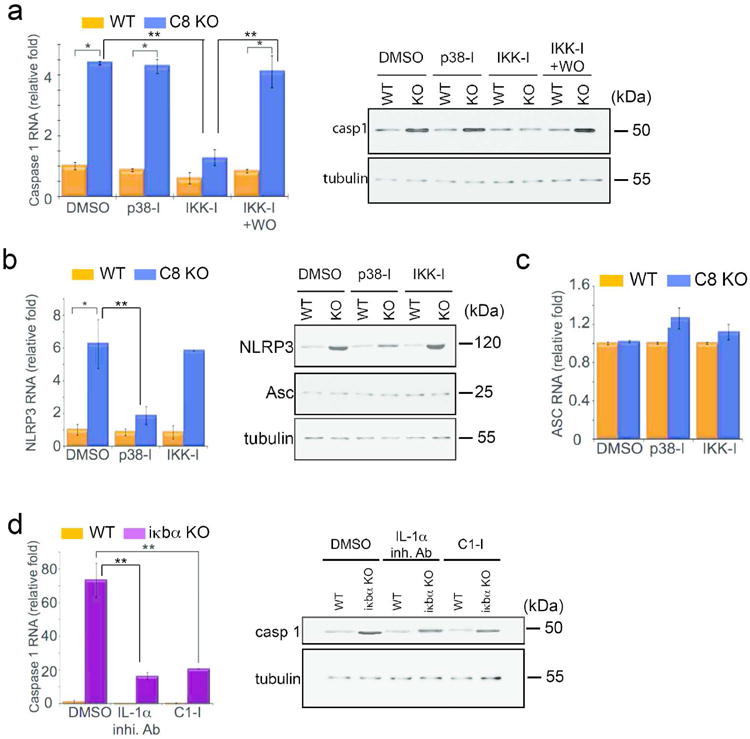
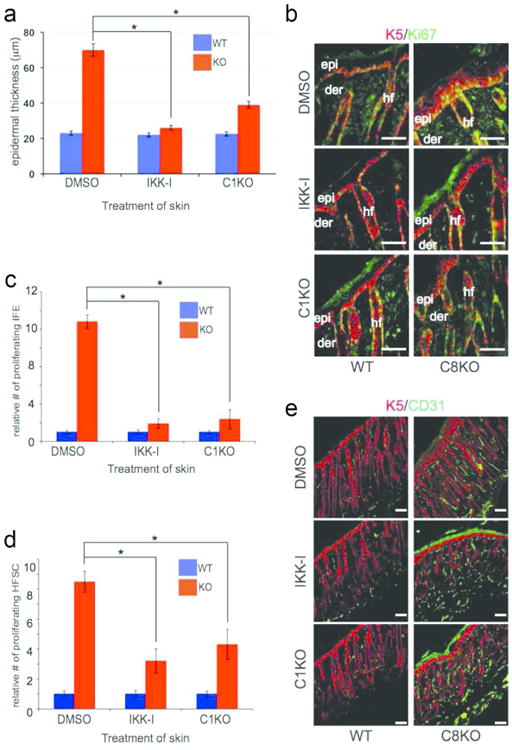
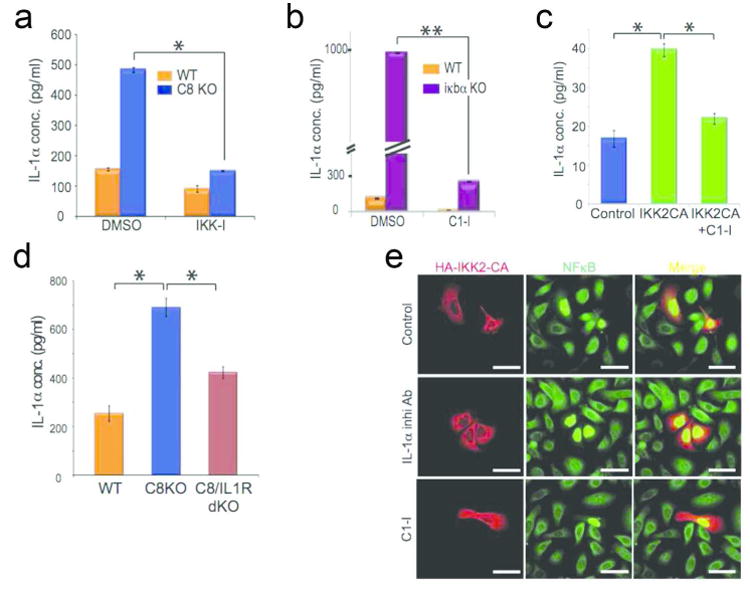
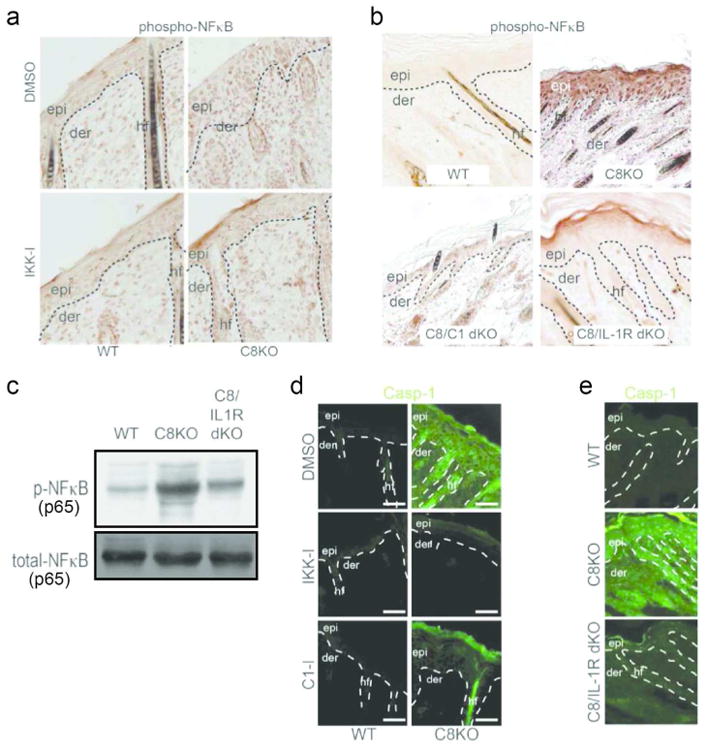
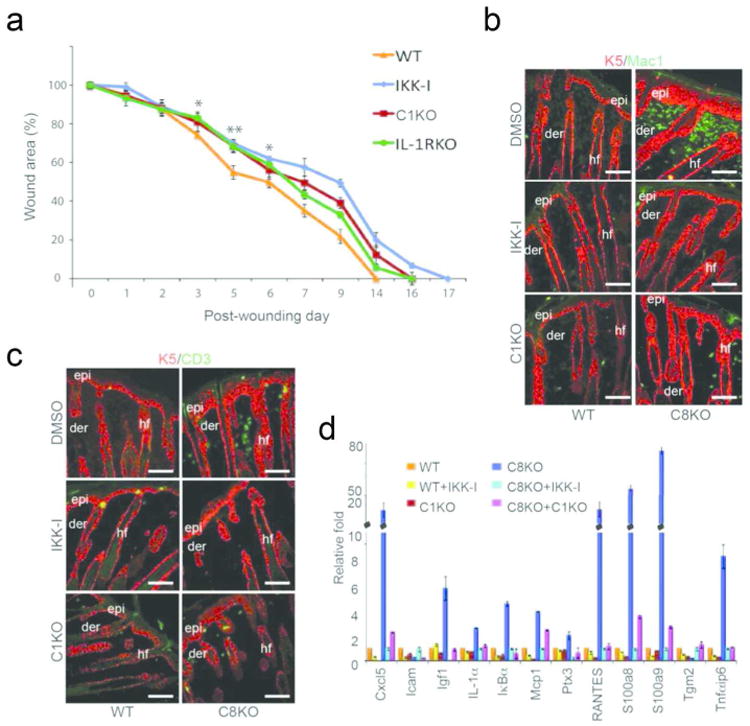
The inflammasome is a complex of proteins that has a critical role in mounting an inflammatory response in reply to a harmful stimulus that compromises the homeostatic state of the tissue. The NLRP3 inflammasome, which is found in a wound-like environment, is comprised of three components: the NLRP3, the adaptor protein ASC and caspase-1. Interestingly, although ASC levels do not fluctuate, caspase-1 levels are elevated in both physiological and pathological conditions. Despite the observation that merely raising caspase-1 levels is sufficient to induce inflammation, the crucial question regarding the mechanism governing its expression is unexplored. We found that, in an inflammatory microenvironment, caspase-1 is regulated by NF-κB. Consistent with this association, the inhibition of caspase-1 activity parallels the effects on wound healing caused by the abrogation of NF-κB activation. Surprisingly, not only does inhibition of the NF-κB/caspase-1 axis disrupt the inflammatory phase of the wound-healing program, but it also impairs the stimulation of cutaneous epithelial stem cells of the proliferative phase. These data provide a mechanistic basis for the complex interplay between different phases of the wound-healing response in which the downstream signaling activity of immune cells can kindle the amplification of local stem cells to advance tissue repair.
炎性小体是一种蛋白质复合物,在应对损害组织稳态的有害刺激时引发炎症反应中起关键作用。在类似伤口的环境中发现的NLRP3炎性小体由三个成分组成:NLRP3、接头蛋白ASC和半胱天冬酶-1。有趣的是,尽管ASC水平没有波动,但半胱天冬酶-1水平在生理和病理条件下均升高。尽管观察到仅仅提高半胱天冬酶-1水平就足以诱导炎症,但关于其表达调控机制的关键问题尚未得到探索。我们发现,在炎性微环境中,半胱天冬酶-1受NF-κB调控。与这种关联一致,半胱天冬酶-1活性的抑制与NF-κB激活消除对伤口愈合的影响相似。令人惊讶的是,不仅NF-κB/半胱天冬酶-1轴的抑制破坏了伤口愈合程序的炎症阶段,而且还损害了增殖期皮肤上皮干细胞的刺激。这些数据为伤口愈合反应不同阶段之间的复杂相互作用提供了机制基础,其中免疫细胞的下游信号传导活性可以引发局部干细胞的扩增以促进组织修复。