Smith Gaynor A, Rocha Emily M, Rooney Thomas, Barneoud Pascal, McLean Jesse R, Beagan Jonathan, Osborn Teresia, Coimbra Madeleine, Luo Yongyi, Hallett Penelope J, Isacson Ole
Neuroregeneration Research Institute, Harvard Medical School/McLean Hospital, Belmont, Massachusetts, United States of America.
Sanofi, Neurodegeneration and Pain Unit, Chilly-Mazarin, France.
PLoS One. 2015 Mar 27;10(3):e0121072. doi: 10.1371/journal.pone.0121072. eCollection 2015.
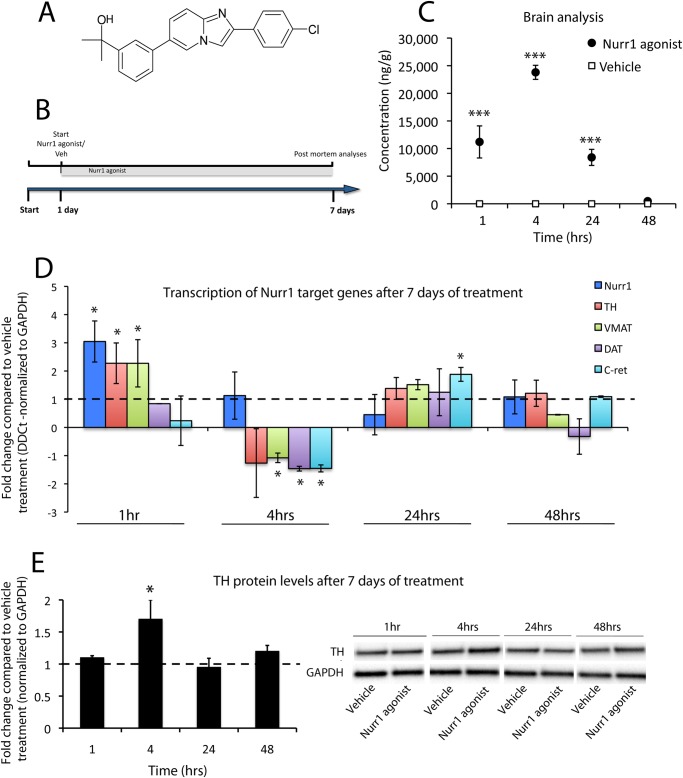
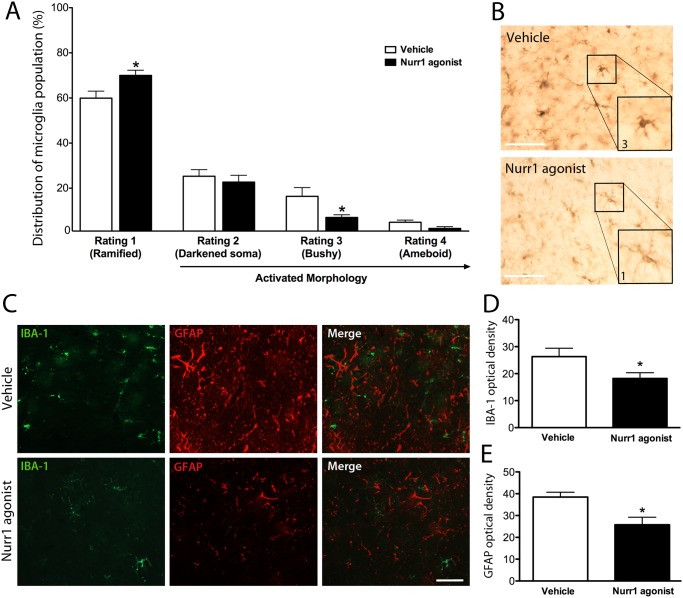
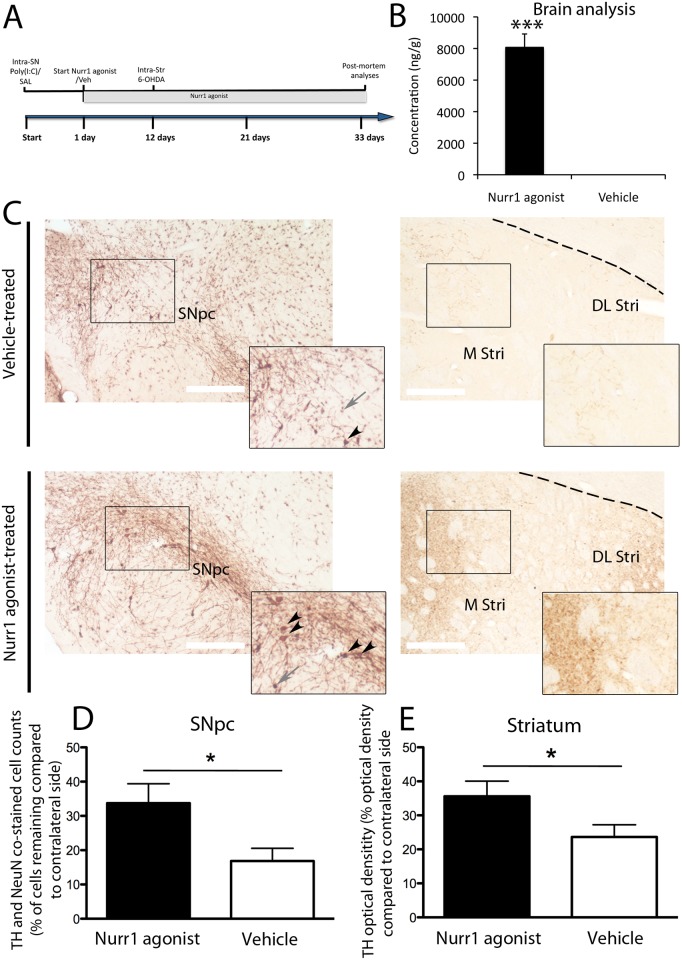
Dopaminergic neurons in the substantia nigra pars compacta (SNpc) are characterized by the expression of genes required for dopamine synthesis, handling and reuptake and the expression of these genes is largely controlled by nuclear receptor related 1 (Nurr1). Nurr1 is also expressed in astrocytes and microglia where it functions to mitigate the release of proinflammatory cytokines and neurotoxic factors. Given that Parkinson's disease (PD) pathogenesis has been linked to both loss of Nurr1 expression in the SNpc and inflammation, increasing levels of Nurr1 maybe a promising therapeutic strategy. In this study a novel Nurr1 agonist, SA00025, was tested for both its efficiency to induce the transcription of dopaminergic target genes in vivo and prevent dopaminergic neuron degeneration in an inflammation exacerbated 6-OHDA-lesion model of PD. SA00025 (30mg/kg p.o.) entered the brain and modulated the expression of the dopaminergic phenotype genes TH, VMAT, DAT, AADC and the GDNF receptor gene c-Ret in the SN of naive rats. Daily gavage treatment with SA00025 (30mg/kg) for 32 days also induced partial neuroprotection of dopaminergic neurons and fibers in rats administered a priming injection of polyinosinic-polycytidylic acid (poly(I:C) and subsequent injection of 6-OHDA. The neuroprotective effects of SA00025 in this dopamine neuron degeneration model were associated with changes in microglial morphology indicative of a resting state and a decrease in microglial specific IBA-1 staining intensity in the SNpc. Astrocyte specific GFAP staining intensity and IL-6 levels were also reduced. We conclude that Nurr1 agonist treatment causes neuroprotective and anti-inflammatory effects in an inflammation exacerbated 6-OHDA lesion model of PD.
黑质致密部(SNpc)中的多巴胺能神经元的特征在于表达多巴胺合成、处理和再摄取所需的基因,并且这些基因的表达在很大程度上受核受体相关蛋白1(Nurr1)控制。Nurr1也在星形胶质细胞和小胶质细胞中表达,其作用是减轻促炎细胞因子和神经毒性因子的释放。鉴于帕金森病(PD)的发病机制与SNpc中Nurr1表达缺失以及炎症均有关联,提高Nurr1水平可能是一种有前景的治疗策略。在本研究中,一种新型Nurr1激动剂SA00025,在体内诱导多巴胺能靶基因转录的效率以及在炎症加剧的6-羟基多巴胺(6-OHDA)损伤PD模型中预防多巴胺能神经元变性的能力均得到了测试。SA00025(30mg/kg口服)进入大脑并调节了未处理大鼠中脑黑质中多巴胺能表型基因酪氨酸羟化酶(TH)、囊泡单胺转运体(VMAT)、多巴胺转运体(DAT)、芳香酸脱羧酶(AADC)以及胶质细胞源性神经营养因子(GDNF)受体基因c-Ret的表达。用SA00025(30mg/kg)每日灌胃处理32天,对预先注射聚肌苷酸-聚胞苷酸(poly(I:C))随后注射6-OHDA的大鼠的多巴胺能神经元和纤维也诱导了部分神经保护作用。SA00025在该多巴胺神经元变性模型中的神经保护作用与小胶质细胞形态变化有关,这些变化表明处于静息状态,并且黑质致密部中小胶质细胞特异性离子钙接头蛋白1(IBA-1)染色强度降低。星形胶质细胞特异性胶质纤维酸性蛋白(GFAP)染色强度和白细胞介素-6(IL-6)水平也降低。我们得出结论,在炎症加剧的6-OHDA损伤PD模型中,Nurr1激动剂治疗具有神经保护和抗炎作用。