Senior Alistair M, Charleston Michael A, Lihoreau Mathieu, Buhl Camille, Raubenheimer David, Simpson Stephen J
Charles Perkins Centre, The University of Sydney, Sydney, New South Wales, Australia; School of Biological Sciences, The University of Sydney, Sydney, New South Wales, Australia.
School of Information Technologies, The University of Sydney, Sydney, New South Wales, Australia.
PLoS Comput Biol. 2015 Mar 27;11(3):e1004111. doi: 10.1371/journal.pcbi.1004111. eCollection 2015 Mar.
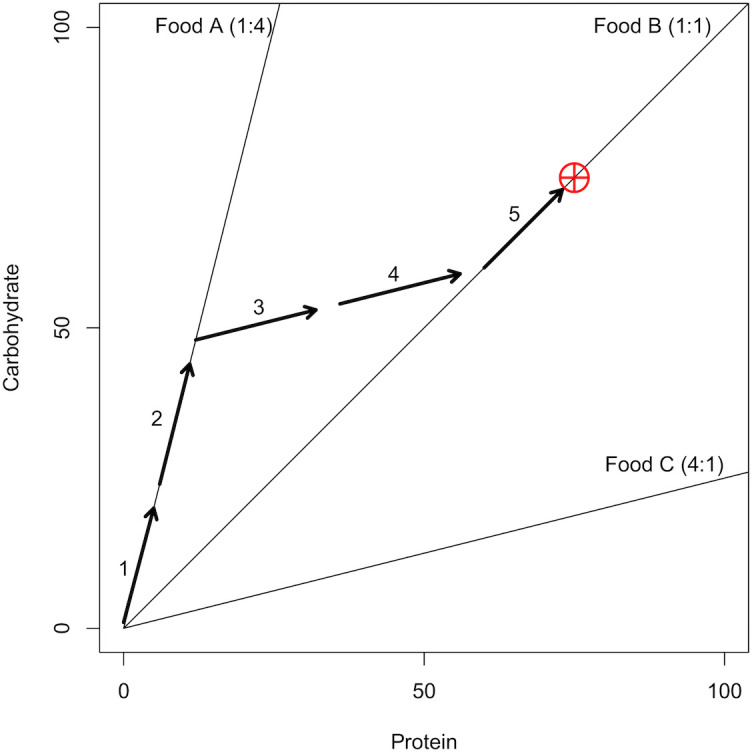
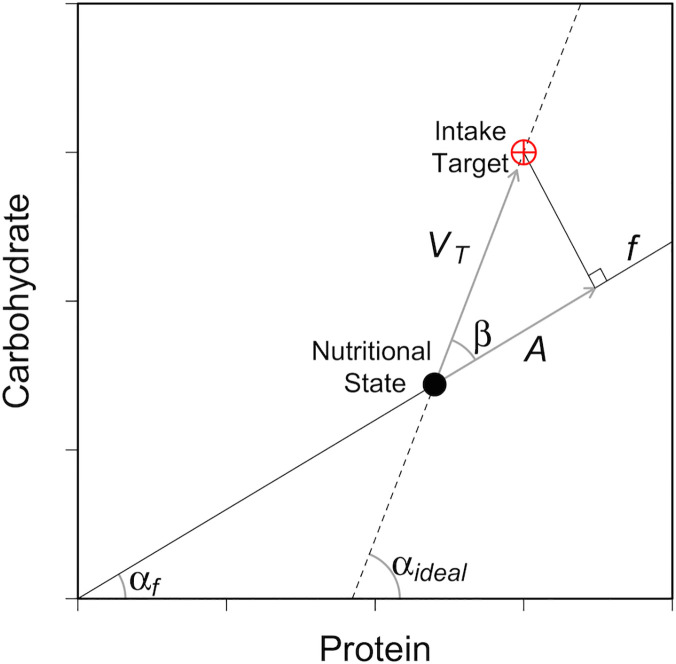
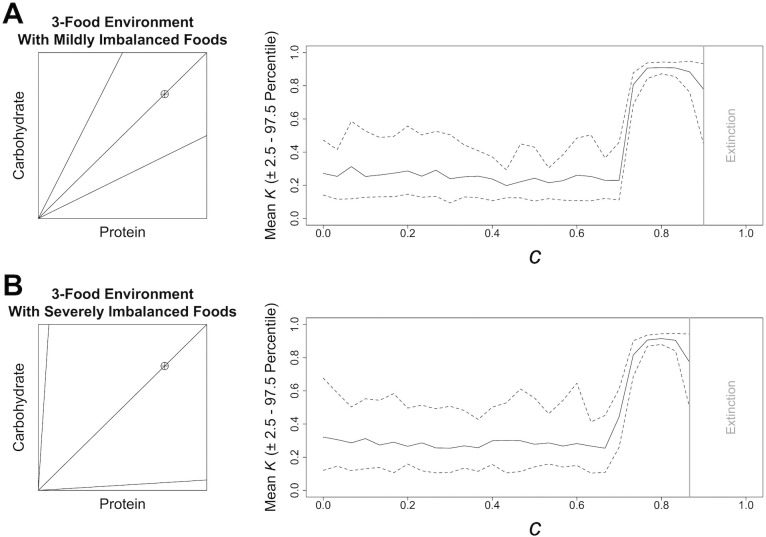
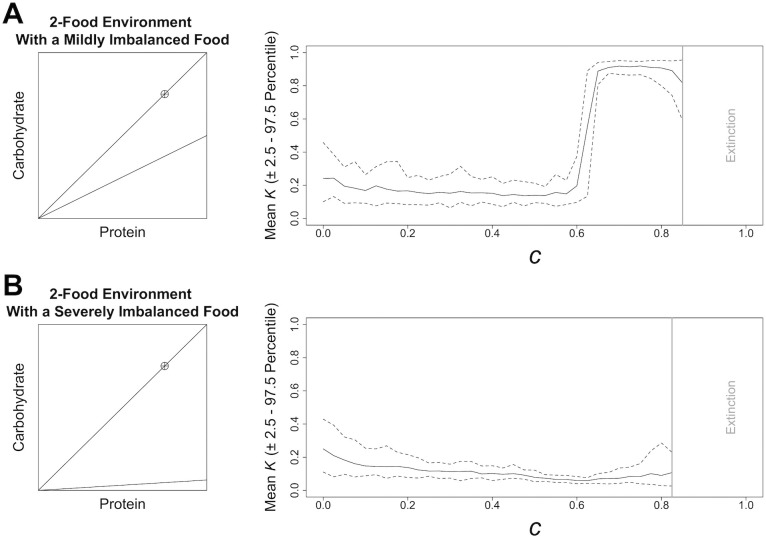
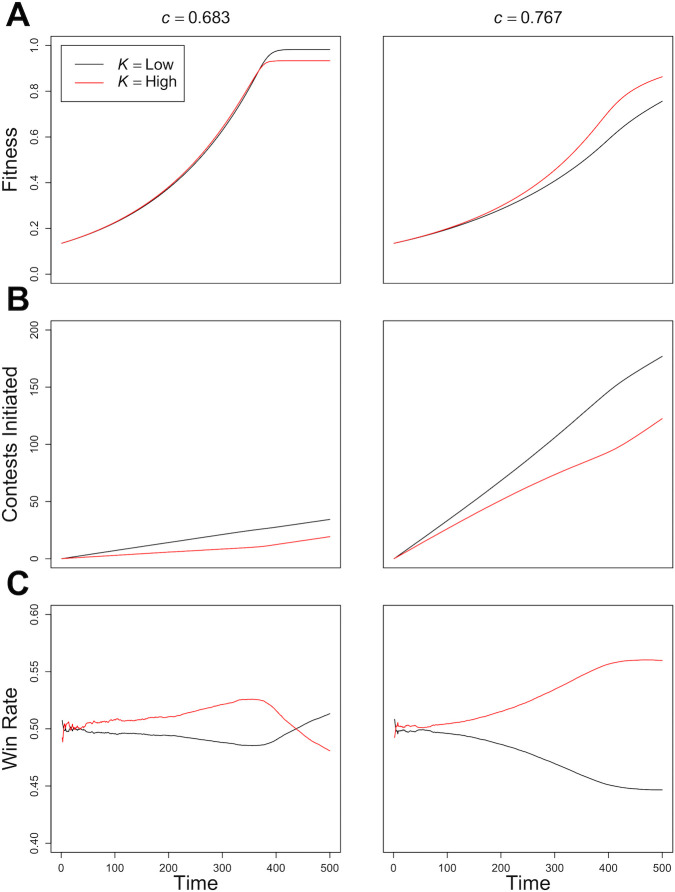
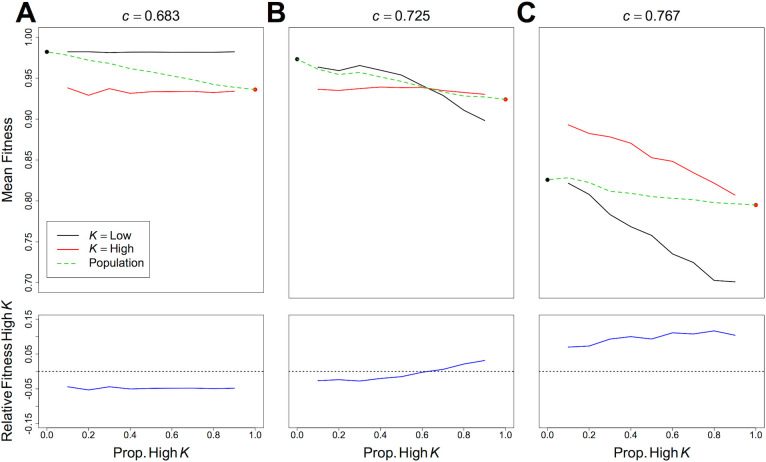
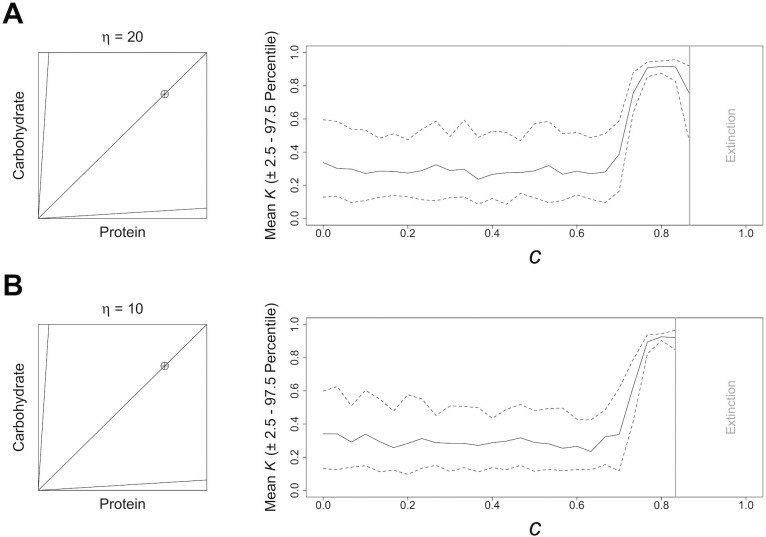
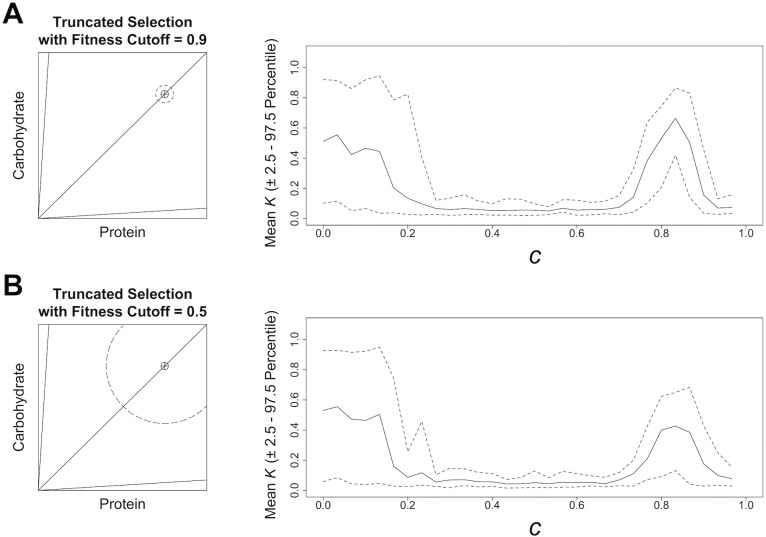
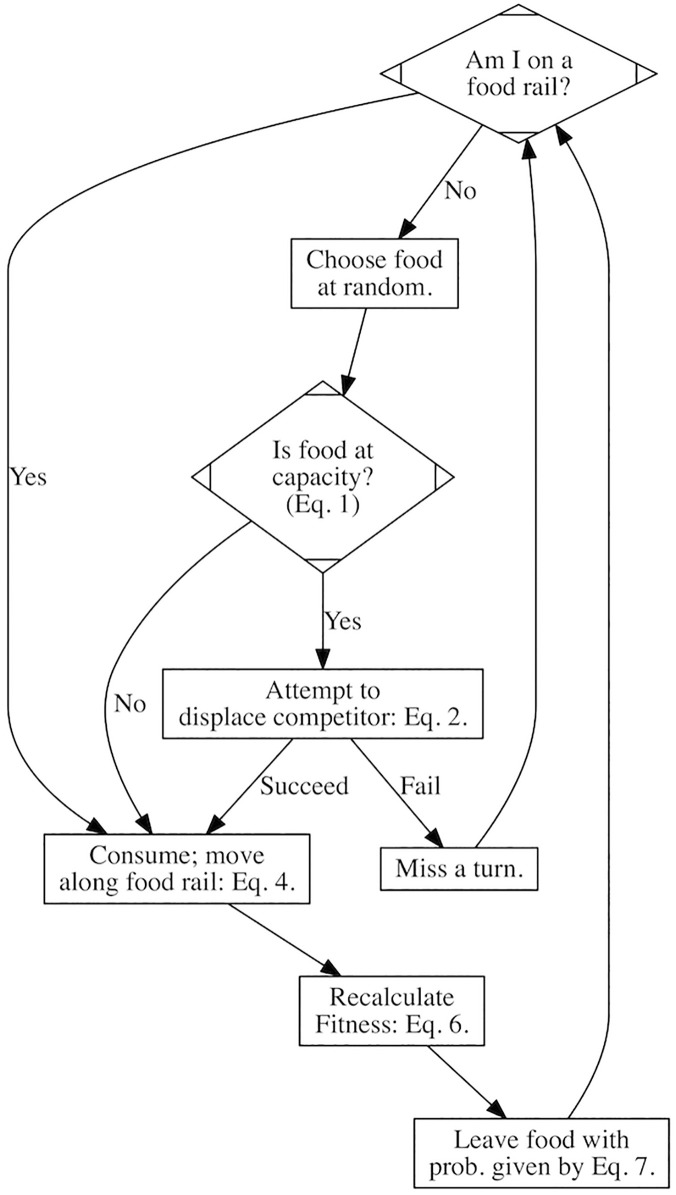
Access to nutrients is a key factor governing development, reproduction and ultimately fitness. Within social groups, contest-competition can fundamentally affect nutrient access, potentially leading to reproductive asymmetry among individuals. Previously, agent-based models have been combined with the Geometric Framework of nutrition to provide insight into how nutrition and social interactions affect one another. Here, we expand this modelling approach by incorporating evolutionary algorithms to explore how contest-competition over nutrient acquisition might affect the evolution of animal nutritional strategies. Specifically, we model tolerance of nutrient excesses and deficits when ingesting nutritionally imbalanced foods, which we term 'nutritional latitude'; a higher degree of nutritional latitude constitutes a higher tolerance of nutritional excess and deficit. Our results indicate that a transition between two alternative strategies occurs at moderate to high levels of competition. When competition is low, individuals display a low level of nutritional latitude and regularly switch foods in search of an optimum. When food is scarce and contest-competition is intense, high nutritional latitude appears optimal, and individuals continue to consume an imbalanced food for longer periods before attempting to switch to an alternative. However, the relative balance of nutrients within available foods also strongly influences at what levels of competition, if any, transitions between these two strategies occur. Our models imply that competition combined with reproductive skew in social groups can play a role in the evolution of diet breadth. We discuss how the integration of agent-based, nutritional and evolutionary modelling may be applied in future studies to further understand the evolution of nutritional strategies across social and ecological contexts.
获取营养是影响发育、繁殖以及最终适应性的关键因素。在社会群体中,争夺竞争会从根本上影响营养获取,进而可能导致个体间的繁殖不对称。此前,基于主体的模型已与营养几何框架相结合,以深入了解营养与社会互动如何相互影响。在此,我们通过纳入进化算法来扩展这种建模方法,以探究争夺营养获取的竞争如何影响动物营养策略的演变。具体而言,我们模拟了摄入营养不均衡食物时对营养过剩和不足的耐受性,我们将其称为“营养跨度”;营养跨度越大,对营养过剩和不足的耐受性越高。我们的结果表明,在中等至高竞争水平下会出现两种替代策略之间的转变。当竞争较低时,个体表现出较低的营养跨度,并经常更换食物以寻求最佳选择。当食物稀缺且争夺竞争激烈时,高营养跨度似乎是最优的,个体在尝试更换为替代食物之前会更长时间地持续食用不均衡食物。然而,可获取食物中营养成分的相对平衡也强烈影响这两种策略在何种竞争水平(如果有的话)下发生转变。我们的模型表明,竞争与社会群体中的繁殖偏斜相结合,可能在饮食广度的演变中发挥作用。我们讨论了基于主体、营养和进化建模的整合如何应用于未来研究,以进一步理解社会和生态背景下营养策略的演变。