Skorczyk-Werner Anna, Pawłowski Przemysław, Michalczuk Marta, Warowicka Alicja, Wawrocka Anna, Wicher Katarzyna, Bakunowicz-Łazarczyk Alina, Krawczyński Maciej R
Department of Medical Genetics, Poznan University of Medical Sciences, 8, Rokietnicka Street, 60-806, Poznań, Poland,
J Appl Genet. 2015 Aug;56(3):317-27. doi: 10.1007/s13353-015-0281-x. Epub 2015 Mar 28.
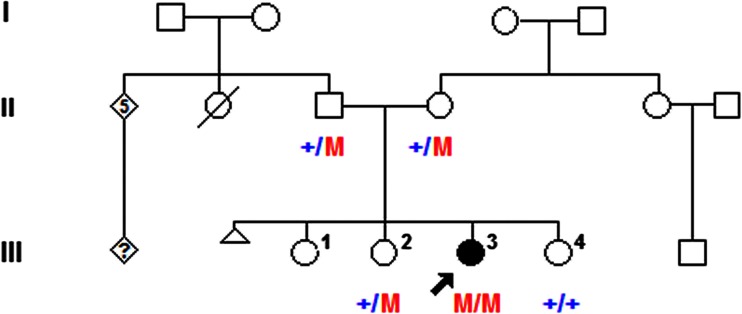
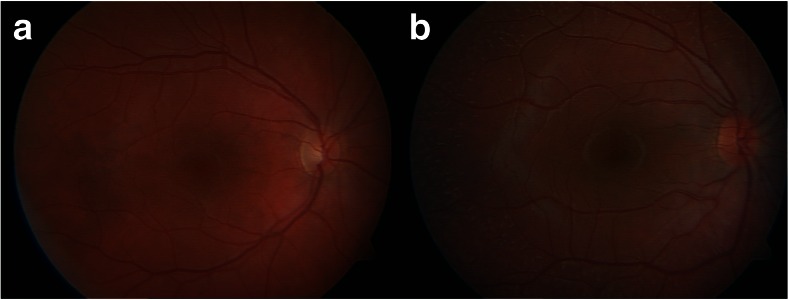
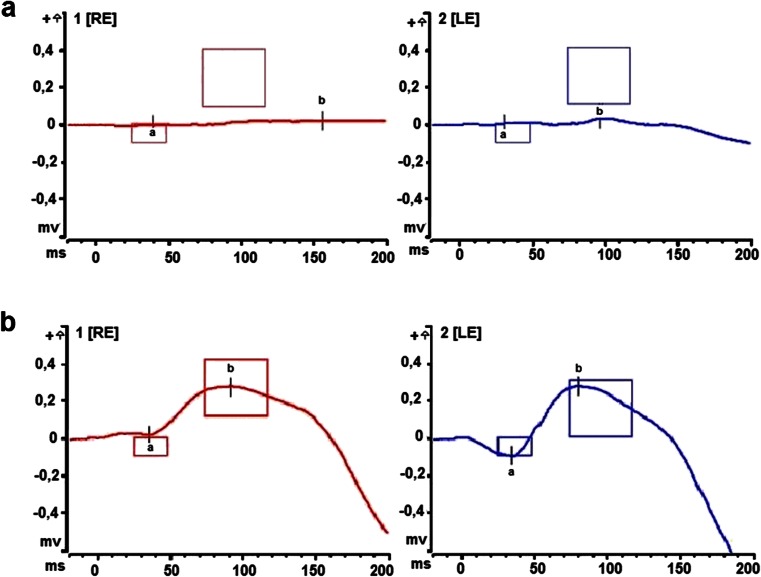
Fundus albipunctatus (FA) is a rare, congenital form of night blindness with rod system impairment, characterised by the presence of numerous small, white-yellow retinal lesions. FA belongs to a heterogenous group of so-called flecked retina syndromes. This disorder shows autosomal recessive inheritance and is caused mostly by mutations in the RDH5 gene. This gene encodes the enzyme that is a part of the visual cycle, the 11-cis retinol dehydrogenase. This study is a brief review of the literature on FA and a report of the first molecular evidence for RDH5 gene mutation in a Polish patient with this rare disorder. We present a novel pathogenic RDH5 gene mutation in a 16-year-old female patient with symptoms of night blindness. The patient underwent ophthalmological examinations, including colour vision testing, fundus photography, automated visual field testing, full-field electroretinography (ERG) and spectral optical coherent tomography (SOCT). The patient showed typical FA ERG records, the visual field was constricted and fundus examination revealed numerous characteristic, small, white-yellowish retinal lesions. DNA sequencing of the RDH5 gene coding sequence (exons 2-5) enabled the detection of the homozygous missense substitution c.524A > T (p.Tyr175Phe) in exon 3. This is the first report of RDH5 gene mutation that affects the invariant tyrosine, one of the most conserved amino acid residues in short-chain alcohol dehydrogenases/reductases (SDRs), crucial for these enzymes' activity. The location of this substitution, together with its predicted influence on the protein function, indicate that the p.Tyr175Phe mutation is the cause of FA in our patient.
白点状眼底(FA)是一种罕见的先天性夜盲症,伴有视杆系统损害,其特征是存在大量小的黄白色视网膜病变。FA属于一组异质性的所谓斑点状视网膜综合征。这种疾病呈常染色体隐性遗传,主要由RDH5基因突变引起。该基因编码一种作为视觉循环一部分的酶,即11-顺式视黄醇脱氢酶。本研究是对FA相关文献的简要综述,并报告了一名患有这种罕见疾病的波兰患者中RDH5基因突变的首个分子证据。我们在一名有夜盲症状的16岁女性患者中发现了一种新的致病性RDH5基因突变。该患者接受了眼科检查,包括色觉测试、眼底照相、自动视野测试、全视野视网膜电图(ERG)和光谱光学相干断层扫描(SOCT)。患者显示出典型的FA ERG记录,视野缩窄,眼底检查发现大量特征性的小的黄白色视网膜病变。对RDH5基因编码序列(外显子2 - 5)进行DNA测序,在第3外显子中检测到纯合错义替换c.524A>T(p.Tyr175Phe)。这是关于RDH5基因突变影响不变酪氨酸的首次报道,不变酪氨酸是短链醇脱氢酶/还原酶(SDR)中最保守的氨基酸残基之一,对这些酶的活性至关重要。该替换的位置及其对蛋白质功能的预测影响表明,p.Tyr175Phe突变是我们患者患FA的原因。