Stuby Fabian M, Döbele Stefan, Schäffer Susanne-Dorothea, Mueller Simon, Ateschrang Atesch, Baumann Matthias, Zieker Derek
BG Trauma Center, University of Tuebingen, Schnarrenbergstrasse 95, D-72076, Tuebingen, Germany.
Muon-Stat Statistical Services, Klugestrasse 28, D-70197, Stuttgart, Germany.
PLoS One. 2015 Mar 30;10(3):e0117720. doi: 10.1371/journal.pone.0117720. eCollection 2015.
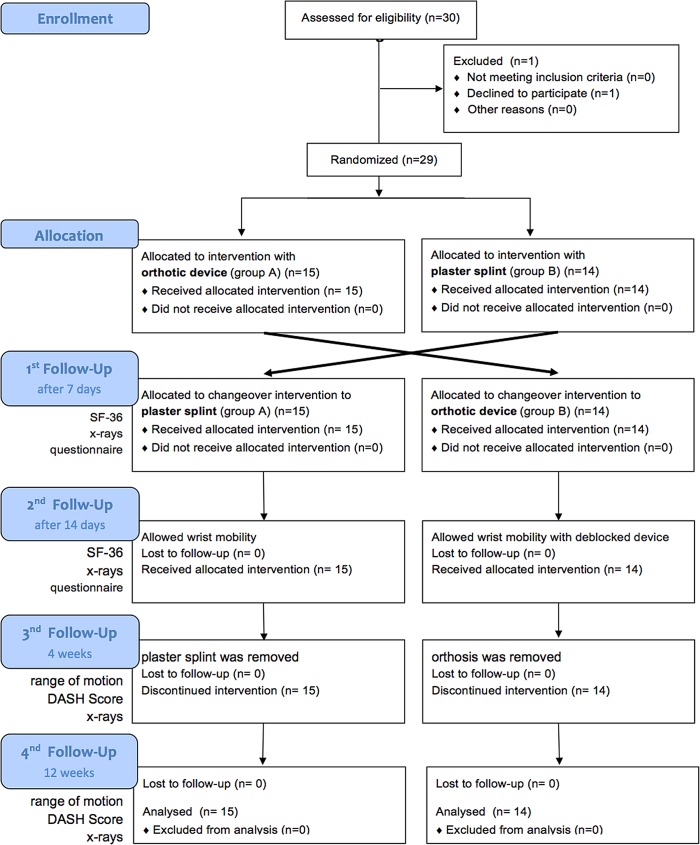
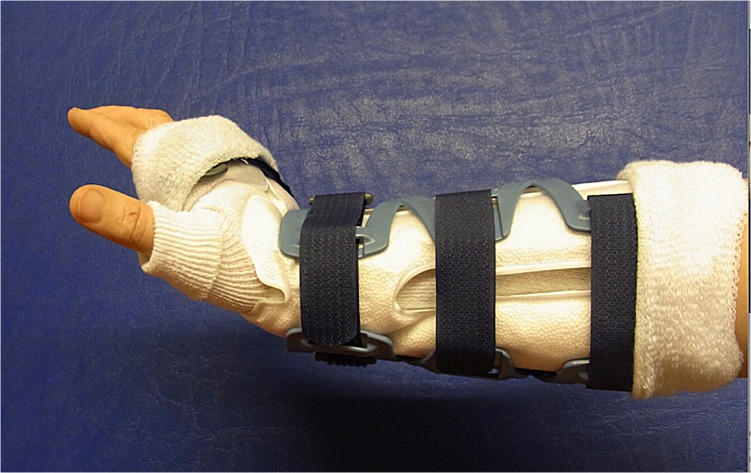
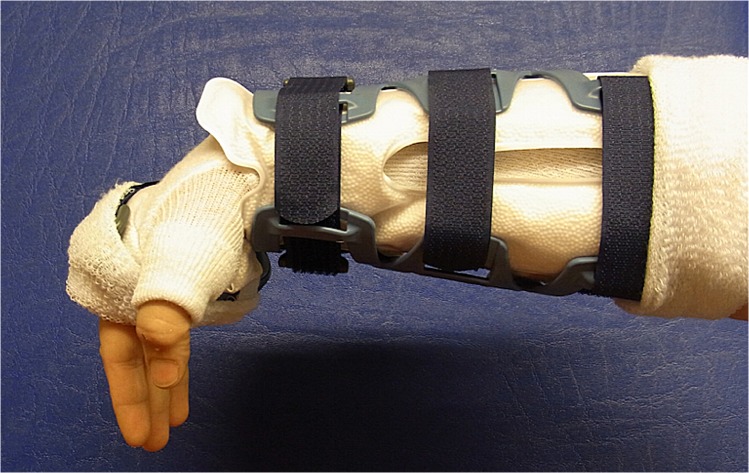
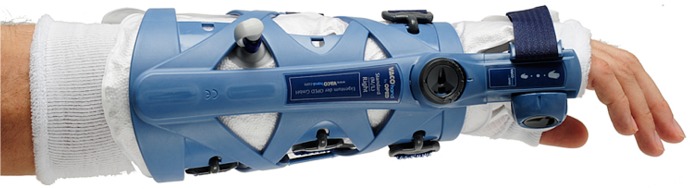
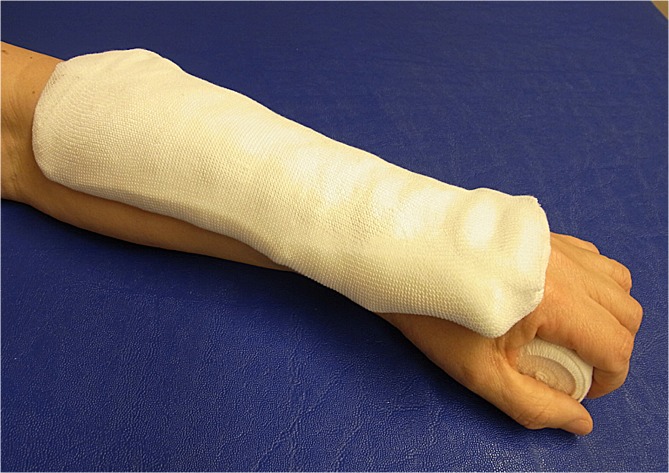
This study was conducted according to GCP criteria as a prospective randomized cross-over study. The primary goal of the study was to determine clinical findings and patient satisfaction with postoperative treatment. 29 patients with a distal radius fracture that was surgically stabilized from volar and who met the inclusion criteria were enrolled over a 12-month period. Each patient randomly received either a dorsal plaster splint or a vacuum-fit flexible but blocked orthosis applied postoperatively in the operating theatre to achieve postoperative immobilization. After one week all patients were crossed over to the complementary device maintaining the immobilization until end of week 2. After week 2 both groups were allowed to exercise wrist mobility with a physiotherapist, in the orthosis group the device was deblocked, thus allowing limited wrist mobility. After week 4 the devices were removed in both groups. Follow-up exams were performed after postoperative weeks 1, 2, 4 and 12.
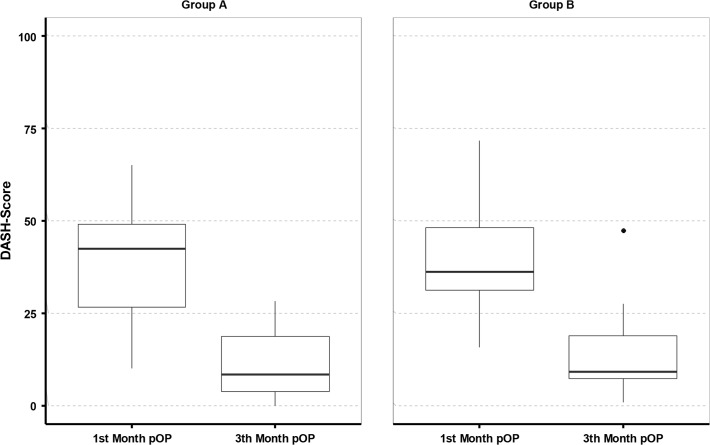
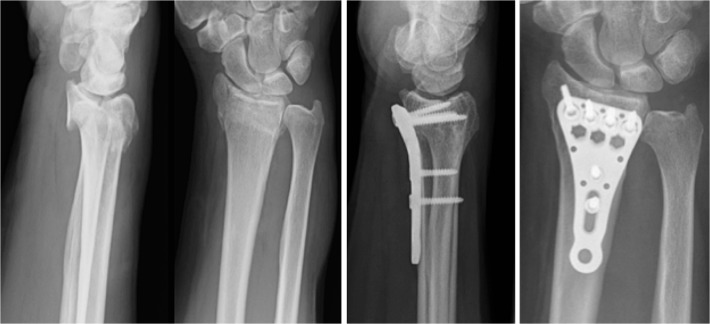
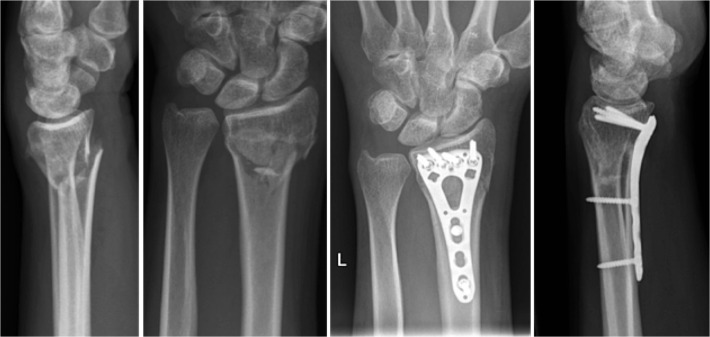
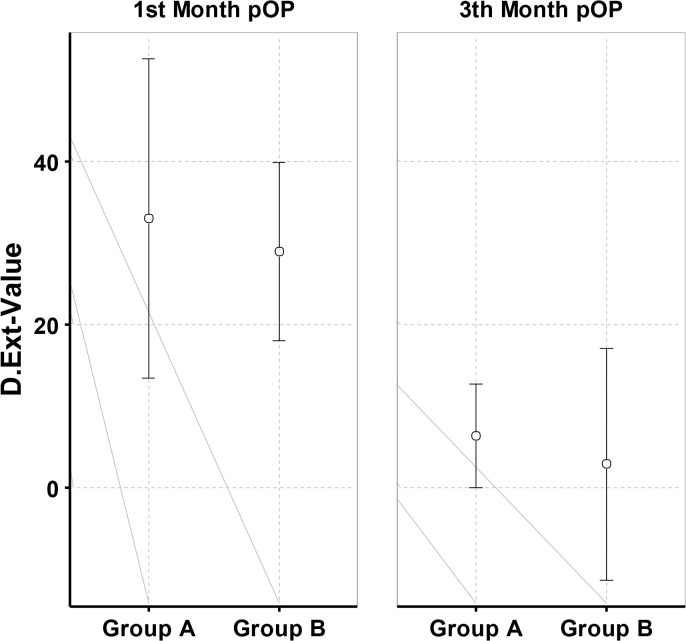
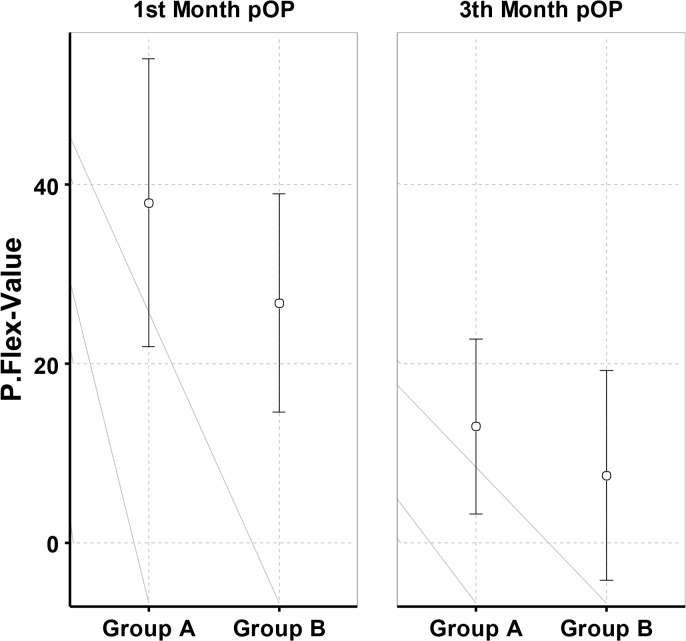
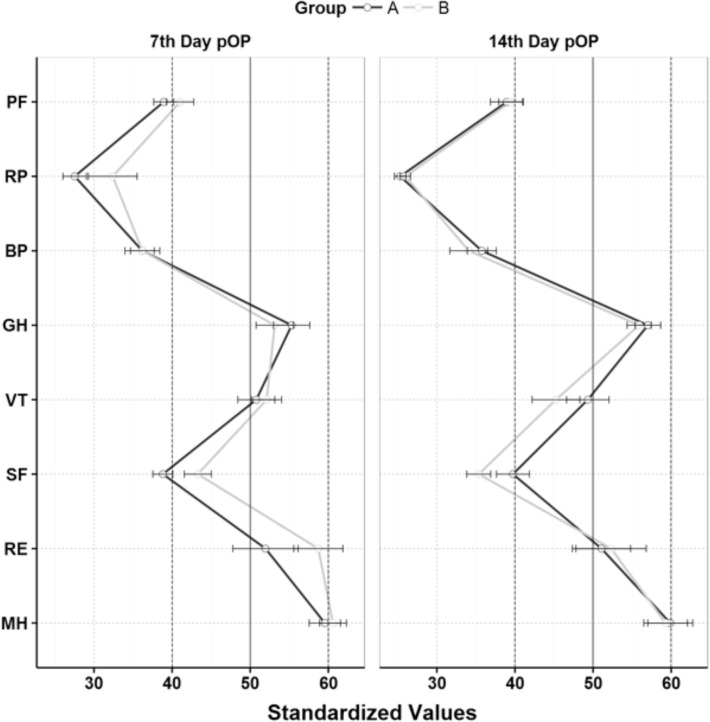
Results were determined after week 1 and 2 using SF 36 and a personally compiled questionnaire; after weeks 4 and 12 with a clinical check-up, calculation of ROM and the DASH Score. Comparison of the two groups showed a significant difference in ROM for volar flexion after 4 weeks, but no significant differences in DASH Score, duration of disability or x-ray findings. With regard to satisfaction with comfort and hygiene, patients were significantly more satisfied with the dynamic orthosis, and 23 of the 29 patients would prefer the flexible vacuum orthosis in future.
German Clinical Trials Register (DRKS) DRKS00006097.
本研究按照GCP标准进行,是一项前瞻性随机交叉研究。该研究的主要目的是确定临床结果以及患者对术后治疗的满意度。在12个月期间,招募了29例桡骨远端骨折患者,这些患者通过掌侧手术实现稳定固定且符合纳入标准。每位患者在手术室术后随机接受背侧石膏夹板或真空贴合的柔性但锁定的矫形器,以实现术后固定。一周后,所有患者更换为互补装置并保持固定直至第2周结束。第2周后,两组患者均在物理治疗师的指导下进行腕关节活动度锻炼,在矫形器组中,该装置解除锁定,从而允许有限的腕关节活动度。第4周后,两组均拆除装置。在术后第1、2、4和12周进行随访检查。
在第1周和第2周后,使用SF 36和一份自行编制的问卷确定结果;在第4周和第12周后,通过临床检查、计算ROM和DASH评分来确定结果。两组比较显示,4周后掌屈的ROM有显著差异,但在DASH评分、残疾持续时间或X线检查结果方面无显著差异。关于舒适度和卫生方面的满意度,患者对动态矫形器的满意度明显更高,29例患者中有23例表示未来更倾向于使用柔性真空矫形器。
德国临床试验注册中心(DRKS)DRKS00006097。