Anton Gabriele, Wilson Rory, Yu Zhong-Hao, Prehn Cornelia, Zukunft Sven, Adamski Jerzy, Heier Margit, Meisinger Christa, Römisch-Margl Werner, Wang-Sattler Rui, Hveem Kristian, Wolfenbuttel Bruce, Peters Annette, Kastenmüller Gabi, Waldenberger Melanie
Institute of Epidemiology II, Helmholtz Center Munich, Munich, Germany.
Institute of Experimental Genetics, Helmholtz Center Munich, Munich, Germany.
PLoS One. 2015 Mar 30;10(3):e0121495. doi: 10.1371/journal.pone.0121495. eCollection 2015.
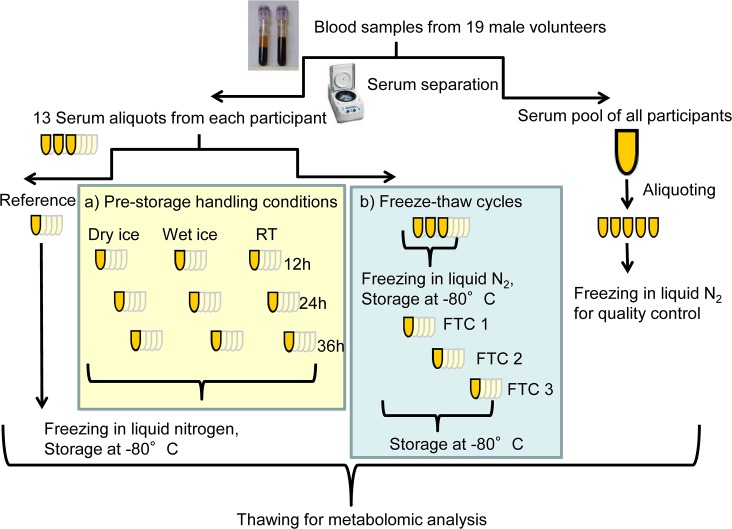
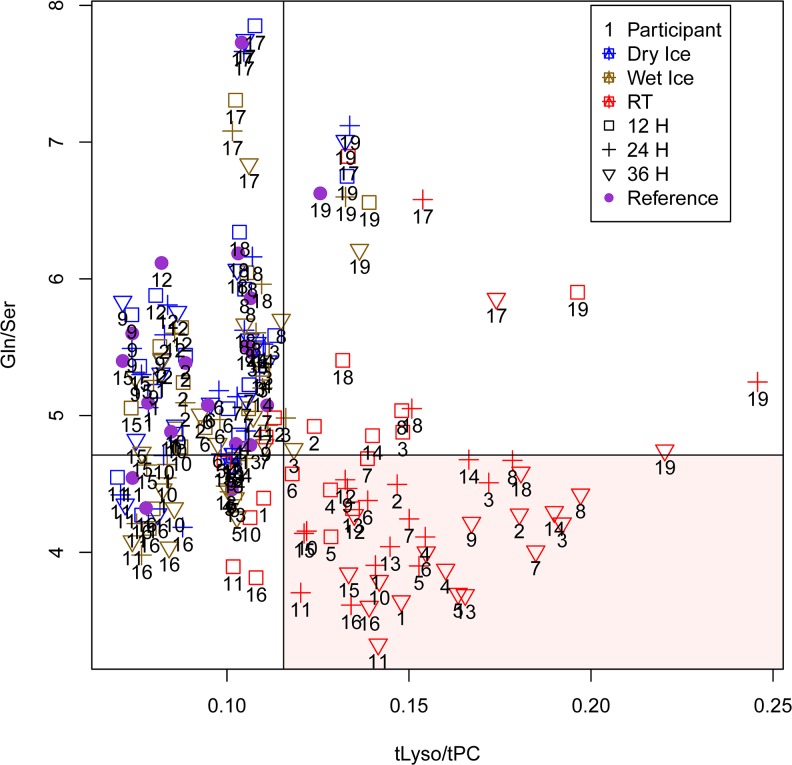
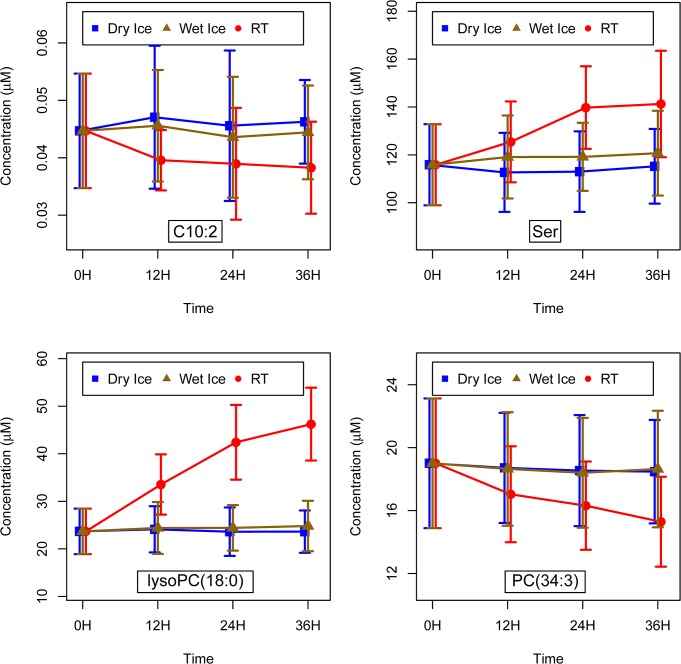
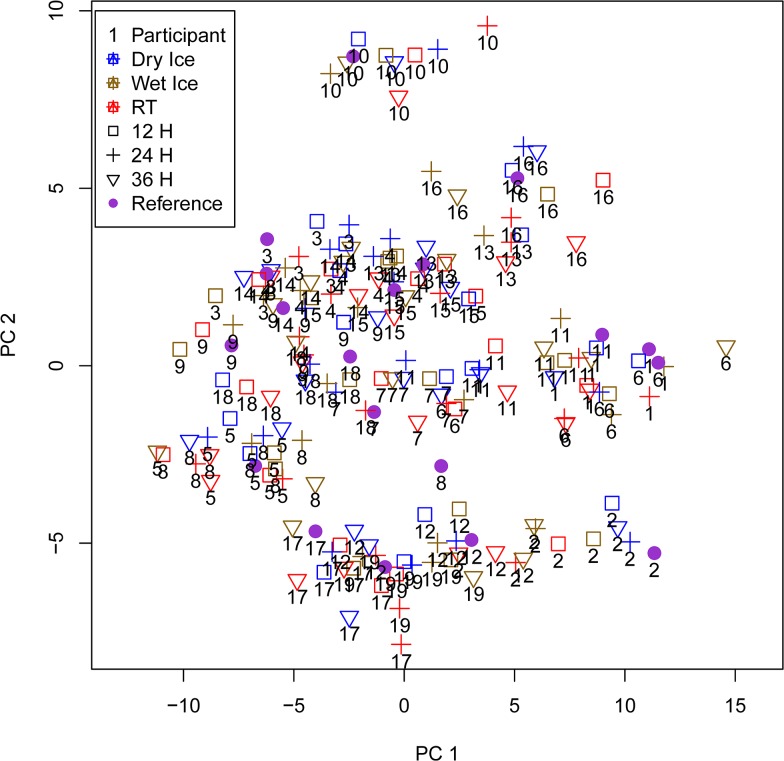
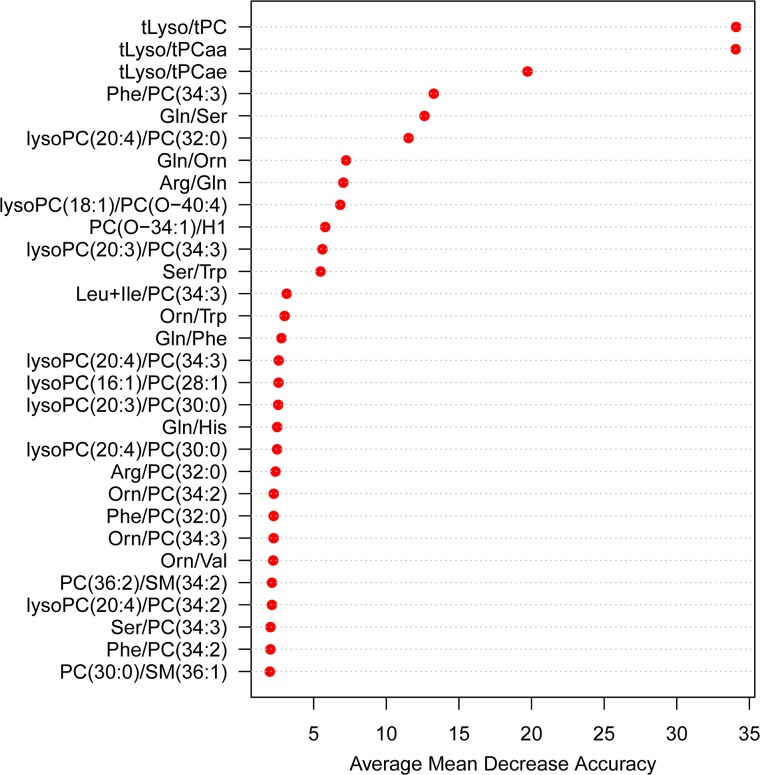
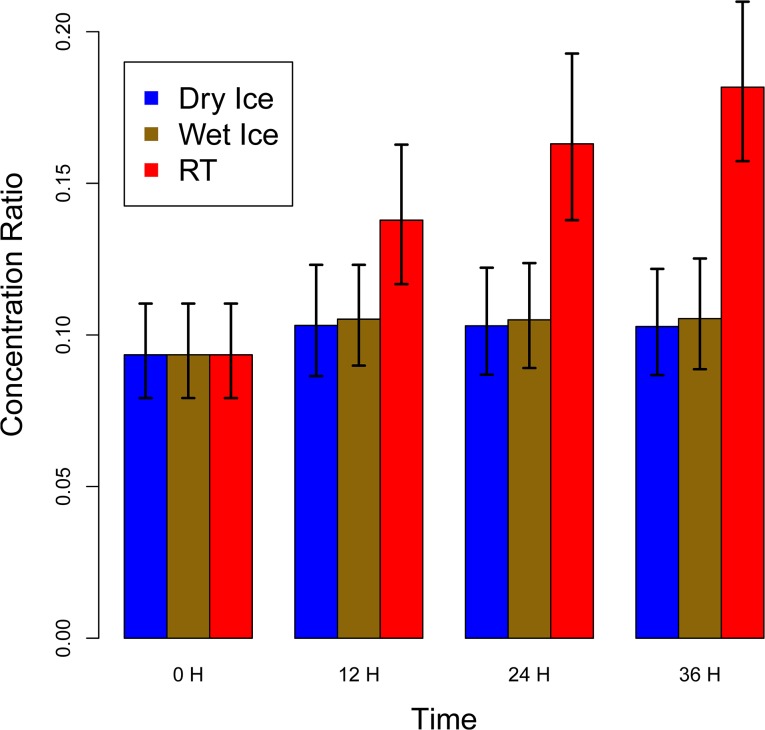
Advances in the "omics" field bring about the need for a high number of good quality samples. Many omics studies take advantage of biobanked samples to meet this need. Most of the laboratory errors occur in the pre-analytical phase. Therefore evidence-based standard operating procedures for the pre-analytical phase as well as markers to distinguish between 'good' and 'bad' quality samples taking into account the desired downstream analysis are urgently needed. We studied concentration changes of metabolites in serum samples due to pre-storage handling conditions as well as due to repeated freeze-thaw cycles. We collected fasting serum samples and subjected aliquots to up to four freeze-thaw cycles and to pre-storage handling delays of 12, 24 and 36 hours at room temperature (RT) and on wet and dry ice. For each treated aliquot, we quantified 127 metabolites through a targeted metabolomics approach. We found a clear signature of degradation in samples kept at RT. Storage on wet ice led to less pronounced concentration changes. 24 metabolites showed significant concentration changes at RT. In 22 of these, changes were already visible after only 12 hours of storage delay. Especially pronounced were increases in lysophosphatidylcholines and decreases in phosphatidylcholines. We showed that the ratio between the concentrations of these molecule classes could serve as a measure to distinguish between 'good' and 'bad' quality samples in our study. In contrast, we found quite stable metabolite concentrations during up to four freeze-thaw cycles. We concluded that pre-analytical RT handling of serum samples should be strictly avoided and serum samples should always be handled on wet ice or in cooling devices after centrifugation. Moreover, serum samples should be frozen at or below -80°C as soon as possible after centrifugation.
“组学”领域的进展使得需要大量高质量的样本。许多组学研究利用生物样本库中的样本以满足这一需求。大多数实验室误差发生在分析前阶段。因此,迫切需要基于证据的分析前阶段标准操作程序以及考虑到所需下游分析来区分“优质”和“劣质”样本的标志物。我们研究了血清样本中代谢物因预储存处理条件以及反复冻融循环而发生的浓度变化。我们收集了空腹血清样本,将等分试样进行多达四次冻融循环,并在室温(RT)以及湿冰和干冰上进行12、24和36小时的预储存处理延迟。对于每个处理过的等分试样,我们通过靶向代谢组学方法对127种代谢物进行了定量。我们发现保存在室温下的样本有明显的降解特征。保存在湿冰上导致的浓度变化不太明显。24种代谢物在室温下显示出显著的浓度变化。其中22种在仅储存延迟12小时后变化就已可见。溶血磷脂酰胆碱增加和磷脂酰胆碱减少尤为明显。我们表明,在我们的研究中,这些分子类别的浓度之比可作为区分“优质”和“劣质”样本的一种度量。相比之下,我们发现在多达四次冻融循环中代谢物浓度相当稳定。我们得出结论,应严格避免血清样本在分析前于室温下处理,血清样本在离心后应始终在湿冰上或在冷却装置中处理。此外,血清样本在离心后应尽快冷冻至-80°C或更低温度。