Ørskov Andreas D, Treppendahl Marianne B, Skovbo Anni, Holm Mette S, Friis Lone S, Hokland Marianne, Grønbæk Kirsten
Department of Hematology, Rigshospitalet, Copenhagen University Hospital, Copenhagen, Denmark.
Department of Biomedicine, Aarhus University, Aarhus, Denmark.
Oncotarget. 2015 Apr 20;6(11):9612-26. doi: 10.18632/oncotarget.3324.
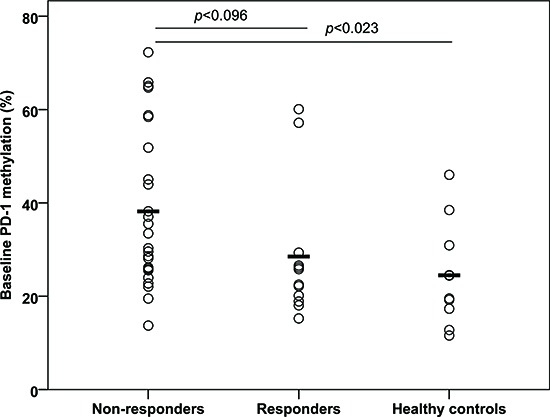
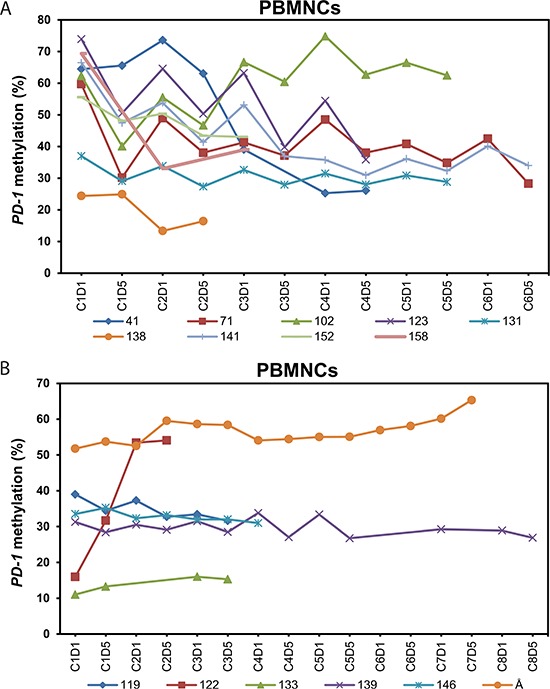
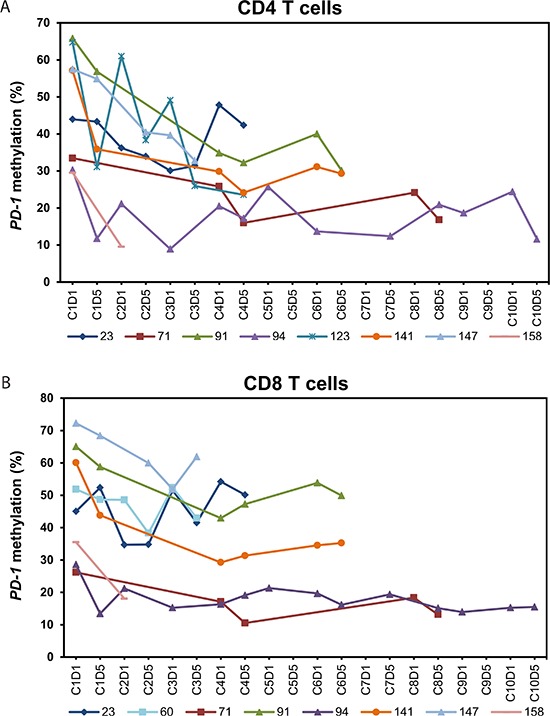
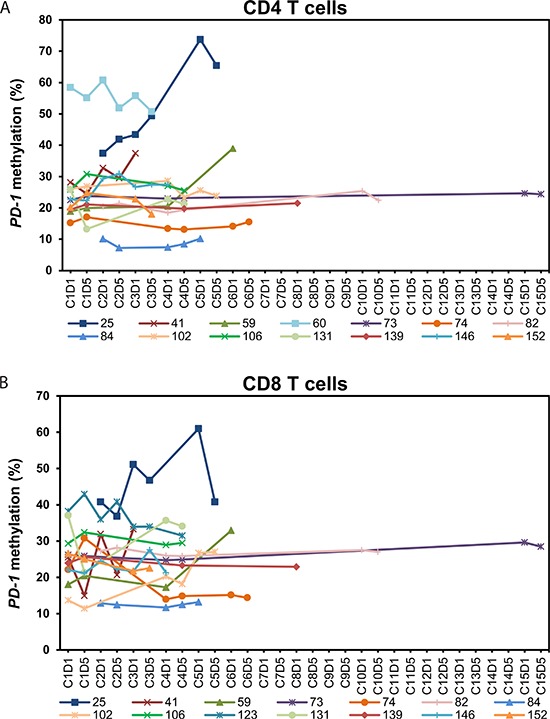
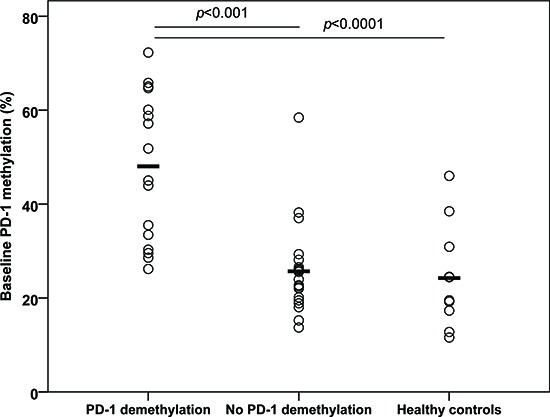
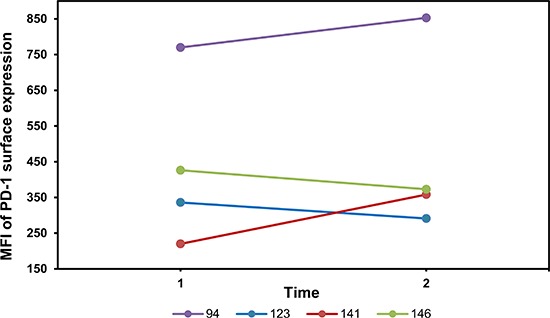
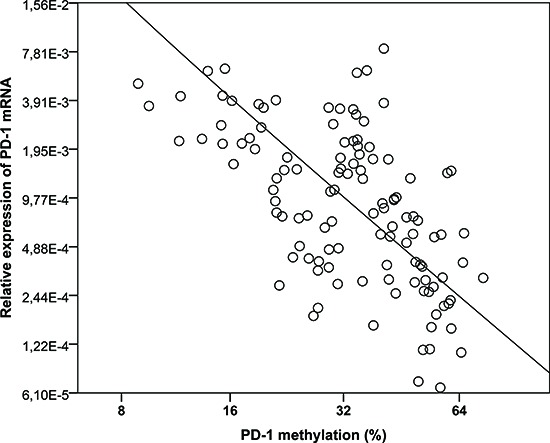
The hypomethylating agents (HMAs) are standard therapy for patients with higher-risk myelodysplastic syndrome (MDS); however, the majority of the patients will lose their response to HMAs over time due to unknown mechanisms. It has recently been shown that T cell expression of the immunoinhibitory receptor PD-1 is regulated by DNA methylation. In 12 of 27 patients (44%) PD-1 promoter demethylation was observed in sorted peripheral blood T cells isolated over consecutive cycles of treatment with 5-azacytidine (5-aza). The PD-1 promoter demethylation correlated with an increase in PD-1 expression. Moreover, demethylation of the PD-1 promoter correlated with a significantly worse overall response rate (8% vs. 60%, p = 0.014), and a trend towards a shorter overall survival (p = 0.11) was observed. A significantly higher baseline methylation level of the PD-1 promoter was observed in T cells of non-responding patients compared to healthy controls (p = 0.023). Accordingly, in addition to their beneficial function, HMAs induce PD-1 expression on T cells in the MDS microenvironment, thereby likely hampering the immune response against the MDS blasts. Thus, we suggest that activation of the PD-1 checkpoint during HMA treatment can be a possible resistance mechanism, which may be overcome by combination therapy with a PD-1 pathway inhibitor.
低甲基化剂(HMAs)是高危骨髓增生异常综合征(MDS)患者的标准治疗方法;然而,由于未知机制,大多数患者会随着时间的推移对HMAs失去反应。最近有研究表明,免疫抑制受体PD-1的T细胞表达受DNA甲基化调控。在27例患者中的12例(44%)中,在用5-氮杂胞苷(5-aza)连续治疗周期中分离出的分选外周血T细胞中观察到PD-1启动子去甲基化。PD-1启动子去甲基化与PD-1表达增加相关。此外,PD-1启动子去甲基化与总体缓解率显著降低相关(8%对60%,p = 0.014),并且观察到总体生存期有缩短趋势(p = 0.11)。与健康对照相比,无反应患者的T细胞中PD-1启动子的基线甲基化水平显著更高(p = 0.023)。因此,除了其有益作用外,HMAs还会在MDS微环境中诱导T细胞上的PD-1表达,从而可能阻碍针对MDS原始细胞的免疫反应。因此,我们认为在HMA治疗期间激活PD-1检查点可能是一种耐药机制,这可能通过与PD-1通路抑制剂联合治疗来克服。