Nguyen Vivien, Pearson Kandyce, Kim Jee-Hyun, Kamdar Karishma, DePaolo R William
Department of Pediatric Gastroenterology and Nutrition, Children's Hospital of Los Angeles, Los Angeles, California, United States of America.
Department of Molecular Microbiology and Immunology, Keck School of Medicine and University of Southern California, Los Angeles, California, United States of America.
PLoS One. 2015 Mar 31;10(3):e0118875. doi: 10.1371/journal.pone.0118875. eCollection 2015.
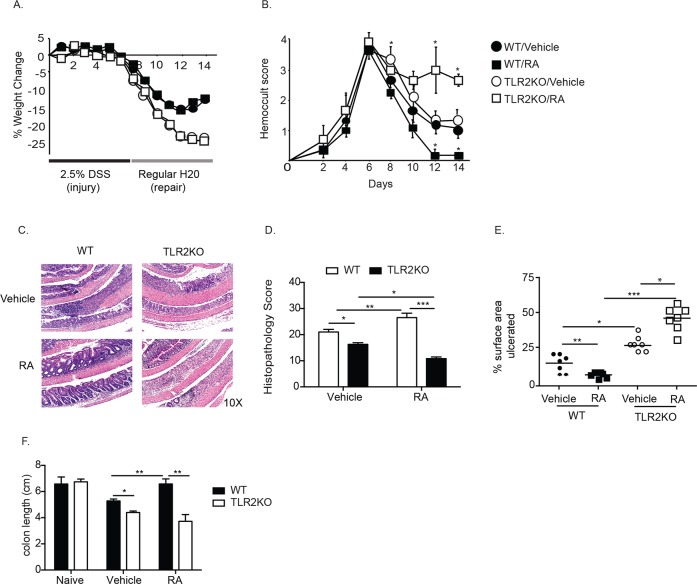
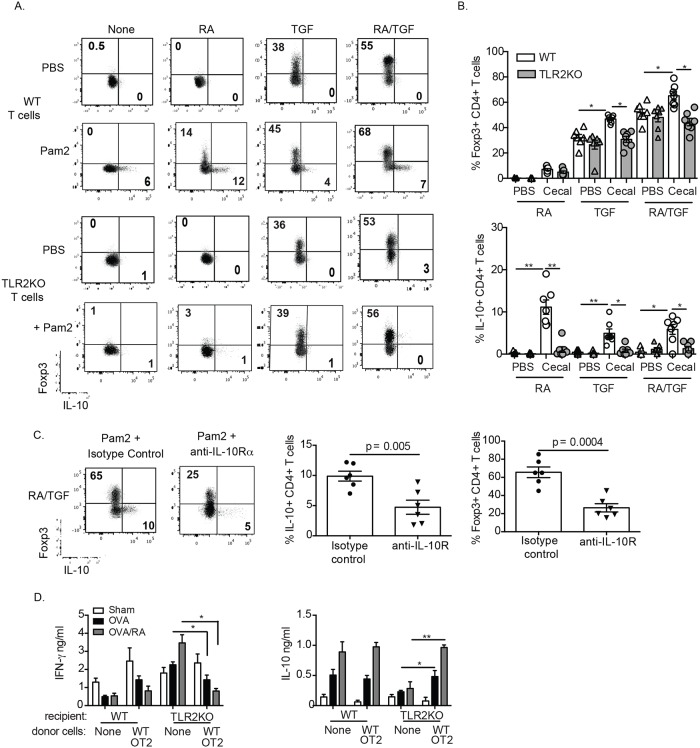
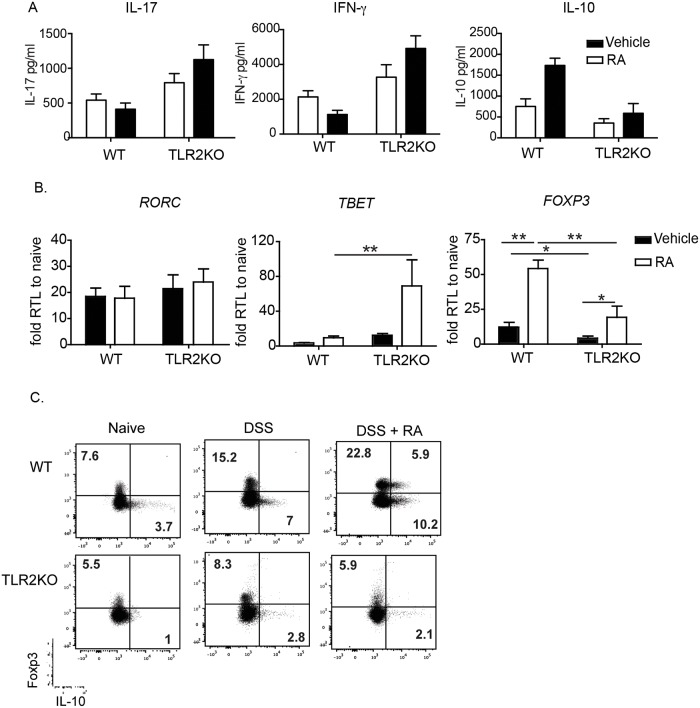
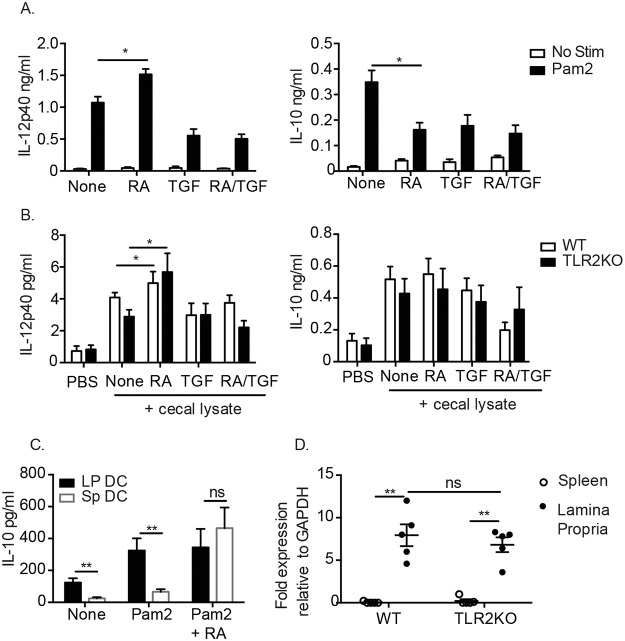
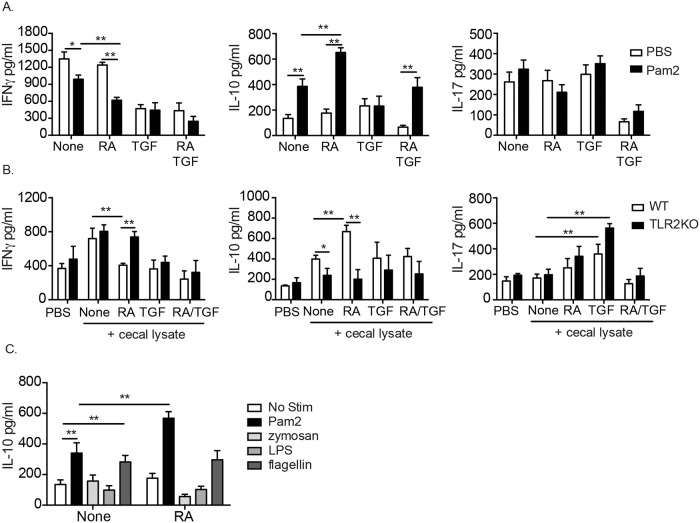
The contribution of vitamin A to immune health has been well established. However, recent evidence indicates that its active metabolite, retinoic acid (RA), has the ability to promote both tolerogenic and inflammatory responses. While the outcome of RA-mediated immunity is dependent upon the immunological status of the tissue, the contribution of specific innate signals influencing this response have yet to be delineated. Here, we found that treatment with RA can dampen inflammation during intestinal injury. Importantly, we report a novel and unexpected requirement for TLR2 in RA-mediated suppression. Our data demonstrate that RA treatment enhances TLR2-dependent IL-10 production from T cells and this, in turn, potentiates T regulatory cell (TREG) generation without the need for activation of antigen presenting cells. These data also suggest that combinatorial therapy using RA and TLR2 ligands may be advantageous in the design of therapies to treat autoimmune or inflammatory disease.
维生素A对免疫健康的贡献已得到充分证实。然而,最近的证据表明,其活性代谢产物视黄酸(RA)具有促进耐受性和炎症反应的能力。虽然RA介导的免疫结果取决于组织的免疫状态,但影响这种反应的特定先天信号的作用尚未明确。在这里,我们发现用RA治疗可以减轻肠道损伤期间的炎症。重要的是,我们报告了TLR2在RA介导的抑制中一种新的意外需求。我们的数据表明,RA治疗可增强T细胞中TLR2依赖性IL-10的产生,进而增强调节性T细胞(TREG)的生成,而无需激活抗原呈递细胞。这些数据还表明,使用RA和TLR2配体的联合疗法在设计治疗自身免疫或炎症性疾病的疗法中可能具有优势。