Mense Sarah M, Barrows Douglas, Hodakoski Cindy, Steinbach Nicole, Schoenfeld David, Su William, Hopkins Benjamin D, Su Tao, Fine Barry, Hibshoosh Hanina, Parsons Ramon
Department of Oncological Sciences, Icahn School of Medicine at Mount Sinai, 1470 Madison Avenue, New York, NY 10029, USA.
Department of Oncological Sciences, Icahn School of Medicine at Mount Sinai, 1470 Madison Avenue, New York, NY 10029, USA. Department of Pharmacology, Columbia University, New York, NY 10032, USA.
Sci Signal. 2015 Mar 31;8(370):ra32. doi: 10.1126/scisignal.2005840.
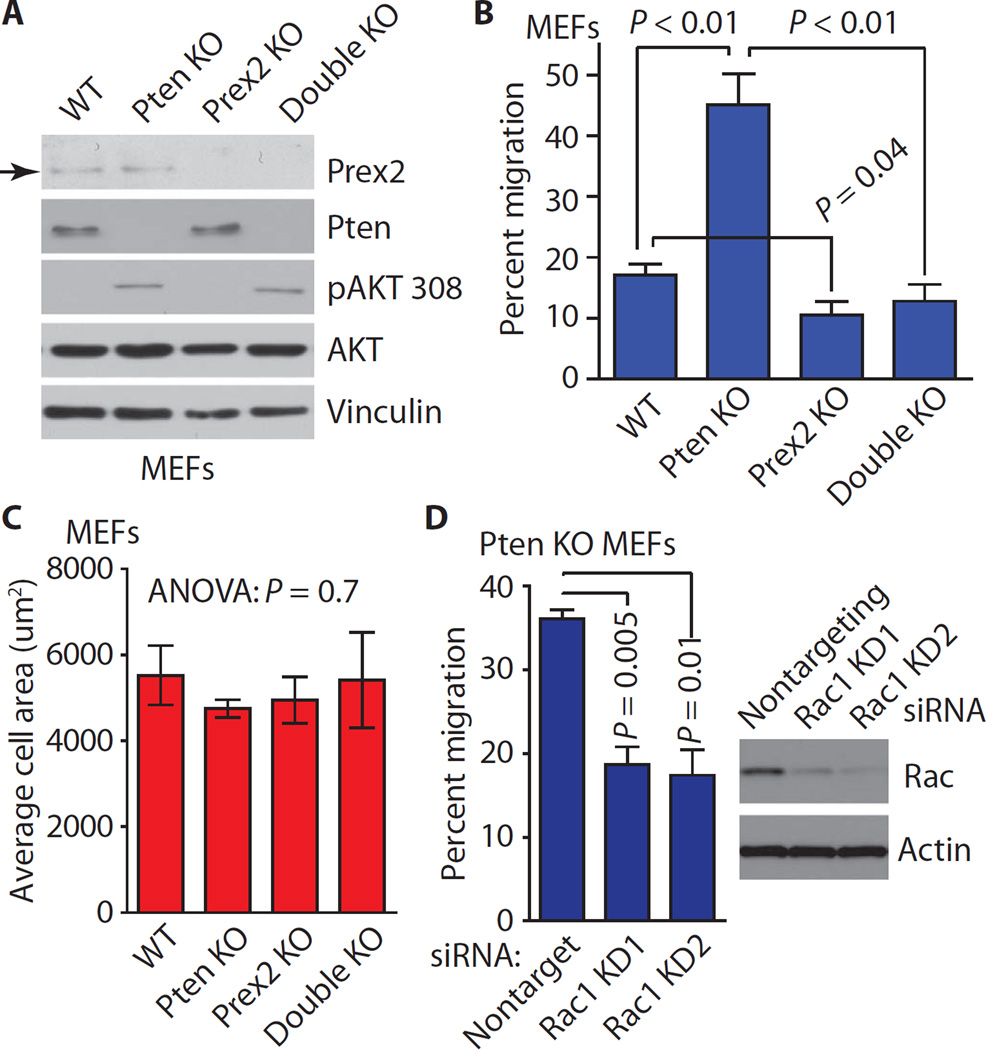
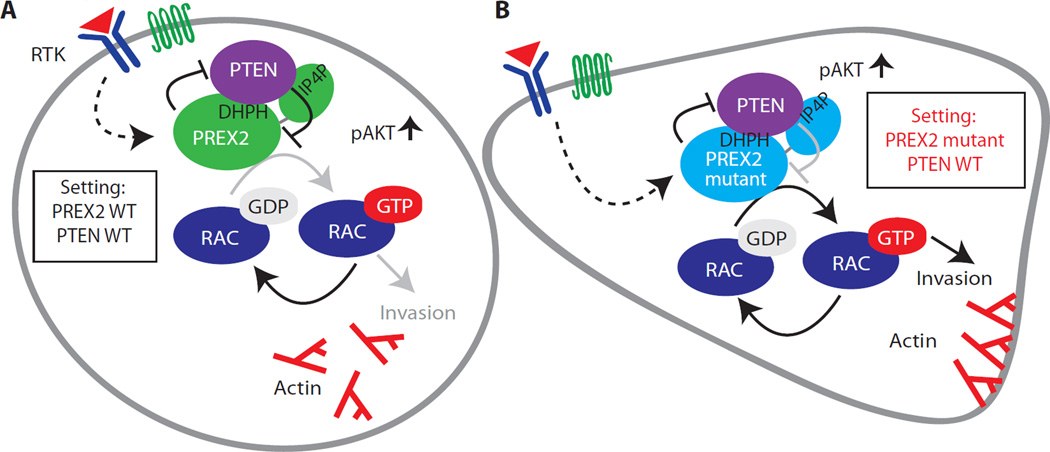
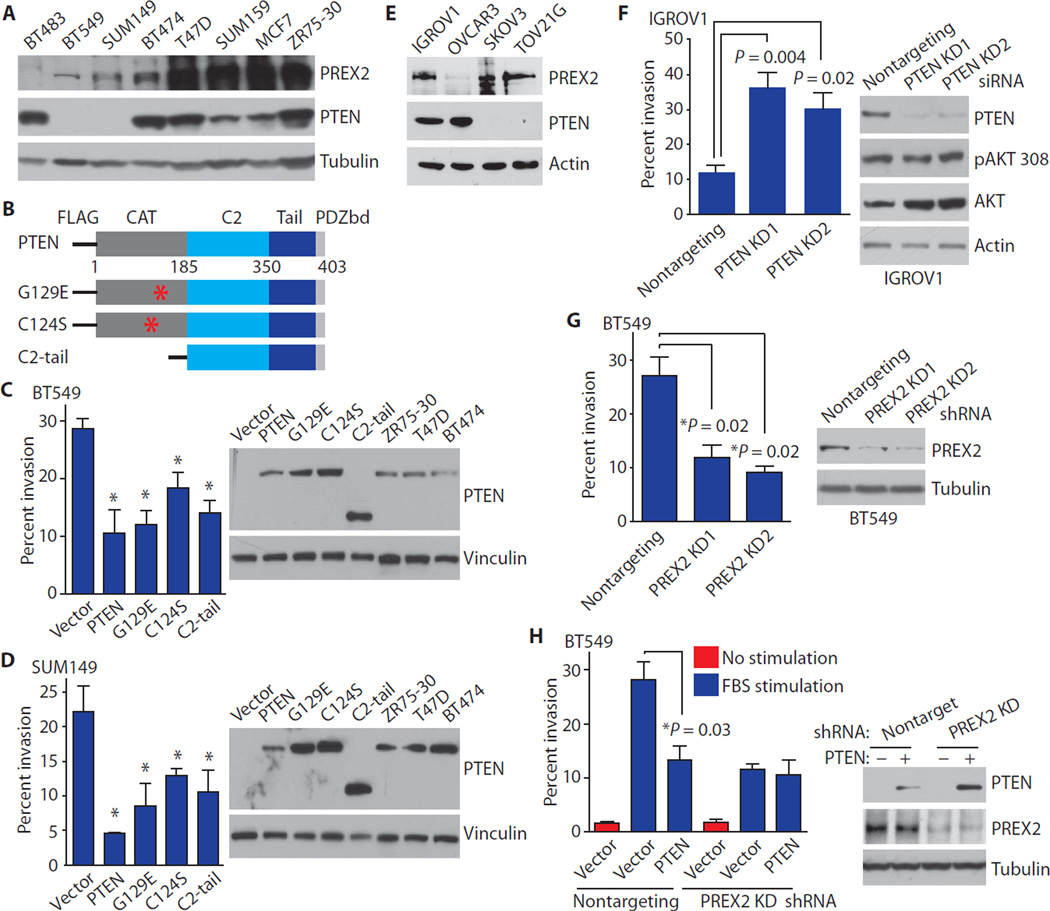
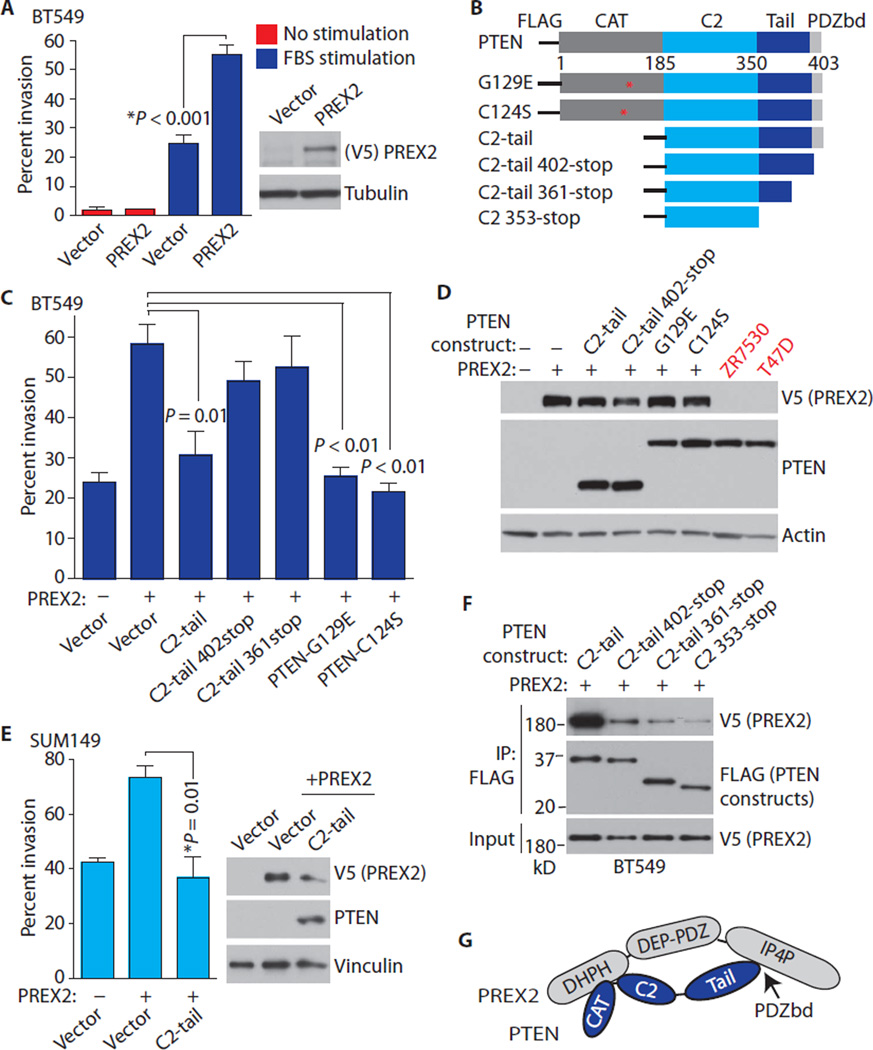
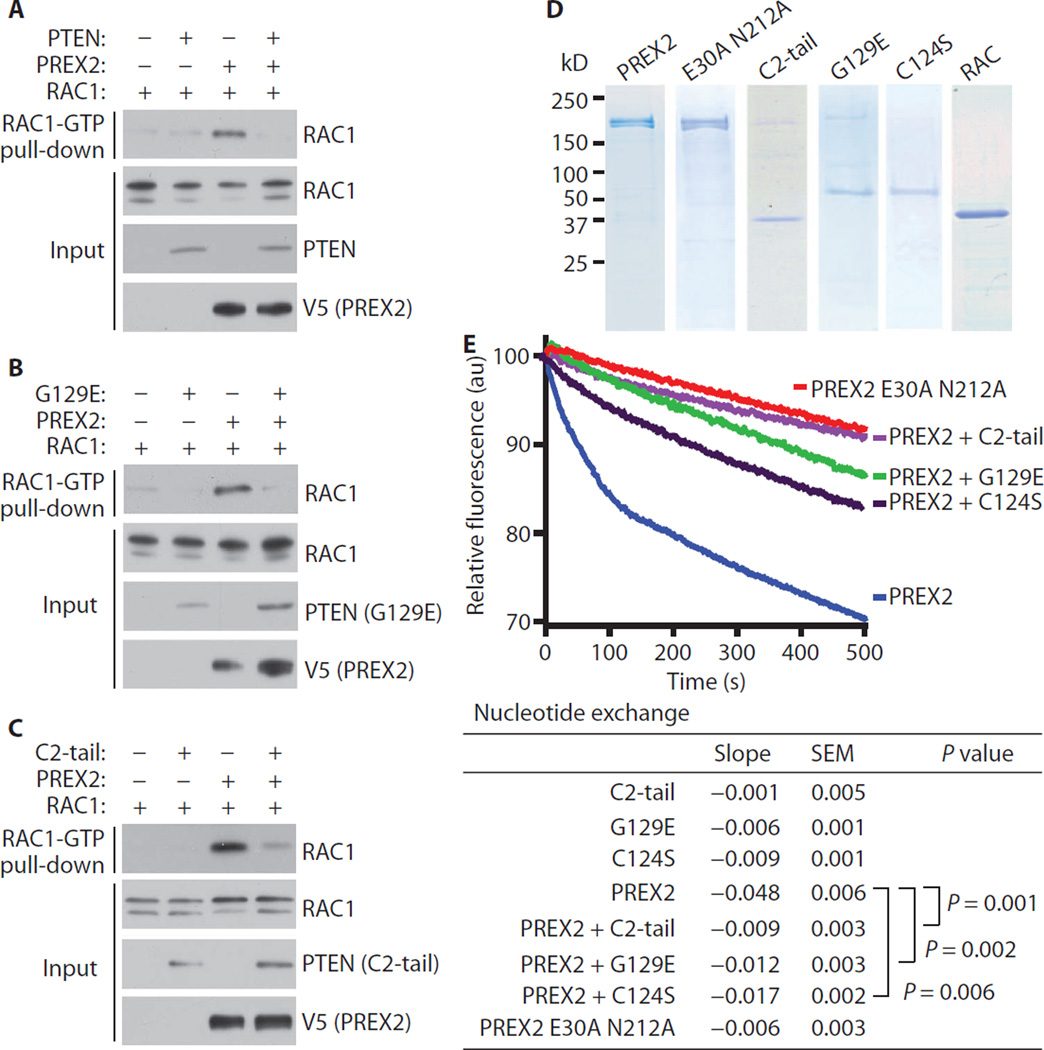
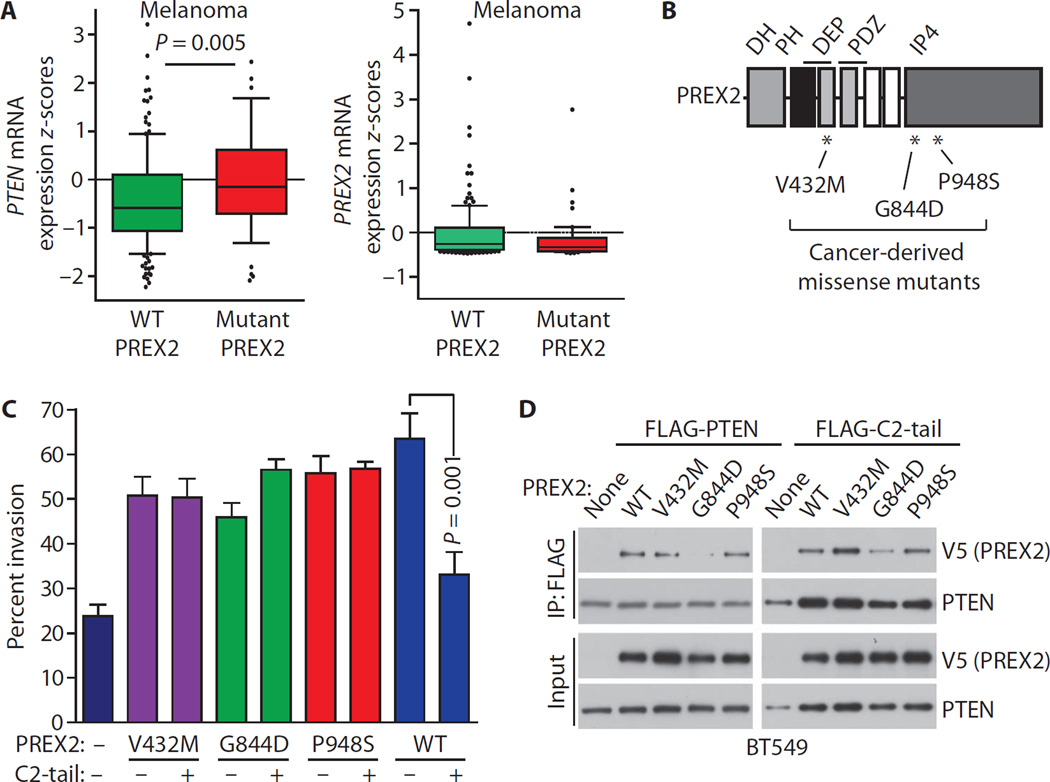
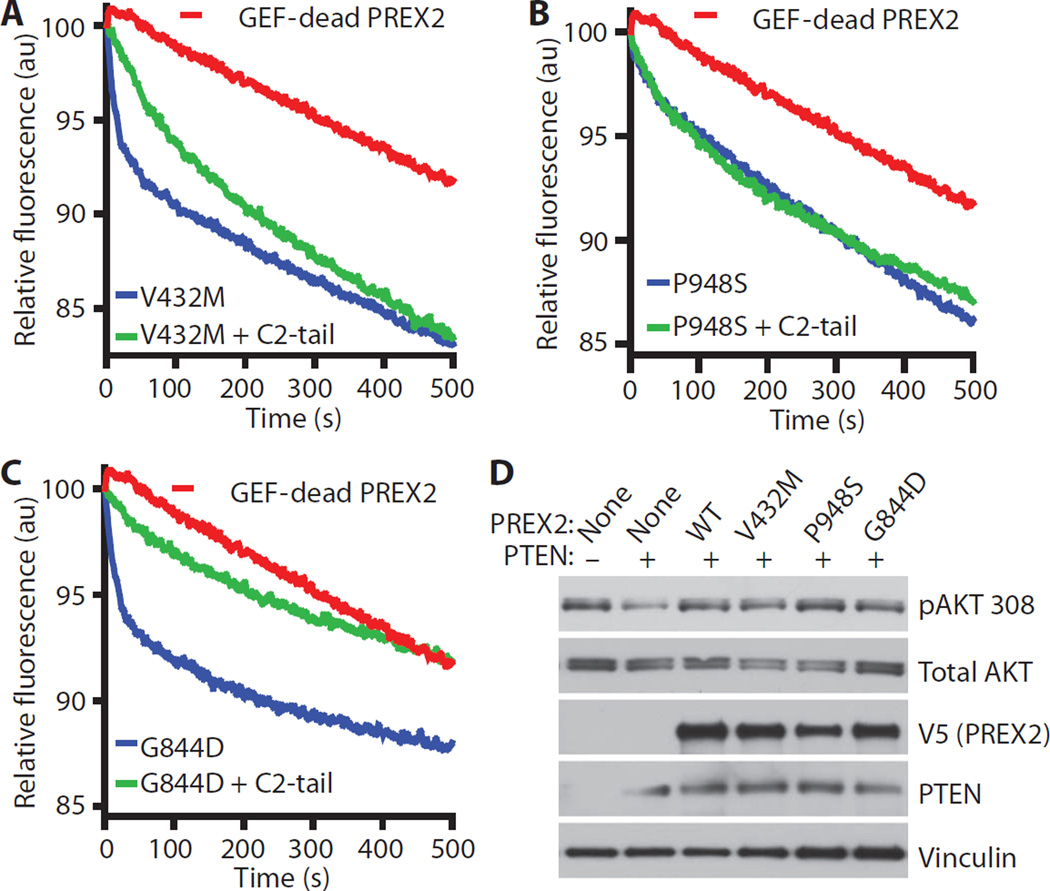
The tumor suppressor PTEN restrains cell migration and invasion by a mechanism that is independent of inhibition of the PI3K pathway and decreased activation of the kinase AKT. PREX2, a widely distributed GEF that activates the GTPase RAC1, binds to and inhibits PTEN. We used mouse embryonic fibroblasts and breast cancer cell lines to show that PTEN suppresses cell migration and invasion by blocking PREX2 activity. In addition to metabolizing the phosphoinositide PIP₃, PTEN inhibited PREX2-induced invasion by a mechanism that required the tail domain of PTEN, but not its lipid phosphatase activity. Fluorescent nucleotide exchange assays revealed that PTEN inhibited the GEF activity of PREX2 toward RAC1. PREX2 is a frequently mutated GEF in cancer, and examination of human tumor data showed that PREX2 mutation was associated with high PTEN expression. Therefore, we tested whether cancer-derived somatic PREX2 mutants, which accelerate tumor formation of immortalized melanocytes, were inhibited by PTEN. The three stably expressed, somatic PREX2 cancer mutants that we tested were resistant to PTEN-mediated inhibition of invasion but retained the ability to inhibit the lipid phosphatase activity of PTEN. In vitro analysis showed that PTEN did not block the GEF activity of two PREX2 cancer mutants and had a reduced binding affinity for the third. Thus, PTEN antagonized migration and invasion by restraining PREX2 GEF activity, and PREX2 mutants are likely selected in cancer to escape PTEN-mediated inhibition of invasion.
肿瘤抑制因子PTEN通过一种独立于抑制PI3K途径和降低激酶AKT激活的机制来抑制细胞迁移和侵袭。PREX2是一种广泛分布的鸟嘌呤核苷酸交换因子(GEF),可激活GTP酶RAC1,它与PTEN结合并抑制PTEN。我们使用小鼠胚胎成纤维细胞和乳腺癌细胞系表明,PTEN通过阻断PREX2活性来抑制细胞迁移和侵袭。除了代谢磷酸肌醇PIP₃外,PTEN还通过一种需要PTEN尾域但不需要其脂质磷酸酶活性的机制抑制PREX2诱导的侵袭。荧光核苷酸交换分析表明,PTEN抑制PREX2对RAC1的GEF活性。PREX2是癌症中一种经常发生突变的GEF,对人类肿瘤数据的检查表明,PREX2突变与PTEN高表达相关。因此,我们测试了源自癌症的体细胞PREX2突变体(其可加速永生化黑素细胞的肿瘤形成)是否受到PTEN的抑制。我们测试的三个稳定表达的体细胞PREX2癌症突变体对PTEN介导的侵袭抑制具有抗性,但保留了抑制PTEN脂质磷酸酶活性的能力。体外分析表明,PTEN没有阻断两个PREX2癌症突变体的GEF活性,并且与第三个突变体的结合亲和力降低。因此,PTEN通过抑制PREX2的GEF活性来拮抗迁移和侵袭,并且PREX2突变体可能在癌症中被选择以逃避PTEN介导的侵袭抑制。