Griesshammer Martin, Gisslinger Heinz, Mesa Ruben
Johannes Wesling Academic Medical Center, Minden, Germany,
Ann Hematol. 2015 Jun;94(6):901-10. doi: 10.1007/s00277-015-2357-4. Epub 2015 Apr 2.
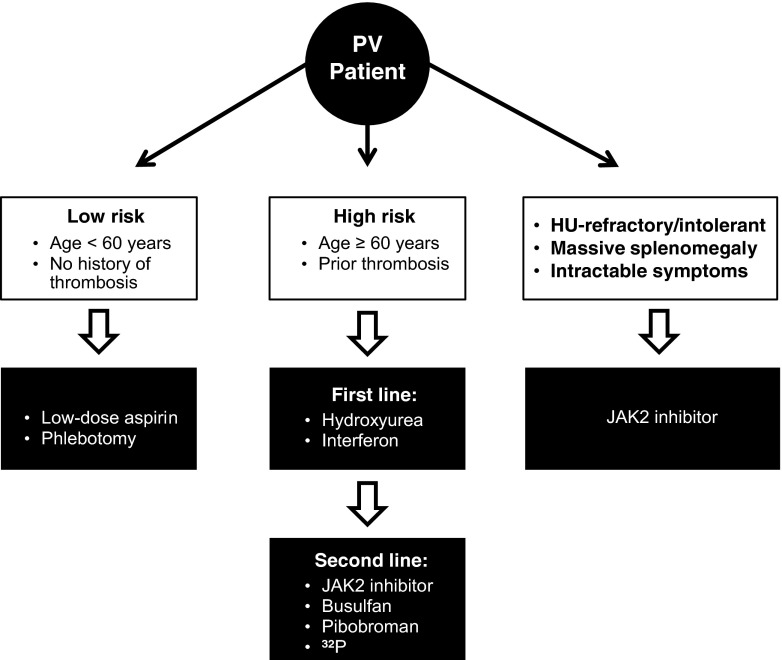
Patients with polycythemia vera (PV), a myeloproliferative neoplasm characterized by an elevated red blood cell mass, are at high risk of vascular and thrombotic complications and have reduced quality of life due to a substantial symptom burden that includes pruritus, fatigue, constitutional symptoms, microvascular disturbances, and bleeding. Conventional therapeutic options aim at reducing vascular and thrombotic risk, with low-dose aspirin and phlebotomy as first-line recommendations for patients at low risk of thrombotic events and cytoreductive therapy (usually hydroxyurea or interferon alpha) recommended for high-risk patients. However, long-term effective and well-tolerated treatments are still lacking. The discovery of mutations in Janus kinase 2 (JAK2) as the underlying molecular basis of PV has led to the development of several targeted therapies, including JAK inhibitors, and results from the first phase 3 clinical trial with a JAK inhibitor in PV are now available. Here, we review the current treatment landscape in PV, as well as therapies currently in development.
真性红细胞增多症(PV)患者是一种以红细胞量增加为特征的骨髓增殖性肿瘤,有发生血管和血栓并发症的高风险,且由于包括瘙痒、疲劳、全身症状、微血管紊乱和出血在内的大量症状负担而导致生活质量下降。传统治疗方案旨在降低血管和血栓风险,对于血栓事件低风险患者,低剂量阿司匹林和放血疗法是一线推荐,对于高风险患者则推荐采用细胞减灭疗法(通常是羟基脲或α干扰素)。然而,仍然缺乏长期有效且耐受性良好的治疗方法。发现Janus激酶2(JAK2)突变是PV的潜在分子基础,这已促使开发了几种靶向疗法,包括JAK抑制剂,并且现在已有JAK抑制剂用于PV的首个3期临床试验结果。在此,我们综述了PV当前的治疗格局以及目前正在研发的疗法。