Fischer Roman, Maier Olaf
Institute of Cell Biology and Immunology, University of Stuttgart, Allmandring 31, 70569 Stuttgart, Germany.
Oxid Med Cell Longev. 2015;2015:610813. doi: 10.1155/2015/610813. Epub 2015 Mar 5.
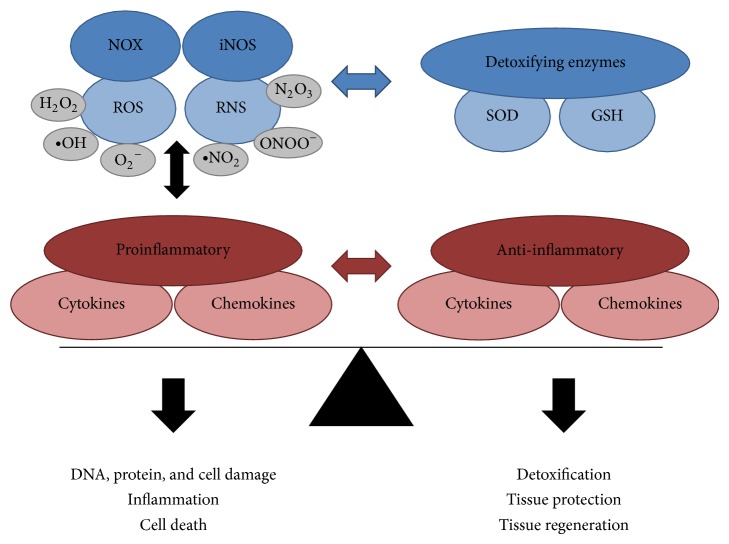
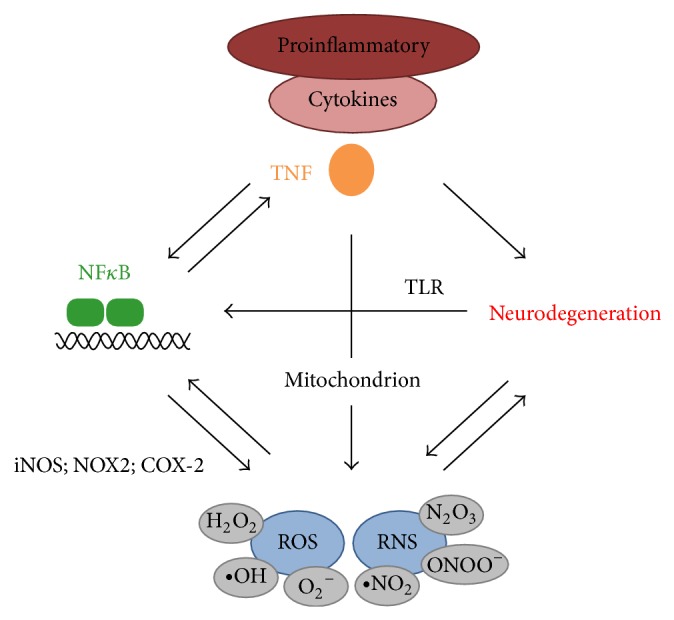
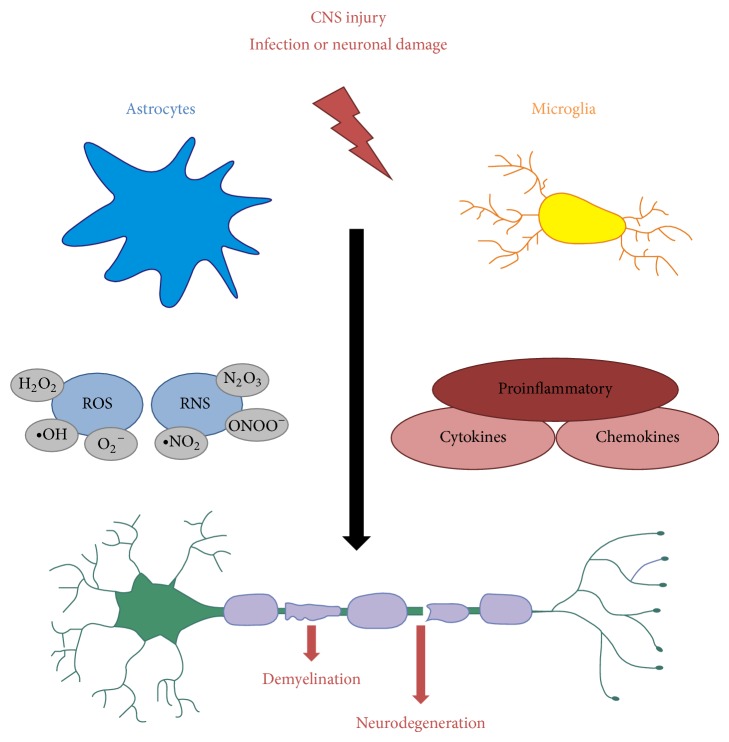
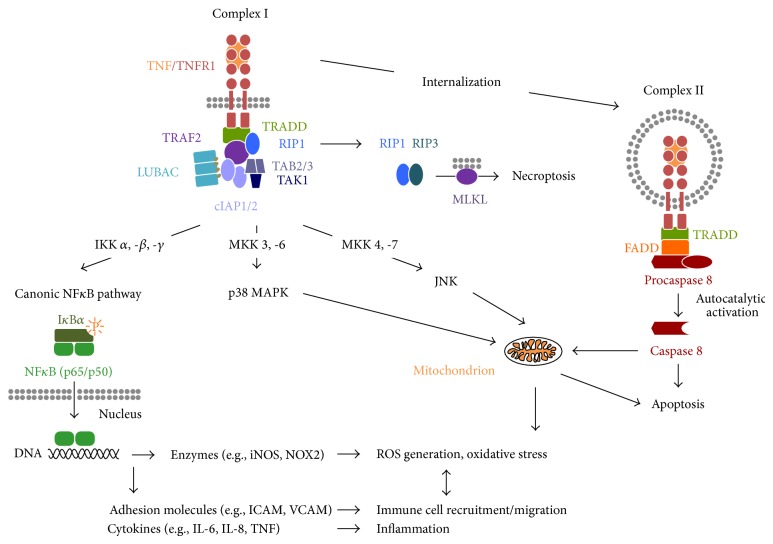
Neuroinflammation and mitochondrial dysfunction are common features of chronic neurodegenerative diseases of the central nervous system. Both conditions can lead to increased oxidative stress by excessive release of harmful reactive oxygen and nitrogen species (ROS and RNS), which further promote neuronal damage and subsequent inflammation resulting in a feed-forward loop of neurodegeneration. The cytokine tumor necrosis factor (TNF), a master regulator of the immune system, plays an important role in the propagation of inflammation due to the activation and recruitment of immune cells via its receptor TNF receptor 1 (TNFR1). Moreover, TNFR1 can directly induce oxidative stress by the activation of ROS and RNS producing enzymes. Both TNF-induced oxidative stress and inflammation interact and cooperate to promote neurodegeneration. However, TNF plays a dual role in neurodegenerative disease, since stimulation via its second receptor, TNFR2, is neuroprotective and promotes tissue regeneration. Here we review the interrelation of oxidative stress and inflammation in the two major chronic neurodegenerative diseases, Alzheimer's and Parkinson's disease, and discuss the dual role of TNF in promoting neurodegeneration and tissue regeneration via its two receptors.
神经炎症和线粒体功能障碍是中枢神经系统慢性神经退行性疾病的常见特征。这两种情况都会因有害活性氧和氮物种(ROS和RNS)的过度释放而导致氧化应激增加,进而进一步促进神经元损伤及随后的炎症反应,形成神经退行性变的前馈循环。细胞因子肿瘤坏死因子(TNF)是免疫系统的主要调节因子,通过其受体肿瘤坏死因子受体1(TNFR1)激活和募集免疫细胞,在炎症传播中起重要作用。此外,TNFR1可通过激活产生ROS和RNS的酶直接诱导氧化应激。TNF诱导的氧化应激和炎症相互作用并协同促进神经退行性变。然而,TNF在神经退行性疾病中起双重作用,因为通过其第二个受体TNFR2的刺激具有神经保护作用并促进组织再生。在此,我们综述了氧化应激与炎症在两种主要慢性神经退行性疾病——阿尔茨海默病和帕金森病中的相互关系,并讨论了TNF通过其两个受体在促进神经退行性变和组织再生中的双重作用。