Camargo Jose F, Bhimji Alyajahan, Kumar Deepali, Kaul Rupert, Pavan Rhea, Schuh Andre, Seftel Matthew, Lipton Jeffrey H, Gupta Vikas, Humar Atul, Husain Shahid
Transplant Infectious Diseases, Multi-Organ Transplant Program, University Health Network, University of Toronto, Toronto, Ontario, Canada; Department of Medicine, University Health Network, Toronto, Ontario, Canada.
Transplant Infectious Diseases, Multi-Organ Transplant Program, University Health Network, University of Toronto, Toronto, Ontario, Canada; Department of Laboratory Medicine & Pathobiology, University of Toronto, Toronto, Ontario, Canada.
PLoS One. 2015 Apr 2;10(4):e0123171. doi: 10.1371/journal.pone.0123171. eCollection 2015.
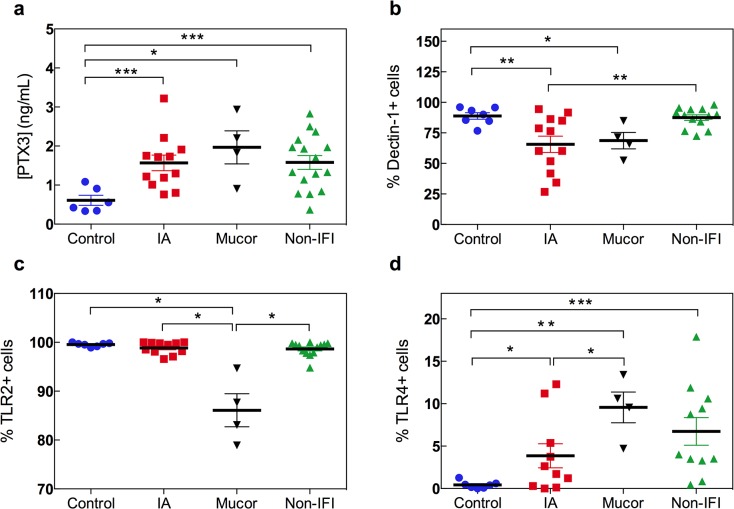
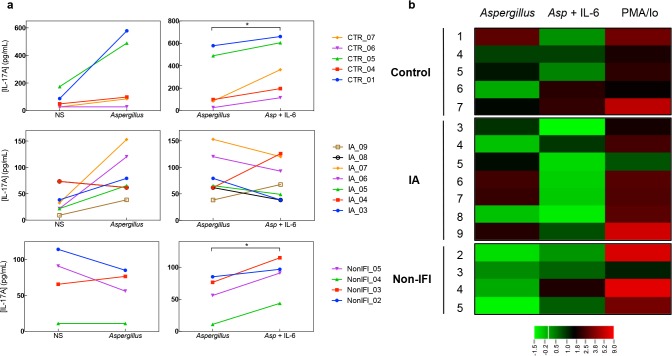
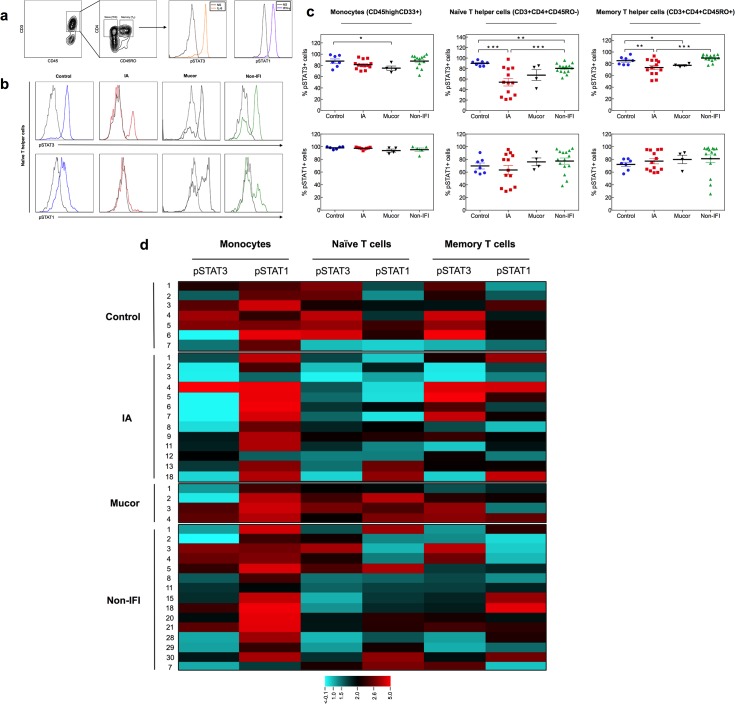
Invasive mold infections (IMI) are among the most devastating complications following chemotherapy and hematopoietic stem cell transplantation (HSCT), with high mortality rates. Yet, the molecular basis for human susceptibility to invasive aspergillosis (IA) and mucormycosis remain poorly understood. Herein, we aimed to characterize the immune profile of individuals with hematological malignancies (n = 18) who developed IMI during the course of chemotherapy or HSCT, and compared it to that of hematological patients who had no evidence of invasive fungal infection (n = 16). First, we measured the expression of the pattern recognition receptors pentraxin 3, dectin-1, and Toll-like receptors (TLR) 2 and 4 in peripheral blood of chemotherapy and HSCT recipients with IMI. Compared to hematological controls, individuals with IA and mucormycosis had defective expression of dectin-1; in addition, patients with mucormycosis had decreased TLR2 and increased TLR4 expression. Since fungal recognition via dectin-1 favors T helper 17 responses and the latter are highly dependent on activation of the signal transducer and activator of transcription (STAT) 3, we next used phospho-flow cytometry to measure the phosphorylation of the transcription factors STAT1 and STAT3 in response to interferon-gamma (IFN-γ) and interleukin (IL)-6, respectively. While IFN-γ/STAT1 signaling was similar between groups, naïve T cells from patients with IA, but not those with mucormycosis, exhibited reduced responsiveness to IL-6 as measured by STAT3 phosphorylation. Furthermore, IL-6 increased Aspergillus-induced IL-17 production in culture supernatants from healthy and hematological controls but not in patients with IA. Altogether, these observations suggest an important role for dectin-1 and the IL-6/STAT3 pathway in protective immunity against Aspergillus.
侵袭性霉菌感染(IMI)是化疗和造血干细胞移植(HSCT)后最具破坏性的并发症之一,死亡率很高。然而,人类对侵袭性曲霉病(IA)和毛霉病易感性的分子基础仍知之甚少。在此,我们旨在描述在化疗或HSCT过程中发生IMI的血液系统恶性肿瘤患者(n = 18)的免疫特征,并将其与无侵袭性真菌感染证据的血液系统患者(n = 16)进行比较。首先,我们测量了患有IMI的化疗和HSCT受者外周血中模式识别受体五聚体3、脱铁素-1以及Toll样受体(TLR)2和4的表达。与血液系统对照相比,患有IA和毛霉病的个体脱铁素-1表达缺陷;此外,毛霉病患者的TLR2表达降低而TLR4表达增加。由于通过脱铁素-1识别真菌有利于辅助性T细胞17反应,而后者高度依赖于信号转导和转录激活因子(STAT)3的激活,接下来我们使用磷酸化流式细胞术分别测量转录因子STAT1和STAT3在响应干扰素-γ(IFN-γ)和白细胞介素(IL)-6时的磷酸化。虽然两组之间IFN-γ/STAT1信号相似,但通过STAT3磷酸化测量,来自IA患者而非毛霉病患者的初始T细胞对IL-6的反应性降低。此外,IL-6增加了健康和血液系统对照培养上清液中曲霉诱导的IL-17产生,但在IA患者中未增加。总之,这些观察结果表明脱铁素-1和IL-6/STAT3途径在抗曲霉保护性免疫中起重要作用。