Stephenson Judith J, Cai Qian, Mocarski Michelle, Tan Hiangkiat, Doshi Jalpa A, Sullivan Sean D
HealthCore, Inc., Wilmington, DE, USA.
Forest Research Institute, Inc., an affiliate of Actavis, Inc., Jersey City, NJ, USA.
Int J Chron Obstruct Pulmon Dis. 2015 Mar 17;10:577-86. doi: 10.2147/COPD.S76157. eCollection 2015.
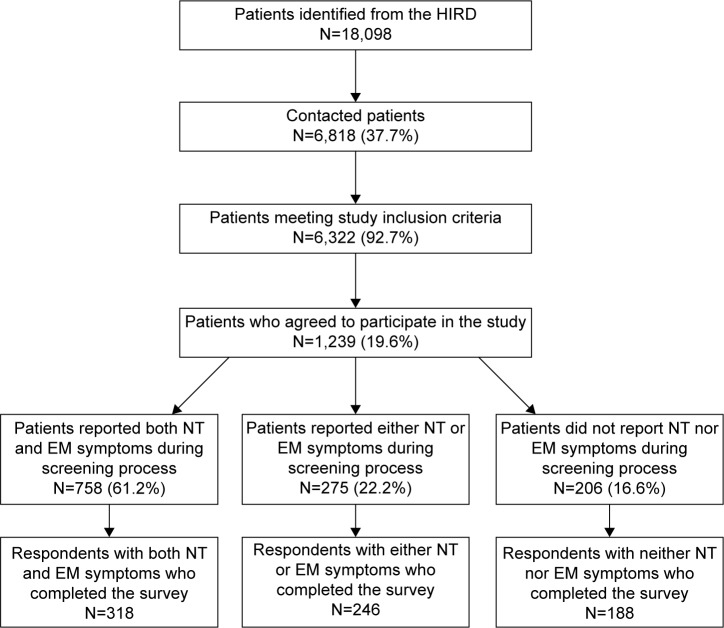
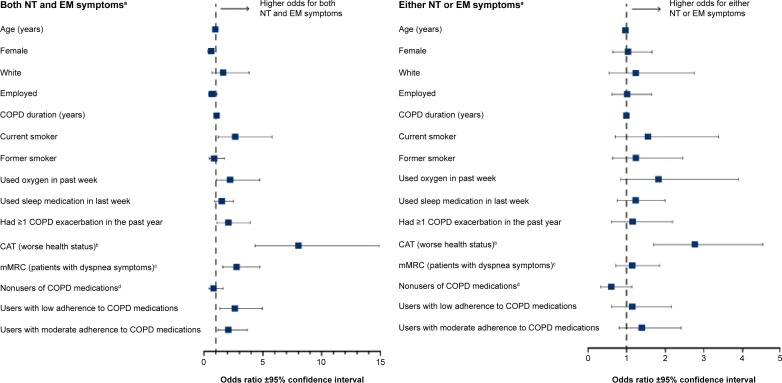
Patients with chronic obstructive pulmonary disease (COPD) exhibit poor sleep quality and consider morning as the worst time of day for their symptoms. While work has been done to characterize nighttime (NT) and early morning (EM) symptoms in various populations, the impact and factors associated with NT/EM symptoms among patients with COPD in the United States is not well understood. Commercially insured patients aged ≥40 years with one or more medical claim for COPD and one or more pharmacy claim for COPD maintenance medication were identified from the HealthCore Integrated Research Database between September 1, 2010 and August 31, 2011. Consenting respondents were asked whether they had COPD symptoms on at least three nights or at least three mornings during the past week. Respondents were then either assigned to one of three symptom groups to complete the survey or excluded if their predefined group quota limit had been met. Survey completers completed the survey with questions about COPD symptoms and other commonly used patient-reported outcome measures. Respondents with NT/EM symptoms were asked about the frequency, severity, and impact of the symptoms on sleep, morning activities, and anxiety levels. Among respondents with symptoms, 73.1% of respondents with NT symptoms (N=376) and 83% of respondents with EM symptoms (N=506) experienced at least three distinct types of symptoms over the past week, with cough being the most frequently reported symptom. Approximately half of respondents with NT or EM symptoms perceived their symptoms as moderate to very severe, with a majority reporting their symptoms affected their NT sleep and morning activities, and more than half felt anxious due to their symptoms. Multinomial logistic regression showed COPD patients with both or either NT/EM symptoms were associated with poorer health status compared to those without. Improved disease management may reduce NT/EM symptoms and improve health status in patients with COPD.
慢性阻塞性肺疾病(COPD)患者睡眠质量较差,并认为早晨是一天中症状最严重的时候。虽然已经开展了一些工作来描述不同人群的夜间(NT)和清晨(EM)症状,但美国COPD患者中NT/EM症状的影响及相关因素仍未得到充分了解。从HealthCore综合研究数据库中识别出年龄≥40岁、有一项或多项COPD医疗索赔以及一项或多项COPD维持药物药房索赔的商业保险患者,时间范围为2010年9月1日至2011年8月31日。同意参与的受访者被问及在过去一周内是否至少有三个晚上或至少三个早晨出现COPD症状。然后,受访者被分配到三个症状组之一以完成调查,如果达到其预定义的组配额限制则被排除。完成调查的受访者完成了关于COPD症状及其他常用的患者报告结局指标的调查。有NT/EM症状的受访者被问及症状的频率、严重程度以及对睡眠、早晨活动和焦虑水平的影响。在有症状的受访者中,73.1%的NT症状受访者(N = 376)和83%的EM症状受访者(N = 506)在过去一周内经历了至少三种不同类型的症状,咳嗽是最常报告的症状。大约一半有NT或EM症状的受访者认为他们的症状为中度至非常严重,大多数受访者报告他们的症状影响了夜间睡眠和早晨活动,超过一半的人因症状感到焦虑。多项逻辑回归显示,与没有NT/EM症状的COPD患者相比,有NT/EM症状的COPD患者健康状况较差。改善疾病管理可能会减少COPD患者的NT/EM症状并改善其健康状况。