Shurson Gerald C, Kerr Brian J, Hanson Andrea R
Department of Animal Science, University of Minnesota, St. Paul, MN 55018 USA.
USDA-ARS-National Laboratory for Agriculture and the Environment, Ames, IA 50011 USA.
J Anim Sci Biotechnol. 2015 Mar 21;6(1):10. doi: 10.1186/s40104-015-0005-4. eCollection 2015.
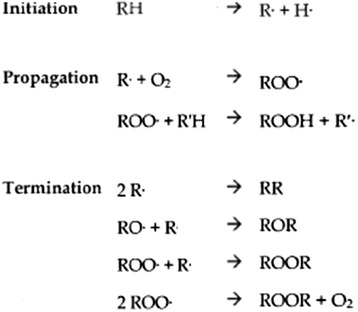
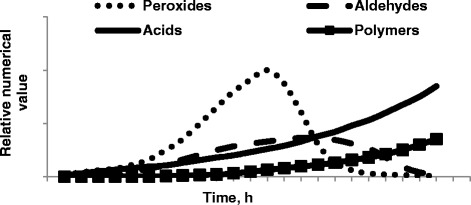
Feed fats and oils provide significant amounts of energy to swine diets, but there is large variation in composition, quality, feeding value, and price among sources. Common measures of lipid quality include moisture, insolubles, and unsaponifiables (MIU), titer, and free fatty acid content, but provide limited information regarding their feeding value. Lipid peroxidation is an important quality factor related to animal growth performance and health, but maximum tolerable limits in various lipids have not been established. Several indicative assays can be used to detect the presence of various peroxidation compounds, but due to the complexity and numerous compounds produced and degraded during peroxidation process, no single method can adequately determine the extent of peroxidation. Until further information is available, using a combination of peroxide value, thiobarbituric acid reactive substances (TBARS), and anisidine value appear to provide a reasonable assessment of the extent of peroxidation in a lipid at a reasonable cost. However, fatty acid composition of the lipid being evaluated should be considered when selecting specific assays. Predictive tests can also be used to estimate the stability or susceptibility of lipids to peroxidation and include active oxygen method, oil stability index, and oxygen bomb method. A review of 16 published studies with pigs has shown an average decrease of 11.4% in growth rate, 8.8% feed intake fed isocaloric diets containing peroxidized lipids compared to diets containing unperoxidized lipids of the same source. Furthermore, serum vitamin E content was generally reduced and serum TBARS content was increased when peroxidized lipids were fed in these studies, suggesting that feeding peroxidized lipids negatively affects metabolic oxidative status of pigs. However, it is unclear if antioxidants are useful additions to lipids to maintain optimal nutritional value, or if their addition to swine diets is beneficial in overcoming a metabolic oxidative challenge.
饲料中的油脂为猪的日粮提供了大量能量,但不同来源的油脂在成分、质量、饲喂价值和价格方面存在很大差异。脂质质量的常见衡量指标包括水分、不溶物和不皂化物(MIU)、滴定度和游离脂肪酸含量,但这些指标提供的关于其饲喂价值的信息有限。脂质过氧化是一个与动物生长性能和健康相关的重要质量因素,但尚未确定各种脂质中的最大可耐受限度。有几种指示性检测方法可用于检测各种过氧化化合物的存在,但由于过氧化过程中产生和降解的化合物复杂且数量众多,没有一种单一方法能够充分确定过氧化的程度。在获得更多信息之前,结合使用过氧化值、硫代巴比妥酸反应性物质(TBARS)和茴香胺值,似乎能够以合理的成本对脂质中的过氧化程度进行合理评估。然而,在选择特定检测方法时,应考虑被评估脂质的脂肪酸组成。预测性检测也可用于估计脂质对过氧化的稳定性或敏感性,包括活性氧法、油稳定性指数和氧弹法。对16项已发表的猪研究的综述表明,与饲喂相同来源未过氧化脂质的日粮相比,饲喂含过氧化脂质的等热量日粮时,生长速度平均降低11.4%,采食量降低8.8%。此外,在这些研究中,饲喂过氧化脂质时,血清维生素E含量通常会降低,血清TBARS含量会增加,这表明饲喂过氧化脂质会对猪的代谢氧化状态产生负面影响。然而,目前尚不清楚抗氧化剂添加到脂质中是否有助于维持最佳营养价值,或者其添加到猪日粮中是否有利于克服代谢氧化挑战。