Zuluaga Maria A, Rodionov Roman, Nowell Mark, Achhala Sufyan, Zombori Gergely, Mendelson Alex F, Cardoso M Jorge, Miserocchi Anna, McEvoy Andrew W, Duncan John S, Ourselin Sébastien
Translational Imaging Group, CMIC, University College London, London, UK,
Int J Comput Assist Radiol Surg. 2015 Aug;10(8):1227-37. doi: 10.1007/s11548-015-1174-5. Epub 2015 Apr 7.
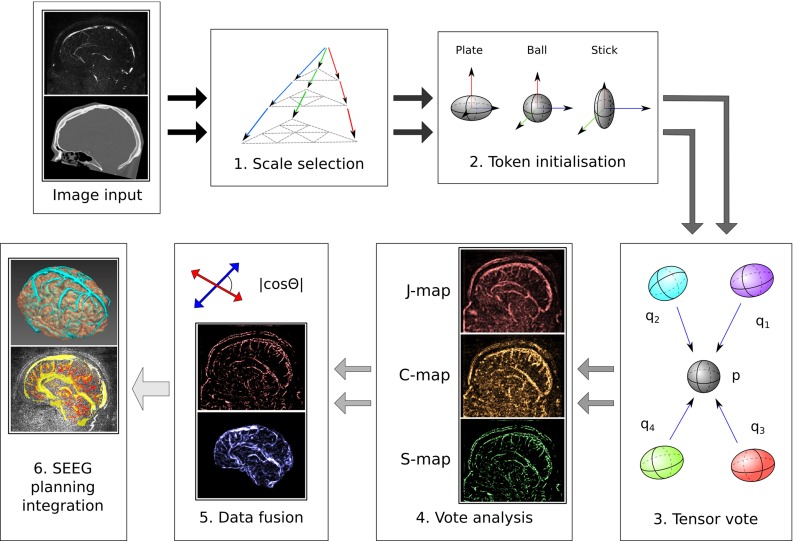
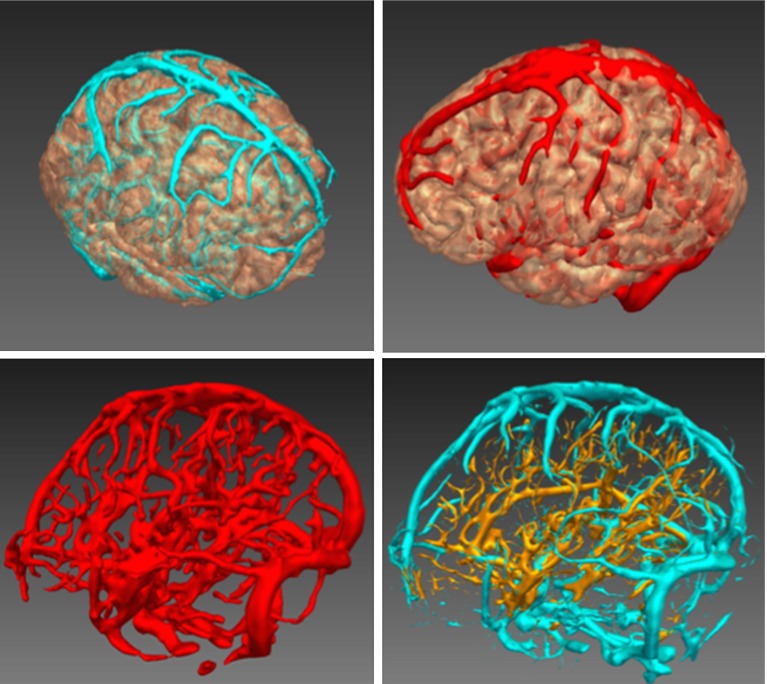
Brain vessels are among the most critical landmarks that need to be assessed for mitigating surgical risks in stereo-electroencephalography (SEEG) implantation. Intracranial haemorrhage is the most common complication associated with implantation, carrying significantly associated morbidity. SEEG planning is done pre-operatively to identify avascular trajectories for the electrodes. In current practice, neurosurgeons have no assistance in the planning of electrode trajectories. There is great interest in developing computer-assisted planning systems that can optimise the safety profile of electrode trajectories, maximising the distance to critical structures. This paper presents a method that integrates the concepts of scale, neighbourhood structure and feature stability with the aim of improving robustness and accuracy of vessel extraction within a SEEG planning system.
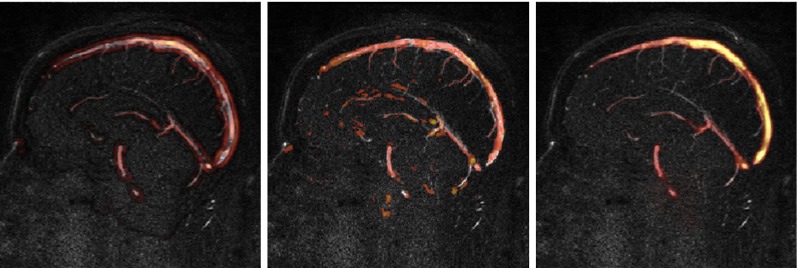
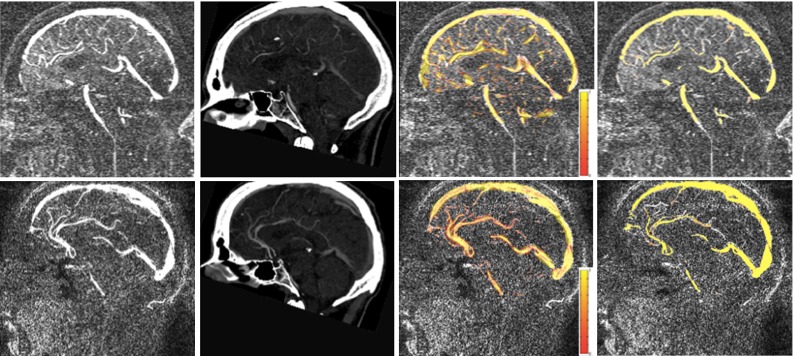
The developed method accounts for scale and vicinity of a voxel by formulating the problem within a multi-scale tensor voting framework. Feature stability is achieved through a similarity measure that evaluates the multi-modal consistency in vesselness responses. The proposed measurement allows the combination of multiple images modalities into a single image that is used within the planning system to visualise critical vessels.
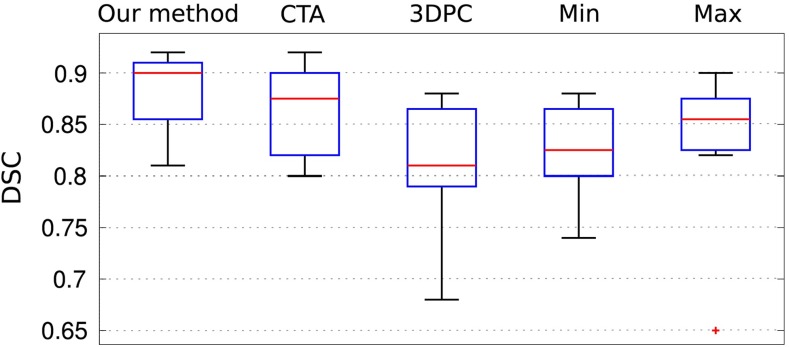
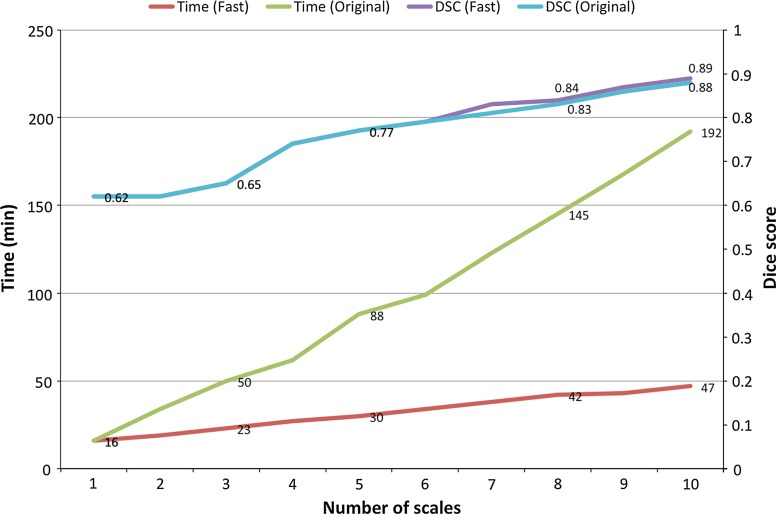
Twelve paired data sets from two image modalities available within the planning system were used for evaluation. The mean Dice similarity coefficient was 0.89 ± 0.04, representing a statistically significantly improvement when compared to a semi-automated single human rater, single-modality segmentation protocol used in clinical practice (0.80 ± 0.03).
Multi-modal vessel extraction is superior to semi-automated single-modality segmentation, indicating the possibility of safer SEEG planning, with reduced patient morbidity.
脑血管是立体定向脑电图(SEEG)植入手术中评估手术风险时最关键的标志之一。颅内出血是与植入相关的最常见并发症,具有显著的相关发病率。SEEG规划在术前进行,以确定电极的无血管轨迹。在当前实践中,神经外科医生在电极轨迹规划方面没有辅助工具。开发能够优化电极轨迹安全状况、最大化与关键结构距离的计算机辅助规划系统具有重大意义。本文提出一种方法,该方法整合了尺度、邻域结构和特征稳定性的概念,旨在提高SEEG规划系统内血管提取的鲁棒性和准确性。
所开发的方法通过在多尺度张量投票框架内构建问题来考虑体素的尺度和邻域。通过一种相似性度量实现特征稳定性,该度量评估血管性响应中的多模态一致性。所提出的度量允许将多个图像模态组合成单个图像,该图像在规划系统中用于可视化关键血管。
使用规划系统中可用的来自两种图像模态的12对数据集进行评估。平均骰子相似系数为0.89±0.04,与临床实践中使用的半自动单人评分、单模态分割协议(0.80±0.03)相比,有统计学显著改善。
多模态血管提取优于半自动单模态分割,这表明SEEG规划更安全、患者发病率降低具有可能性。