Naoumkina Marina, Thyssen Gregory N, Fang David D
BMC Plant Biol. 2015 Feb 27;15:65. doi: 10.1186/s12870-015-0454-0.
Cotton fiber length is a key determinant of fiber quality for the textile industry. Understanding the molecular basis of fiber elongation would provide a means for improvement of fiber length. Ligon lintless-1 (Li 1 ) and Ligon lintless-2 (Li 2 ) are monogenic and dominant mutations, that result in an extreme reduction in the length of lint fiber to approximately 6 mm on mature seeds. In a near-isogenic state with wild type (WT) cotton these two short fiber mutants provide an excellent model system to study mechanisms of fiber elongation.
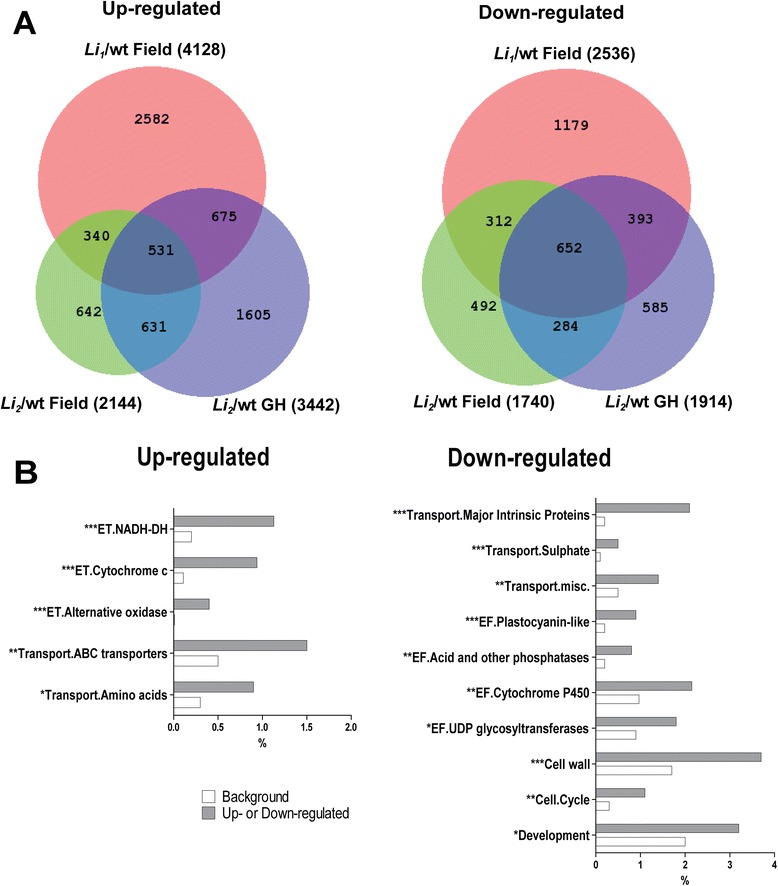
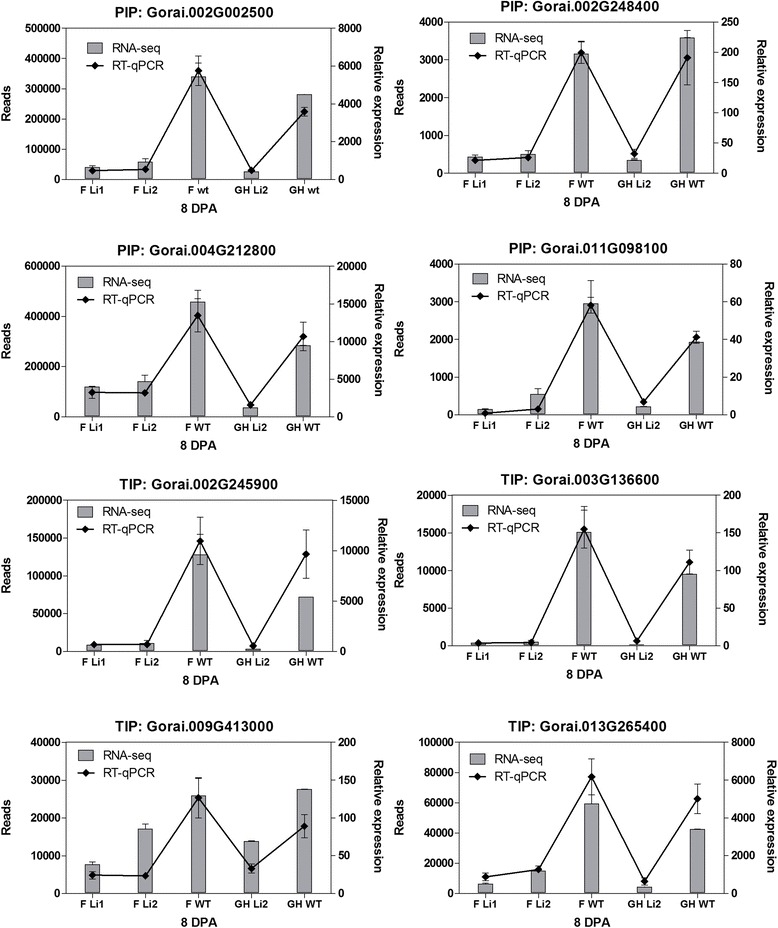
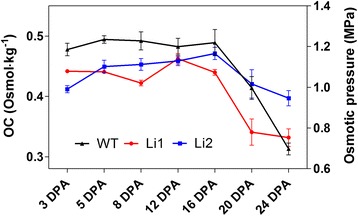
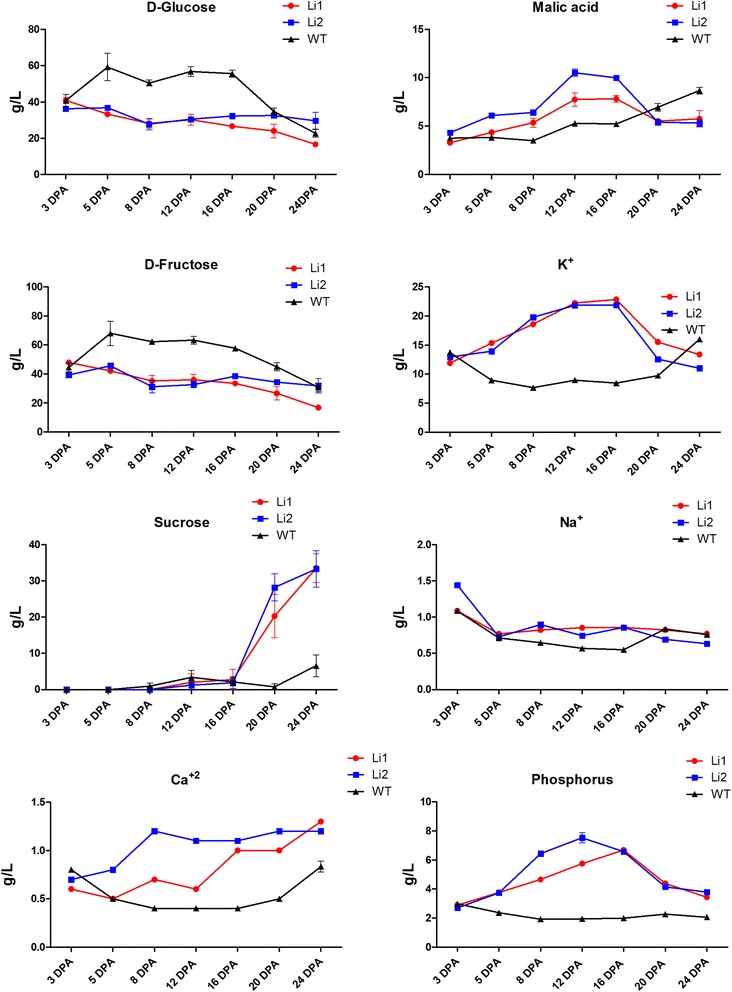
We used next generation sequencing (RNA-seq) to identify common fiber elongation related genes in developing fibers of Li 1 and Li 2 mutants growing in the field and a greenhouse. We found a large number of differentially expressed genes common to both mutants, including 531 up-regulated genes and 652 down-regulated genes. Major intrinsic proteins or aquaporins were one of the most significantly over-represented gene families among common down-regulated genes in Li 1 and Li 2 fibers. The members of three subfamilies of aquaporins, including plasma membrane intrinsic proteins, tonoplast intrinsic proteins and NOD26-like intrinsic proteins were down-regulated in short fiber mutants. The osmotic concentration and the concentrations of soluble sugars were lower in fiber cells of both short fiber mutants than in WT, whereas the concentrations of K+ and malic acid were significantly higher in mutants during rapid cell elongation.
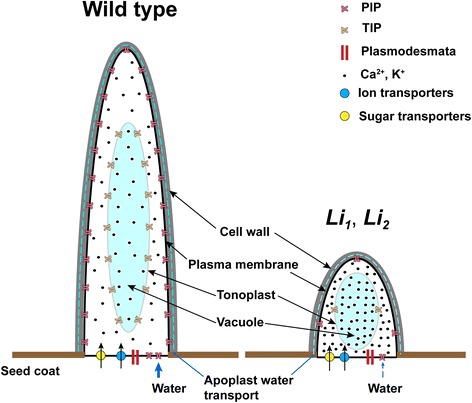
We found that the aquaporins were the most down-regulated gene family in both short fiber mutants. The osmolality and concentrations of soluble sugars were less in saps of Li 1 - Li 2 , whereas the concentrations of malic acid, K+ and other detected ions were significantly higher in saps of mutants than in WT. These results suggest that higher accumulation of ions in fiber cells, reduced osmotic pressure and low expression of aquaporins, may contribute to the cessation of fiber elongation in Li 1 and Li 2 short-fiber mutants. The research presented here provides new insights into osmoregulation of short fiber mutants and the role of aquaporins in cotton fiber elongation.
棉纤维长度是纺织工业中纤维品质的关键决定因素。了解纤维伸长的分子基础将为改善纤维长度提供一种方法。无绒-1(Li1)和无绒-2(Li2)是单基因显性突变体,导致成熟种子上的皮棉纤维长度极度缩短至约6毫米。在与野生型(WT)棉花的近等基因状态下,这两个短纤维突变体为研究纤维伸长机制提供了一个优秀的模型系统。
我们使用下一代测序(RNA-seq)来鉴定在田间和温室中生长的Li1和Li2突变体发育纤维中与纤维伸长相关的共同基因。我们发现两个突变体共有大量差异表达基因,包括531个上调基因和652个下调基因。主要内在蛋白或水通道蛋白是Li1和Li2纤维共同下调基因中最显著富集的基因家族之一。水通道蛋白三个亚家族的成员,包括质膜内在蛋白、液泡膜内在蛋白和NOD26样内在蛋白,在短纤维突变体中下调。两个短纤维突变体的纤维细胞中的渗透浓度和可溶性糖浓度均低于野生型,而在细胞快速伸长期间,突变体中的钾离子和苹果酸浓度显著更高。
我们发现水通道蛋白是两个短纤维突变体中下调最明显的基因家族。Li1-Li2的汁液中渗透压和可溶性糖浓度较低,而突变体汁液中的苹果酸、钾离子和其他检测到的离子浓度显著高于野生型。这些结果表明,纤维细胞中离子的较高积累、渗透压降低和水通道蛋白的低表达,可能导致Li1和Li2短纤维突变体中纤维伸长的停止。本文的研究为短纤维突变体的渗透调节以及水通道蛋白在棉纤维伸长中的作用提供了新的见解。