Walker Andrew W, Smith Craig M, Chua Berenice E, Krstew Elena V, Zhang Cary, Gundlach Andrew L, Lawrence Andrew J
Neuropeptides Division, The Florey Institute of Neuroscience and Mental Health, Melbourne, Victoria, Australia; Behavioural Neuroscience Division, The Florey Institute of Neuroscience and Mental Health, Melbourne, Victoria, Australia; Florey Department of Neuroscience and Mental Health, The University of Melbourne, Melbourne, Victoria, Australia.
Neuropeptides Division, The Florey Institute of Neuroscience and Mental Health, Melbourne, Victoria, Australia.
PLoS One. 2015 Apr 7;10(4):e0122504. doi: 10.1371/journal.pone.0122504. eCollection 2015.
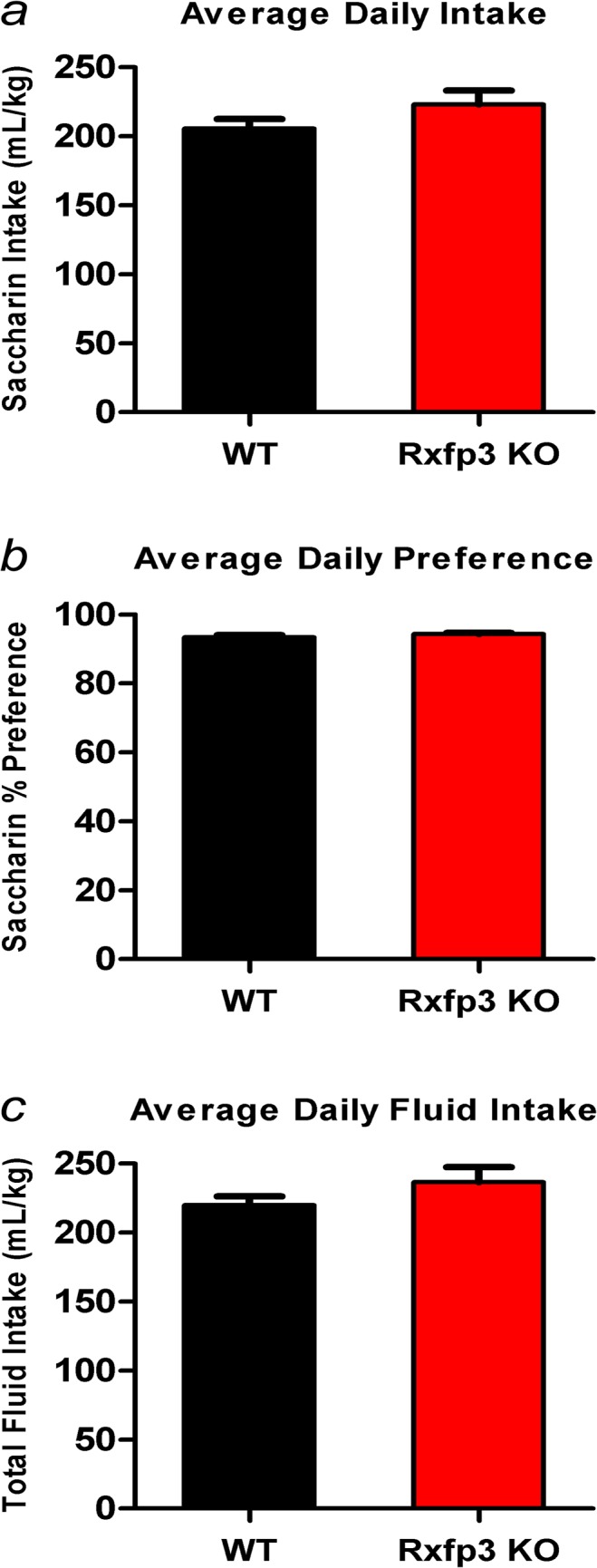
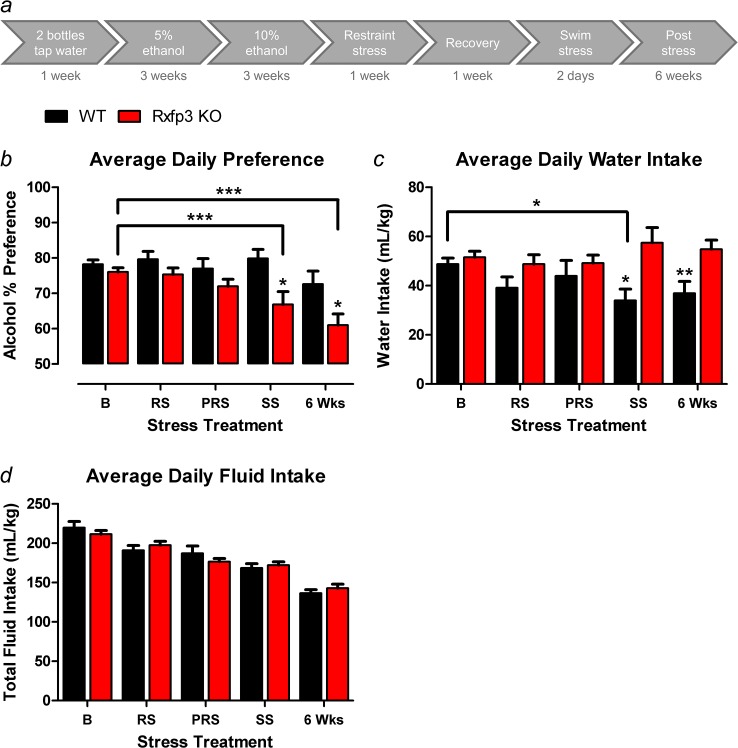
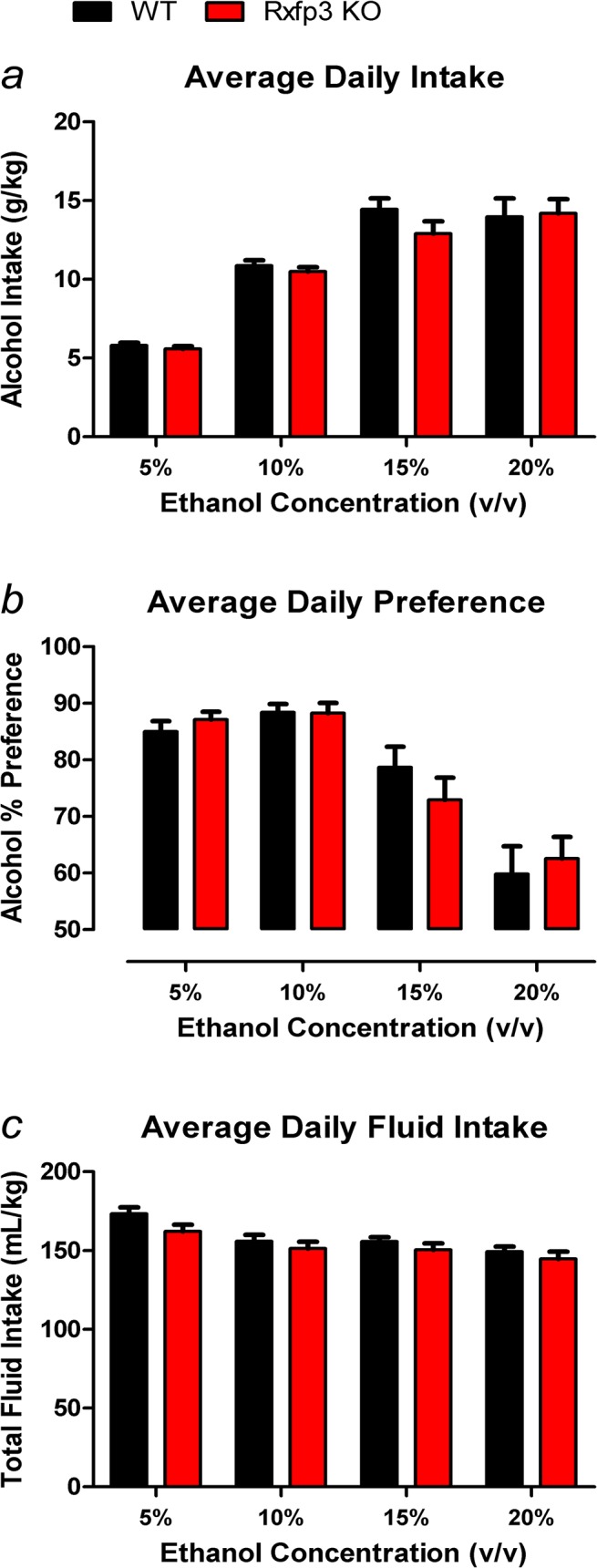
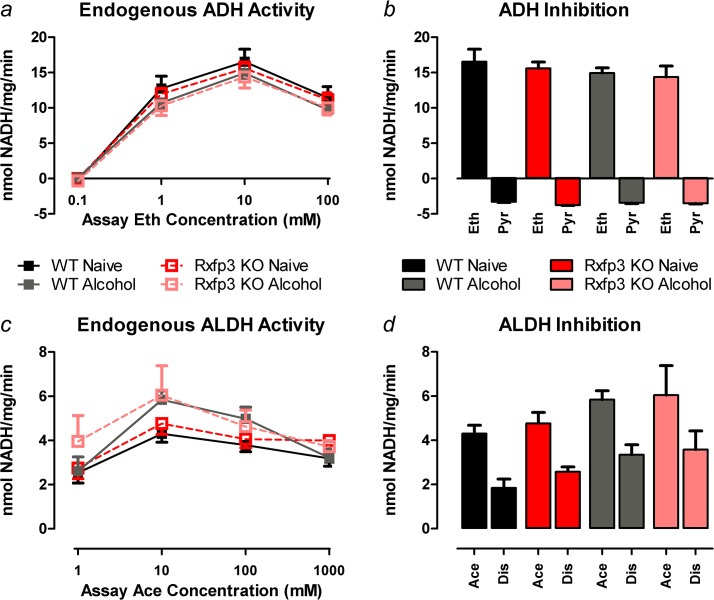
Stressful life events are causally linked with alcohol use disorders (AUDs), providing support for a hypothesis that alcohol consumption is aimed at stress reduction. We have previously shown that expression of relaxin-3 mRNA in rat brain correlates with alcohol intake and that central antagonism of relaxin-3 receptors (RXFP3) prevents stress-induced reinstatement of alcohol-seeking. Therefore the objectives of these studies were to investigate the impact of Rxfp3 gene deletion in C57BL/6J mice on baseline and stress-related alcohol consumption. Male wild-type (WT) and Rxfp3 knockout (KO) (C57/B6JRXFP3TM1/DGen) littermate mice were tested for baseline saccharin and alcohol consumption and preference over water in a continuous access two-bottle free-choice paradigm. Another cohort of mice was subjected to repeated restraint followed by swim stress to examine stress-related alcohol preference. Hepatic alcohol and aldehyde dehydrogenase activity was assessed in mice following chronic alcohol intake and in naive controls. WT and Rxfp3 KO mice had similar baseline saccharin and alcohol preference, and hepatic alcohol processing. However, Rxfp3 KO mice displayed a stress-induced reduction in alcohol preference that was not observed in WT littermates. Notably, this phenotype, once established, persisted for at least six weeks after cessation of stress exposure. These findings suggest that in mice, relaxin-3/RXFP3 signalling is involved in maintaining high alcohol preference during and after stress, but does not appear to strongly regulate the primary reinforcing effects of alcohol.
压力性生活事件与酒精使用障碍(AUDs)存在因果联系,这为酒精消费旨在减轻压力这一假说提供了支持。我们之前已经表明,大鼠脑中松弛素-3 mRNA的表达与酒精摄入量相关,并且松弛素-3受体(RXFP3)的中枢拮抗作用可防止应激诱导的觅酒行为恢复。因此,这些研究的目的是调查C57BL/6J小鼠中Rxfp3基因缺失对基线及与应激相关的酒精消费的影响。在连续获取两瓶自由选择范式中,对雄性野生型(WT)和Rxfp3基因敲除(KO)(C57/B6JRXFP3TM1/DGen)同窝小鼠进行基线糖精和酒精消费以及相对于水的偏好测试。另一组小鼠接受重复束缚,随后进行游泳应激,以检查与应激相关的酒精偏好。在慢性酒精摄入后的小鼠以及未处理的对照小鼠中评估肝脏酒精和醛脱氢酶活性。WT和Rxfp3 KO小鼠具有相似的基线糖精和酒精偏好以及肝脏酒精代谢能力。然而,Rxfp3 KO小鼠表现出应激诱导的酒精偏好降低,而在WT同窝小鼠中未观察到这种情况。值得注意的是,这种表型一旦形成,在应激暴露停止后至少持续六周。这些发现表明,在小鼠中,松弛素-3/RXFP3信号通路参与在应激期间及之后维持高酒精偏好,但似乎并不强烈调节酒精的主要强化作用。