
膜式和离心式治疗性血浆置换:体外循环抗凝的实际困难。
Membrane and centrifugal therapeutic plasma exchange: practical difficulties in anticoagulating the extracorporeal circuit.
作者信息
Puppe B, Kingdon E J
机构信息
Sussex Kidney Unit , Royal Sussex County Hospital , BN2 5BE, Brighton , UK.
出版信息
Clin Kidney J. 2014 Apr;7(2):201-5. doi: 10.1093/ckj/sft163. Epub 2014 Jan 23.
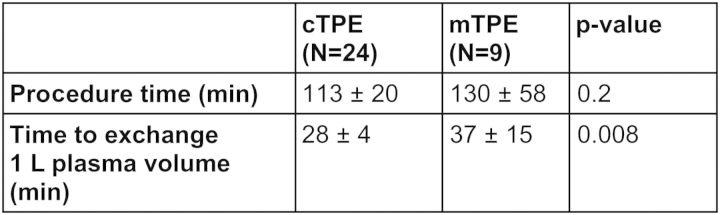
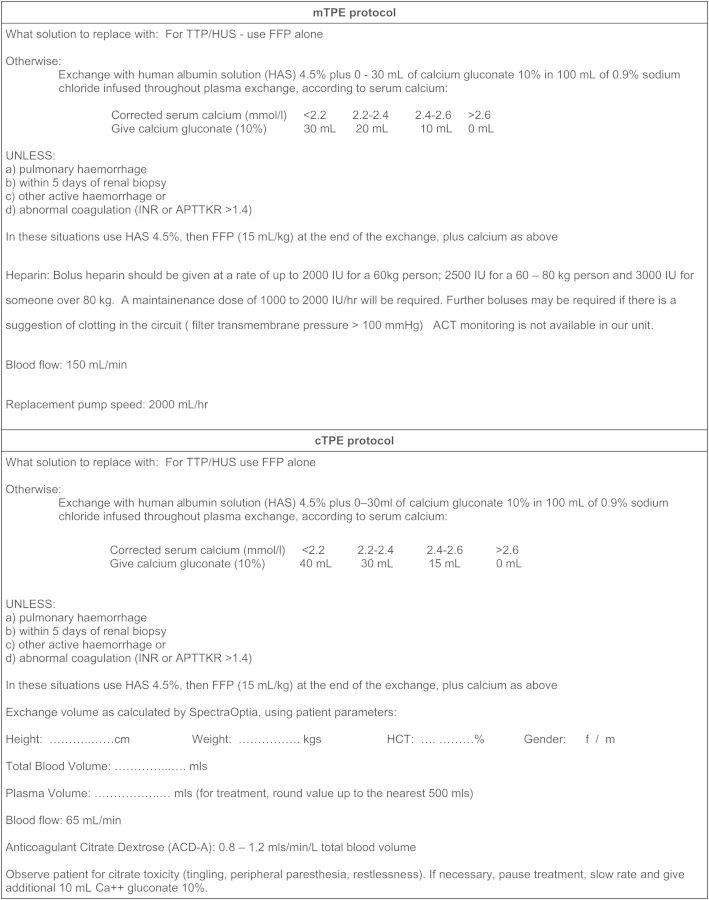
Therapeutic plasma exchange (TPE) is a well-established treatment modality for nephrology patients, using two conventional methods: membrane (mTPE) or centrifugal TPE (cTPE). Although the efficacy of both treatments has been described, there are few reports that compare these methodologies. Here we describe three nephrology patients who were treated with both mTPE and cTPE. The mTPE method, but not the cTPE method, was associated with persistent difficulty anticoagulating the extracorporeal circuit in all three patients. In mTPE procedures, the doses of heparin bolus and infusion rate were important determinants of whether the circuit clotted. With a heparin bolus at or below 2000 IU, clotting occurred in 67% of treatments, dropping to 25% with a bolus of >2000 IU. Likewise, a heparin infusion rate during the procedure was indicative of clotting. With a maintenance infusion of <2000 IU/h, most circuits clotted. No clotting was observed during cTPE procedures using acid citrate dextrose formula A solution as an anticoagulant of the extracorporeal circuit. Overall, difficulties maintaining the extracorporeal circuit in mTPE required the use of additional disposable sets, high doses of heparin and nursing time. In addition, mTPE procedures took longer to perform than cTPE.
治疗性血浆置换(TPE)是一种成熟的肾病治疗方式,采用两种传统方法:膜式(mTPE)或离心式TPE(cTPE)。尽管两种治疗方法的疗效都有描述,但比较这些方法的报告很少。在此,我们描述了三名接受mTPE和cTPE治疗的肾病患者。在所有三名患者中,mTPE方法而非cTPE方法与体外循环持续抗凝困难有关。在mTPE操作中,肝素推注剂量和输注速率是体外循环是否凝血的重要决定因素。肝素推注剂量在2000 IU及以下时,67%的治疗出现凝血,推注剂量>2000 IU时,凝血发生率降至25%。同样,操作过程中的肝素输注速率也表明是否会凝血。维持输注速率<2000 IU/h时,大多数体外循环会凝血。使用酸性枸橼酸盐葡萄糖配方A溶液作为体外循环抗凝剂的cTPE操作过程中未观察到凝血现象。总体而言,mTPE中维持体外循环的困难需要使用额外的一次性套件、高剂量肝素和护理时间。此外,mTPE操作比cTPE耗时更长。

 Zotero 插件