Frewen Paul A, Brown Matthew F D, Steuwe Carolin, Lanius Ruth A
Department of Psychiatry, Western University, London, Ontario, Canada.
Department of Psychology, Western University, London, Ontario, Canada.
Eur J Psychotraumatol. 2015 Apr 1;6:26406. doi: 10.3402/ejpt.v6.26406. eCollection 2015.
A dissociative subtype has been recognized based on the presence of experiences of depersonalization and derealization in relation to DSM-IV posttraumatic stress disorder (PTSD). However, the dissociative subtype has not been assessed in a community sample in relation to the revised DSM-5 PTSD criteria. Moreover, the 20-item PTSD Checklist for DSM-5 (PCL-5) currently does not assess depersonalization and derealization.
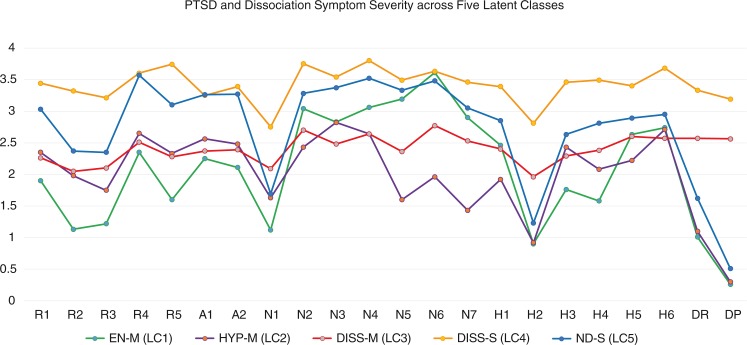
We therefore evaluated two items for assessing depersonalization and derealization in 557 participants recruited online who endorsed PTSD symptoms of at least moderate severity on the PCL-5.
A five-class solution identified two PTSD classes who endorsed dissociative experiences associated with either 1) severe or 2) moderate PTSD symptom severity (D-PTSD classes). Those in the severe dissociative class were particularly likely to endorse histories of childhood physical and sexual abuse. A principal axis factor analysis of the symptom list identified six latent variables: 1) Reexperiencing, 2) Emotional Numbing/Anhedonia, 3) Dissociation, 4) Negative Alterations in Cognition & Mood, 5) Avoidance, and 6) Hyperarousal.
The present results further support the presence of a dissociative subtype within the DSM-5 criteria for PTSD.
基于与《精神疾病诊断与统计手册》第四版(DSM-IV)创伤后应激障碍(PTSD)相关的人格解体和现实解体体验,已识别出一种分离亚型。然而,尚未在社区样本中根据修订后的DSM-5 PTSD标准对分离亚型进行评估。此外,目前的20项DSM-5 PTSD检查表(PCL-5)未评估人格解体和现实解体。
因此,我们在557名通过网络招募的参与者中评估了两项用于评估人格解体和现实解体的条目,这些参与者在PCL-5上认可至少中度严重程度的PTSD症状。
一个五类解决方案识别出两类PTSD患者,他们认可与1)严重或2)中度PTSD症状严重程度相关的分离体验(D-PTSD类别)。严重分离类别的患者特别可能认可童年期身体和性虐待史。对症状列表进行的主轴因子分析确定了六个潜在变量:1)重新体验,2)情感麻木/快感缺失,3)分离,4)认知与情绪的消极改变,5)回避,以及6)过度警觉。
目前的结果进一步支持在DSM-5 PTSD标准中存在分离亚型。