Li L, Li T, Zhang Y, Pan Z, Wu B, Huang X, Zhang Y, Mei Y, Ge L, Shen G, Ge R-s, Zhu D, Lou Y
Institute of Pharmacology, Toxicology and Biochemical Pharmaceutics, Key Innovation Team for Stem Cell Translational Medicine of Cardiovascular Disease of Zhejiang Province, College of Pharmaceutical Sciences, Zhejiang University, Hangzhou, China.
Cardiovascular Key Laboratory of Zhejiang Province, The 2nd Affiliated Hospital, College of Medicine, Zhejiang University, Hangzhou, China.
Cell Death Dis. 2015 Apr 9;6(4):e1715. doi: 10.1038/cddis.2015.88.
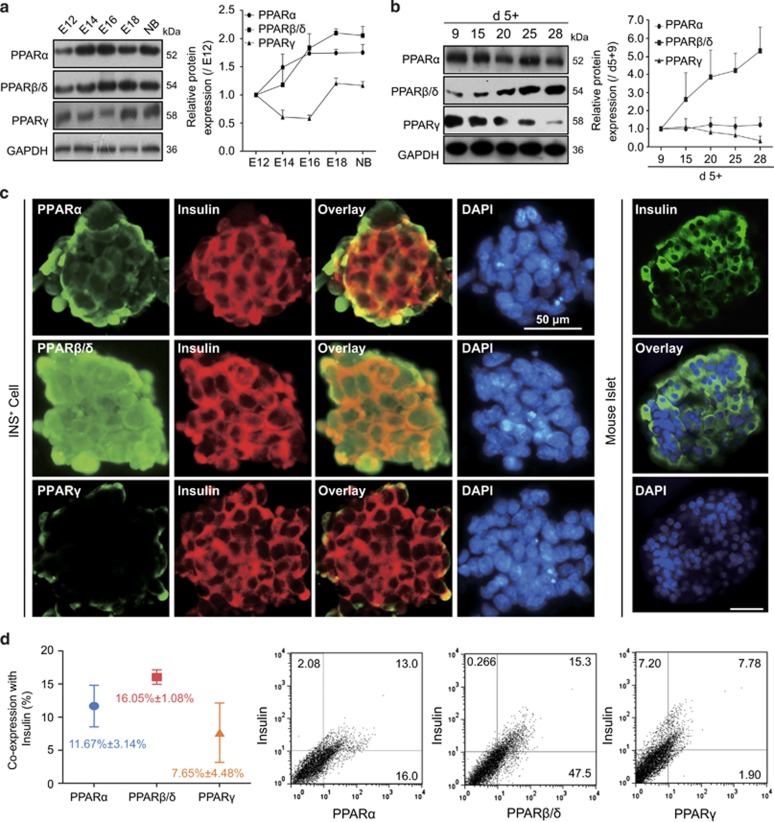
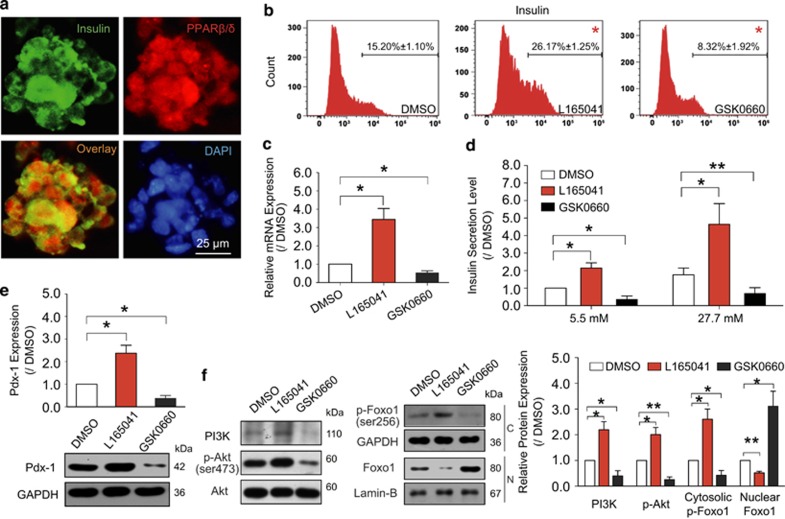
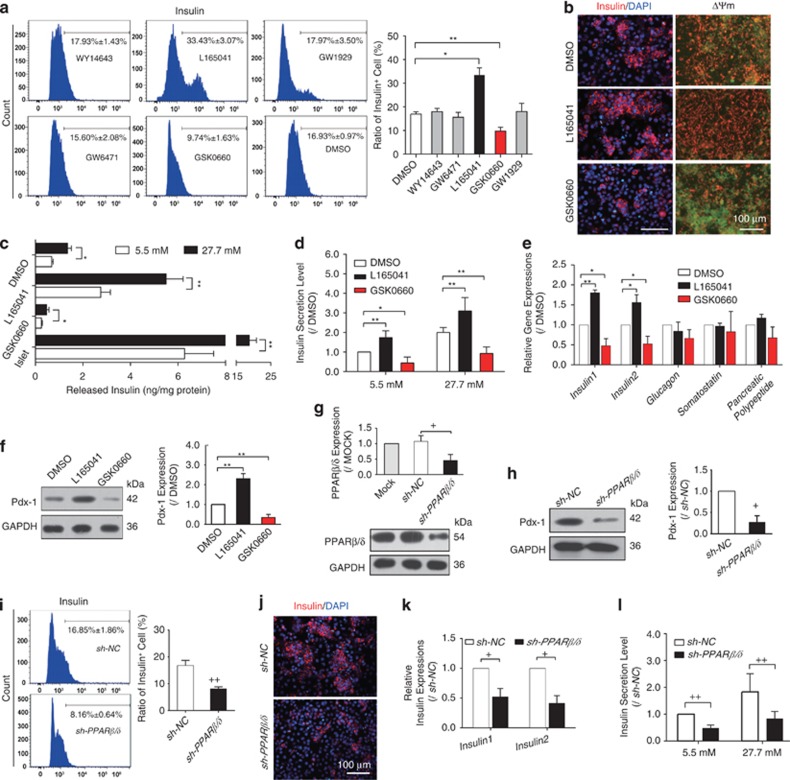
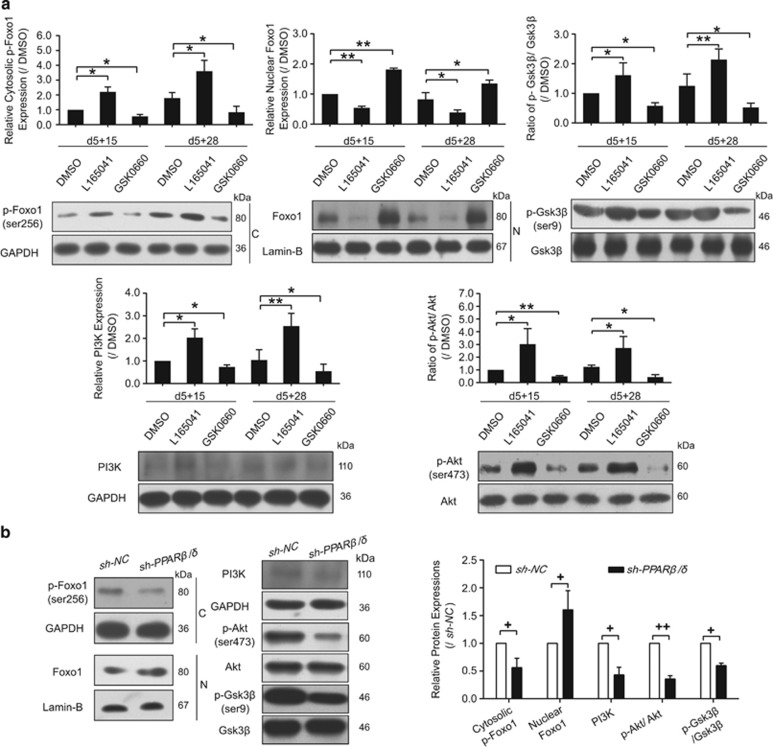
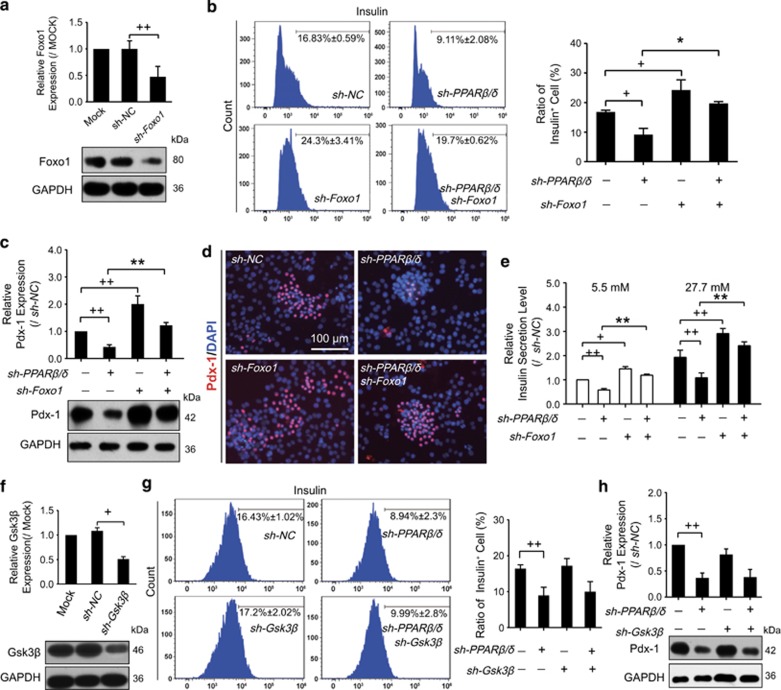
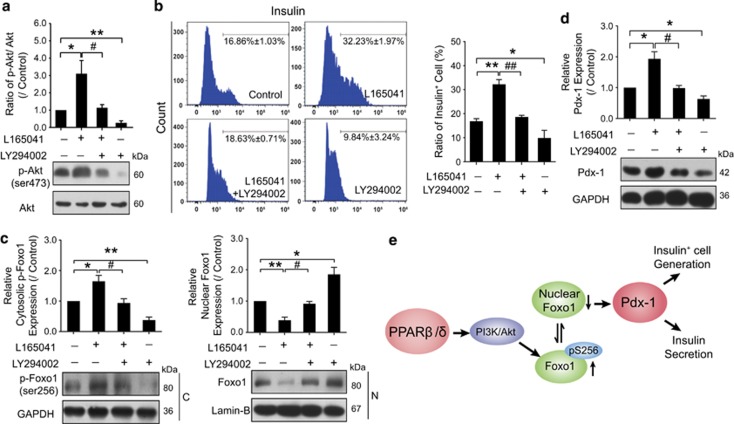
Peroxisome proliferator-activated receptors (PPARs) participate in energy homeostasis and play essential roles in diabetes therapy through their effects on non-pancreas tissues. Pathological microenvironment may influence the metabolic requirements for the maintenance of stem cell differentiation. Accordingly, understanding the mechanisms of PPARs on pancreatic β-cell differentiation may be helpful to find the underlying targets of disrupted energy homeostasis under the pancreatic disease condition. PPARs are involved in stem cell differentiation via mitochondrial oxidative phosphorylation, but the subtype member activation and the downstream regulation in functional insulin-positive (INS+) cell differentiation remain unclear. Here, we show a novel role of PPARβ/δ activation in determining INS+ cell differentiation and functional maturation. We found PPARβ/δ expression selectively upregulated in mouse embryonic pancreases or stem cells-derived INS+ cells at the pancreatic mature stage in vivo and in vitro. Strikingly, given the inefficiency of generating INS+ cells in vitro, PPARβ/δ activation displayed increasing mouse and human ES cell-derived INS+ cell numbers and insulin secretion. This phenomenon was closely associated with the forkhead box protein O1 (Foxo1) nuclear shuttling, which was dependent on PPARβ/δ downstream PI3K/Akt signaling transduction. The present study reveals the essential role of PPARβ/δ activation on p-Foxo1/Foxo1 status, and in turn, determining INS+ cell generation and insulin secretion via affecting pancreatic and duodenal homeobox-1 expression. The results demonstrate the underlying mechanism by which PPARβ/δ activation promotes functional INS+ cell differentiation. It also provides potential targets for anti-diabetes drug discovery and hopeful clinical applications in human cell therapy.
过氧化物酶体增殖物激活受体(PPARs)参与能量稳态,并通过其对非胰腺组织的作用在糖尿病治疗中发挥重要作用。病理微环境可能会影响维持干细胞分化的代谢需求。因此,了解PPARs对胰腺β细胞分化的机制可能有助于找到胰腺疾病状态下能量稳态破坏的潜在靶点。PPARs通过线粒体氧化磷酸化参与干细胞分化,但在功能性胰岛素阳性(INS+)细胞分化中的亚型成员激活和下游调节仍不清楚。在这里,我们展示了PPARβ/δ激活在确定INS+细胞分化和功能成熟中的新作用。我们发现,在体内和体外胰腺成熟阶段的小鼠胚胎胰腺或干细胞来源的INS+细胞中,PPARβ/δ表达选择性上调。令人惊讶的是,鉴于体外生成INS+细胞的效率低下,PPARβ/δ激活增加了小鼠和人类胚胎干细胞来源的INS+细胞数量和胰岛素分泌。这种现象与叉头框蛋白O1(Foxo1)的核穿梭密切相关,这依赖于PPARβ/δ下游的PI3K/Akt信号转导。本研究揭示了PPARβ/δ激活对p-Foxo1/Foxo1状态的重要作用,进而通过影响胰腺和十二指肠同源盒-1的表达来确定INS+细胞的生成和胰岛素分泌。结果证明了PPARβ/δ激活促进功能性INS+细胞分化的潜在机制。它还为抗糖尿病药物发现提供了潜在靶点,并有望在人类细胞治疗中得到临床应用。