Pereira Milton, Soares Chrislaine, Canuto Gisele André Baptista, Tavares Marina Franco Maggi, Colli Walter, Alves Maria Julia M
Departamento de Bioquímica, Instituto de Química, Universidade de São Paulo, São Paulo, Brazil.
Departamento de Química Fundamental, Instituto de Química Universidade de São Paulo, São Paulo, Brazil.
PLoS Negl Trop Dis. 2015 Apr 9;9(4):e0003683. doi: 10.1371/journal.pntd.0003683. eCollection 2015 Apr.
Adhesion of the Trypanosoma cruzi trypomastigotes, the causative agent of Chagas' disease in humans, to components of the extracellular matrix (ECM) is an important step in host cell invasion. The signaling events triggered in the parasite upon binding to ECM are less explored and, to our knowledge, there is no data available regarding •NO signaling.
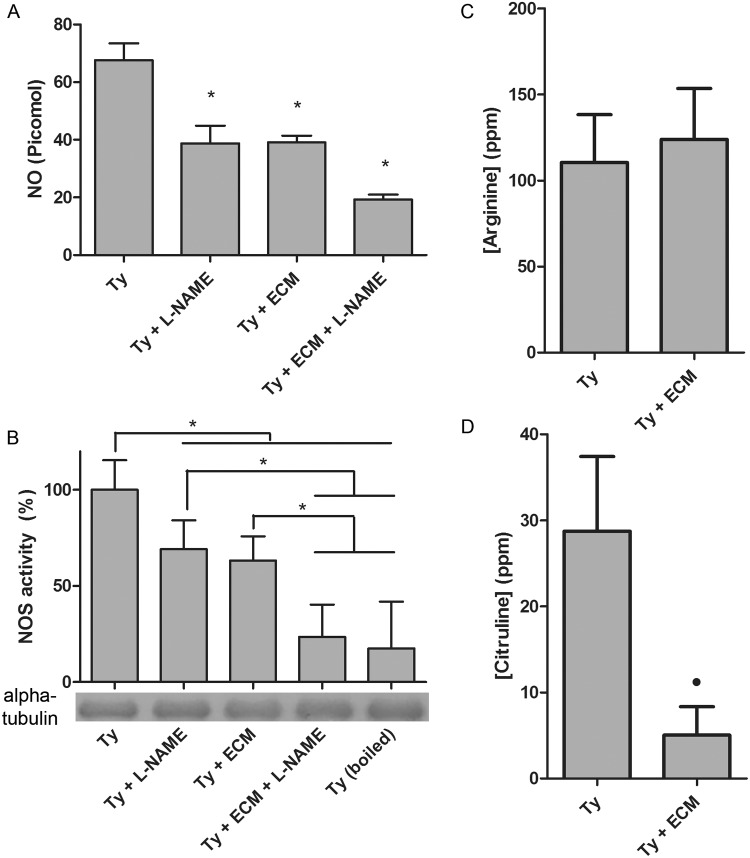
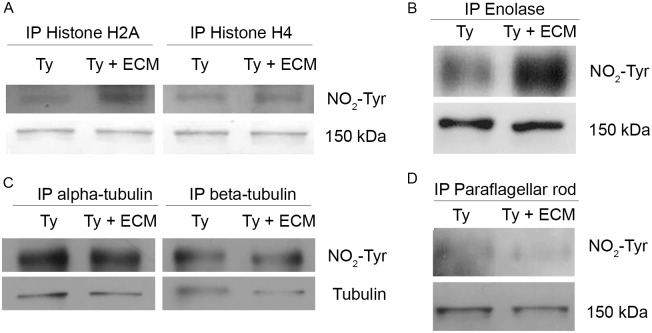
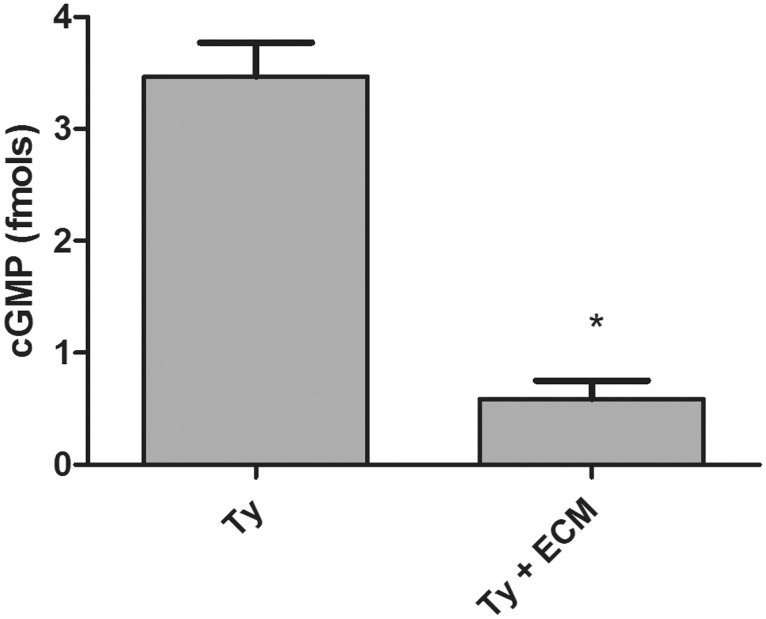
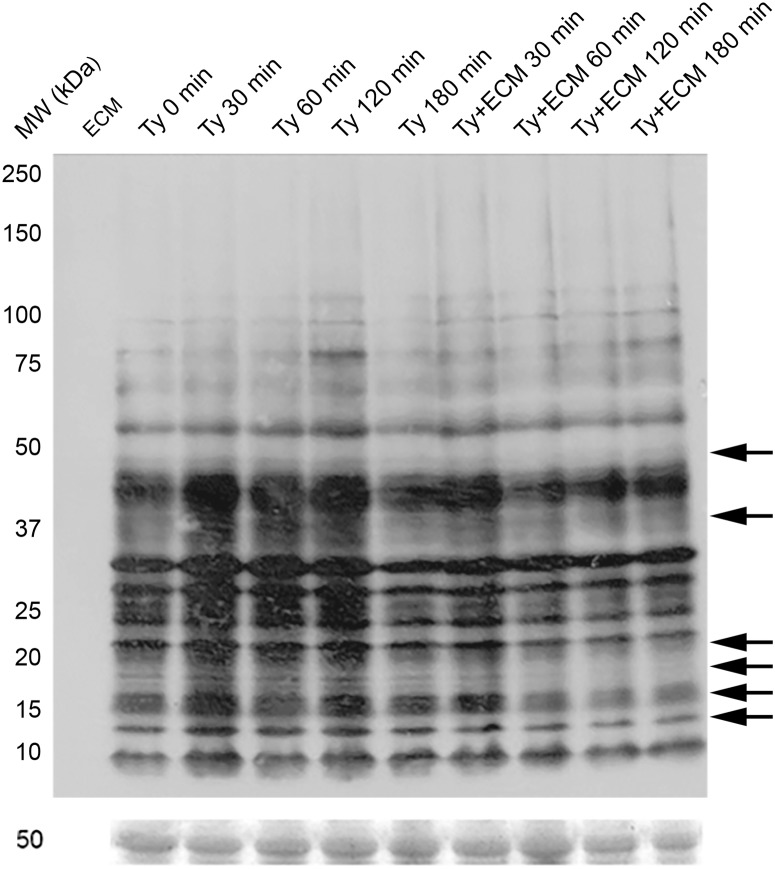
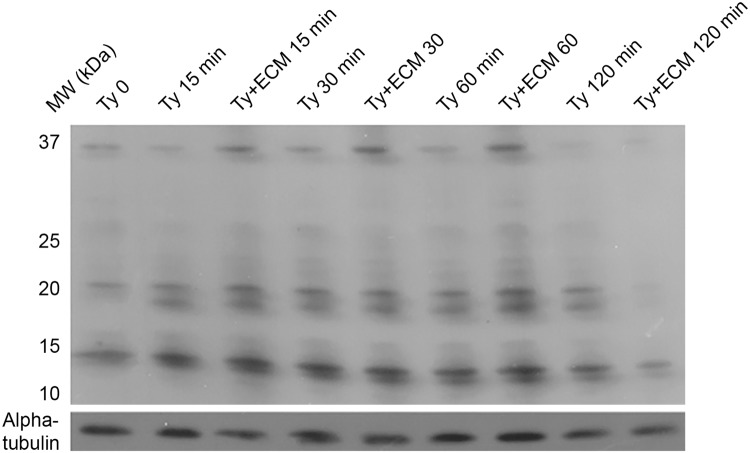
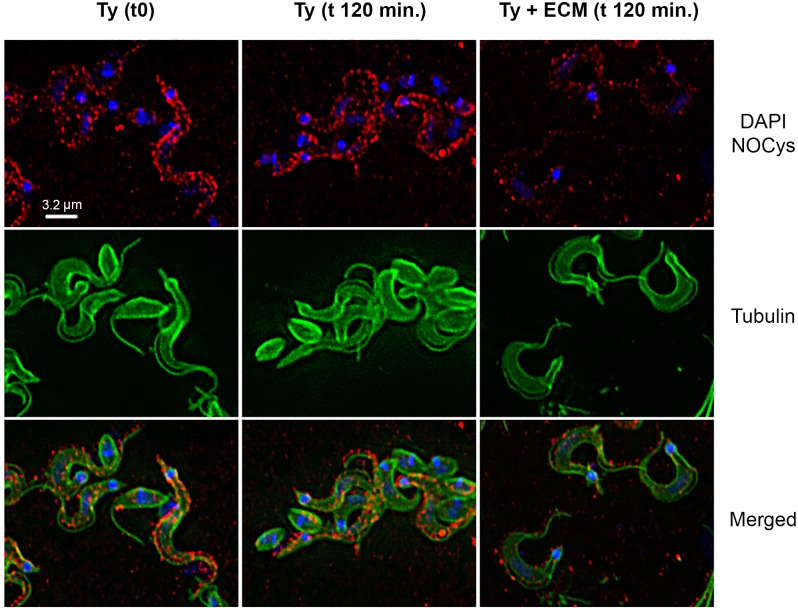
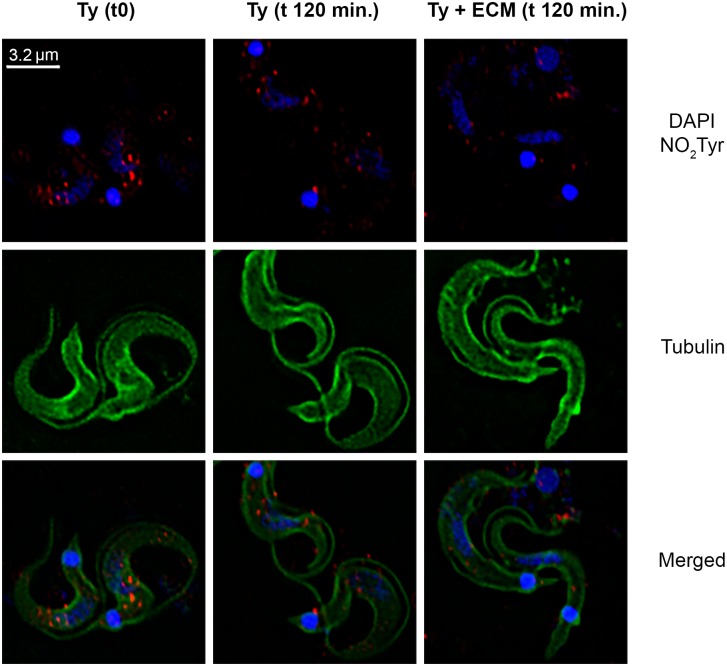
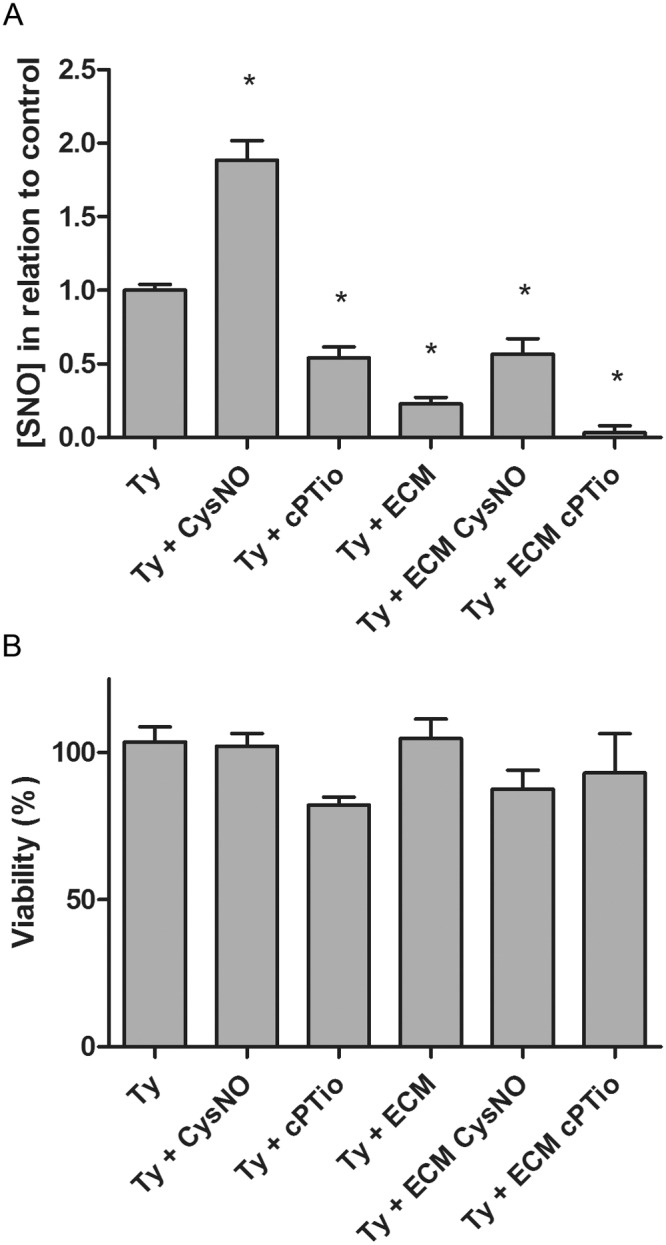
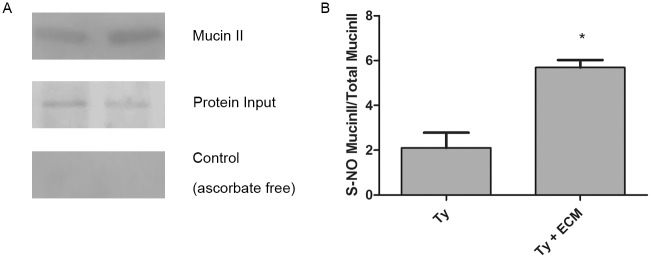
METHODOLOGY/PRINCIPAL FINDINGS: Trypomastigotes were incubated with ECM for different periods of time. Nitrated and S-nitrosylated proteins were analyzed by Western blotting using anti-nitrotyrosine and S-nitrosyl cysteine antibodies. At 2 h incubation time, a decrease in NO synthase activity, •NO, citrulline, arginine and cGMP concentrations, as well as the protein modifications levels have been observed in the parasite. The modified proteins were enriched by immunoprecipitation with anti-nitrotyrosine antibodies (nitrated proteins) or by the biotin switch method (S-nitrosylated proteins) and identified by MS/MS. The presence of both modifications was confirmed in proteins of interest by immunoblotting or immunoprecipitation.
CONCLUSIONS/SIGNIFICANCE: For the first time it was shown that T. cruzi proteins are amenable to modifications by S-nitrosylation and nitration. When T. cruzi trypomastigotes are incubated with the extracellular matrix there is a general down regulation of these reactions, including a decrease in both NOS activity and cGMP concentration. Notwithstanding, some specific proteins, such as enolase or histones had, at least, their nitration levels increased. This suggests that post-translational modifications of T. cruzi proteins are not only a reflex of NOS activity, implying other mechanisms that circumvent a relatively low synthesis of •NO. In conclusion, the extracellular matrix, a cell surrounding layer of macromolecules that have to be trespassed by the parasite in order to be internalized into host cells, contributes to the modification of •NO signaling in the parasite, probably an essential move for the ensuing invasion step.
克氏锥虫无鞭毛体是人类恰加斯病的病原体,其与细胞外基质(ECM)成分的黏附是宿主细胞入侵的重要步骤。寄生虫与ECM结合后触发的信号事件研究较少,据我们所知,尚无关于•NO信号传导的数据。
方法/主要发现:将无鞭毛体与ECM孵育不同时间。使用抗硝基酪氨酸和S-亚硝基化半胱氨酸抗体通过蛋白质印迹分析硝化和S-亚硝基化蛋白。孵育2小时后,在寄生虫中观察到NO合酶活性、•NO、瓜氨酸、精氨酸和cGMP浓度以及蛋白质修饰水平降低。通过用抗硝基酪氨酸抗体进行免疫沉淀(硝化蛋白)或通过生物素转换法(S-亚硝基化蛋白)富集修饰的蛋白质,并通过串联质谱法进行鉴定。通过蛋白质印迹或免疫沉淀在感兴趣的蛋白质中证实了这两种修饰的存在。
结论/意义:首次表明克氏锥虫蛋白可进行S-亚硝基化和硝化修饰。当克氏锥虫无鞭毛体与细胞外基质孵育时,这些反应普遍下调,包括NOS活性和cGMP浓度均降低。尽管如此,一些特定蛋白质,如烯醇化酶或组蛋白,至少其硝化水平有所增加。这表明克氏锥虫蛋白的翻译后修饰不仅是NOS活性的反映,还意味着存在其他机制来规避相对较低的•NO合成。总之,细胞外基质是寄生虫为内化进入宿主细胞而必须穿过的一层大分子,它有助于寄生虫中•NO信号传导的修饰,这可能是随后入侵步骤的关键举措。