Morgan Michael J, Kim You-Sun
Department of Pharmacology, University of Colorado School of Medicine, Aurora, Colorado, USA.
Department of Biochemistry, Ajou University School of Medicine, 3Department of Biomedical Sciences, Graduate School, Ajou University, Suwon 443-749, Korea.
BMB Rep. 2015 Jun;48(6):303-12. doi: 10.5483/bmbrep.2015.48.6.068.
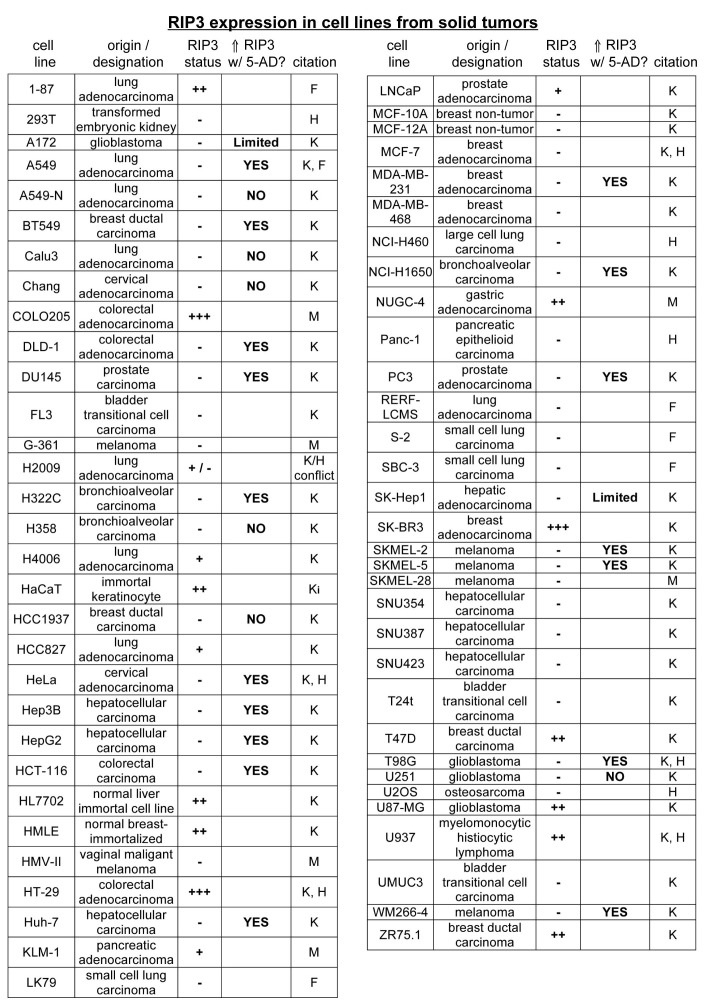
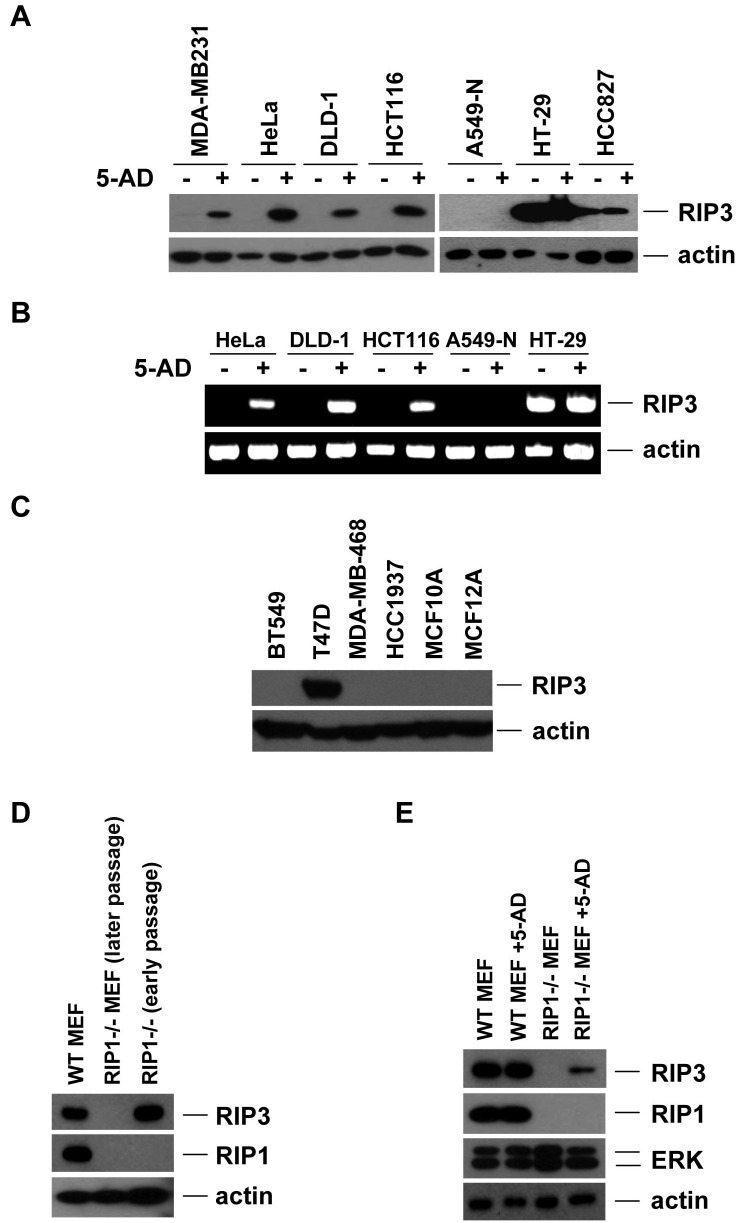
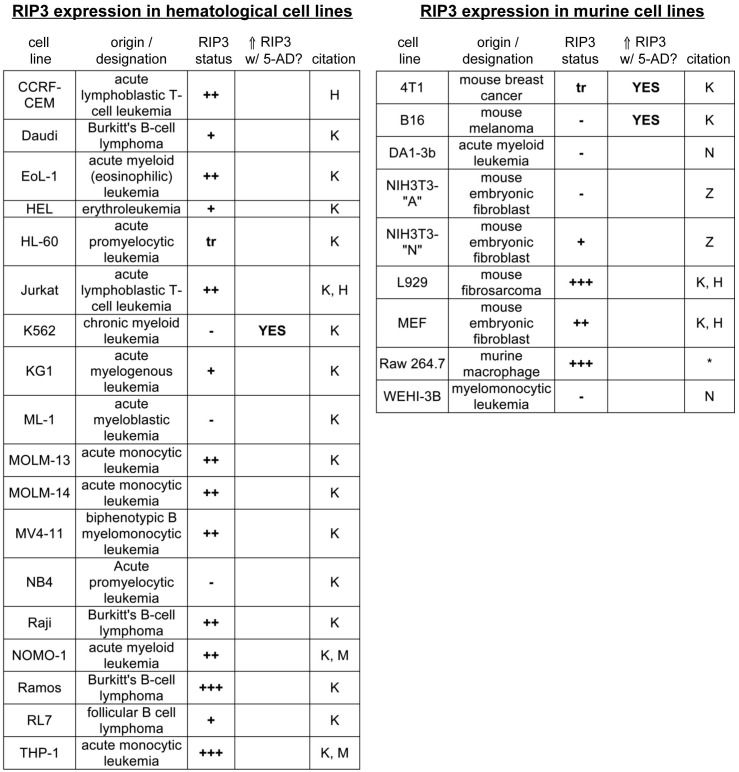
Receptor-interacting protein kinase-3 (RIP3, or RIPK3) is an essential protein in the "programmed", or "regulated" necrosis cell death pathway that is activated in response to death receptor ligands and other types of cellular stress. Programmed necrotic cell death is distinguished from its apoptotic counterpart in that it is not characterized by the activation of caspases; unlike apoptosis, programmed necrosis results in plasma membrane rupture, thus spilling the contents of the cell and triggering the activation of the immune system and inflammation. Here we discuss findings, including our own recent data, which show that RIP3 protein expression is absent in many cancer cell lines. The recent data suggests that the lack of RIP3 expression in a majority of these deficient cell lines is due to methylation-dependent silencing, which limits the responses of these cells to pro-necrotic stimuli. Importantly, RIP3 expression may be restored in many cancer cells through the use of hypomethylating agents, such as decitabine. The potential implications of loss of RIP3 expression in cancer are explored, along with possible consequences for chemotherapeutic response.
受体相互作用蛋白激酶3(RIP3)是“程序性”或“调控性”坏死性细胞死亡途径中的一种关键蛋白,该途径在响应死亡受体配体和其他类型的细胞应激时被激活。程序性坏死性细胞死亡与其凋亡对应物的区别在于,它不以半胱天冬酶的激活为特征;与凋亡不同,程序性坏死会导致质膜破裂,从而使细胞内容物溢出,并触发免疫系统的激活和炎症反应。在此,我们讨论相关研究结果,包括我们自己最近的数据,这些结果表明许多癌细胞系中不存在RIP3蛋白表达。最近的数据表明,这些大多数缺陷细胞系中RIP3表达缺失是由于甲基化依赖性沉默,这限制了这些细胞对促坏死刺激的反应。重要的是,通过使用低甲基化剂,如地西他滨,许多癌细胞中的RIP3表达可能得以恢复。我们探讨了癌症中RIP3表达缺失的潜在影响,以及对化疗反应可能产生的后果。