Blandy Experimental Farm, University of Virginia, 400 Blandy Farm Lane, Boyce, VA 22620, USA
Department of Environmental Sciences, University of Virginia, Charlottesville, VA 22904, USA.
AoB Plants. 2015 Apr 9;7:plv034. doi: 10.1093/aobpla/plv034.
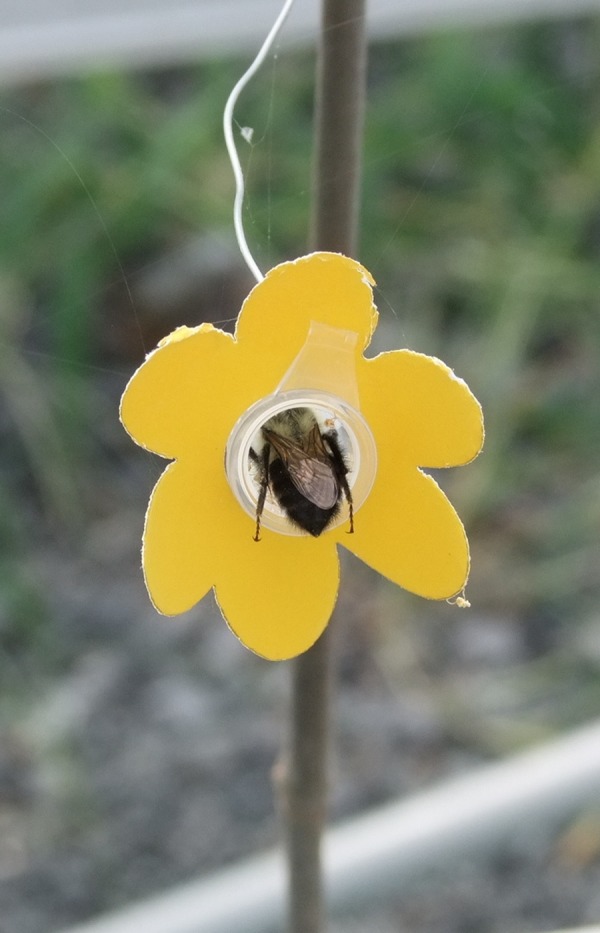
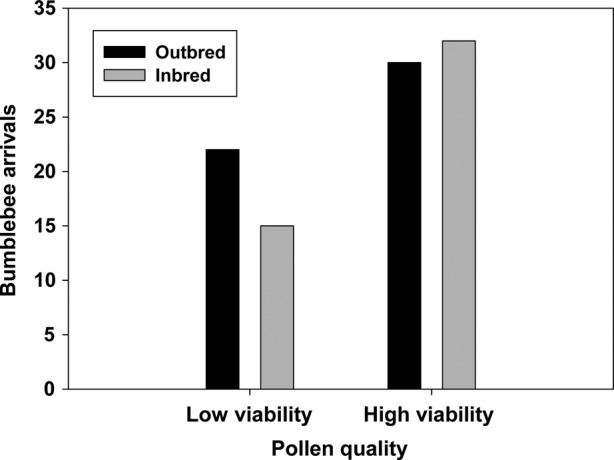
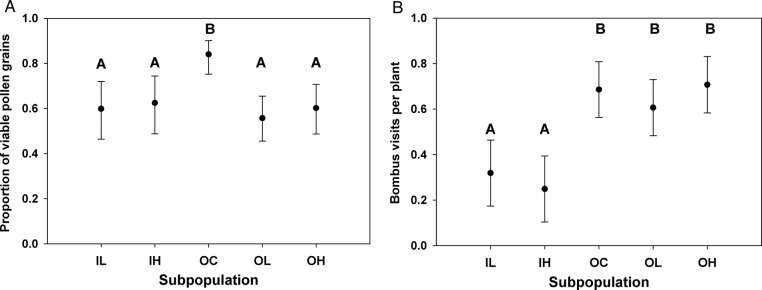
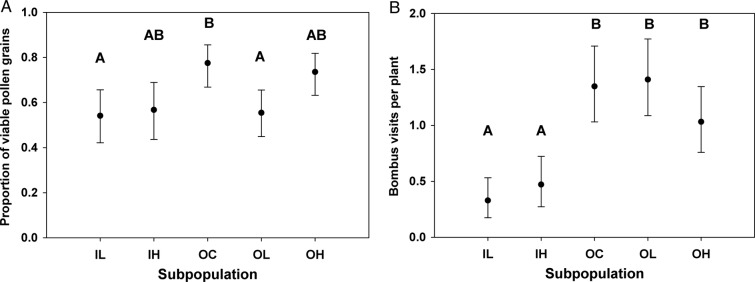
Nearly all bees rely on pollen as the sole protein source for the development of their larvae. The central importance of pollen for the bee life cycle should exert strong selection on their ability to locate the most rewarding sources of pollen. Despite this importance, very few studies have examined the influence of intraspecific variation in pollen rewards on the foraging decisions of bees. Previous studies have demonstrated that inbreeding reduces viability and hence protein content in Mimulus guttatus (seep monkeyflower) pollen and that bees strongly discriminate against inbred in favour of outbred plants. We examined whether variation in pollen viability could explain this preference using a series of choice tests with living plants, artificial plants and olfactometer tests using the bumble bee Bombus impatiens. We found that B. impatiens preferred to visit artificial plants provisioned with fertile anthers over those provisioned with sterile anthers. They also preferred fertile anthers when provided only olfactory cues. These bumble bees were unable to discriminate among live plants from subpopulations differing dramatically in pollen viability, however. They preferred outbred plants even when those plants were from subpopulations with pollen viability as low as the inbred populations. Their preference for outbred plants was evident even when only olfactory cues were available. Our data showed that bumble bees are able to differentiate between anthers that provide higher rewards when cues are isolated from the rest of the flower. When confronted with cues from the entire flower, their choices are independent of the quality of the pollen reward, suggesting that they are responding more strongly to cues unassociated with rewards than to those correlated with rewards. If so, this suggests that a sensory bias or some level of deception may be involved with advertisement to pollinators in M. guttatus.
几乎所有的蜜蜂都依赖花粉作为幼虫发育的唯一蛋白质来源。花粉对蜜蜂生命周期的核心重要性应该对它们寻找最有价值的花粉源的能力施加强烈的选择压力。尽管花粉对蜜蜂如此重要,但很少有研究考察过花粉报酬的种内变异对蜜蜂觅食决策的影响。以前的研究表明,近亲繁殖会降低拟南芥(猴面花)花粉的活力和蛋白质含量,而蜜蜂强烈歧视近亲繁殖,偏爱远交植物。我们通过一系列使用活体植物、人工植物和熊蜂 Bombus impatiens 嗅觉仪的选择测试,检验了花粉活力的变异是否可以解释这种偏好。我们发现,B. impatiens 更喜欢访问提供有活力花药的人工植物,而不是提供无菌花药的人工植物。当只提供嗅觉线索时,它们也更喜欢有活力的花药。然而,这些熊蜂无法区分花粉活力差异很大的亚种群的活体植物。它们更喜欢远交植物,即使这些植物来自花粉活力与近亲繁殖种群一样低的亚种群。即使只有嗅觉线索可用,它们对远交植物的偏好也很明显。我们的数据表明,熊蜂能够区分提供更高报酬的花药,当线索与花的其余部分隔离时。当面对整个花的线索时,它们的选择与花粉报酬的质量无关,这表明它们对与报酬无关的线索的反应比与报酬相关的线索更强。如果是这样,这表明在猴面花中,向传粉者进行广告可能涉及到一种感觉偏差或某种程度的欺骗。