Sanders Edward, Diehl Svenja
Edward Sanders Scientific Consulting, Rue du Clos 33, Peseux, Switzerland.
Freelancer Bioinformatics, Germany.
Oncoscience. 2015 Feb 17;2(2):151-86. doi: 10.18632/oncoscience.128. eCollection 2015.
Many cancers adopt a metabolism that is characterized by the well-known Warburg effect (aerobic glycolysis). Recently, numerous attempts have been made to treat cancer by targeting one or more gene products involved in this pathway without notable success. This work outlines a transcriptomic approach to identify genes that are highly perturbed in clear cell renal cell carcinoma (CCRCC).
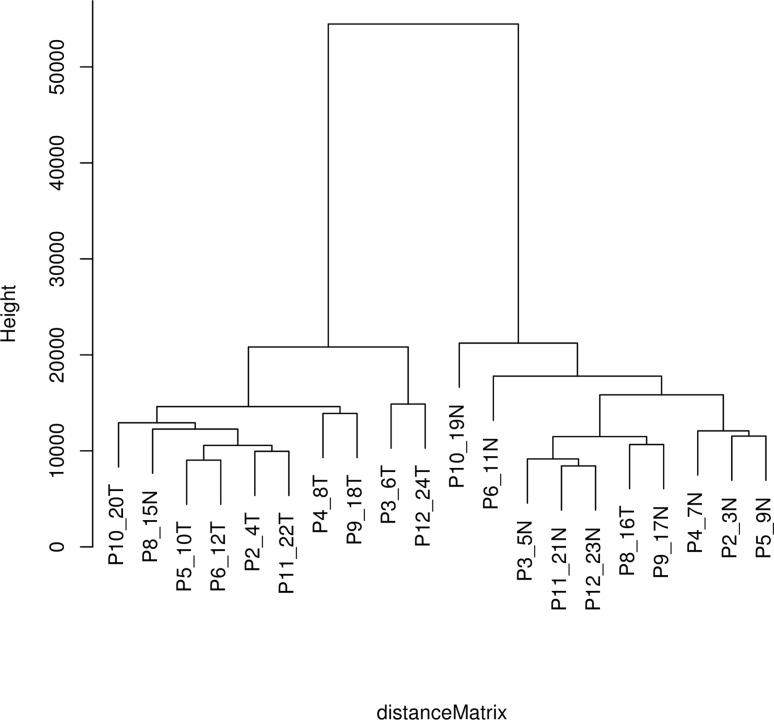
We developed a model of the extended Warburg effect and outlined the model using Cytoscape. Following this, gene expression fold changes (FCs) for tumor and adjacent normal tissue from patients with CCRCC (GSE6344) were mapped on to the network. Gene expression values with FCs of greater than two were considered as potential targets for treatment of CCRCC.
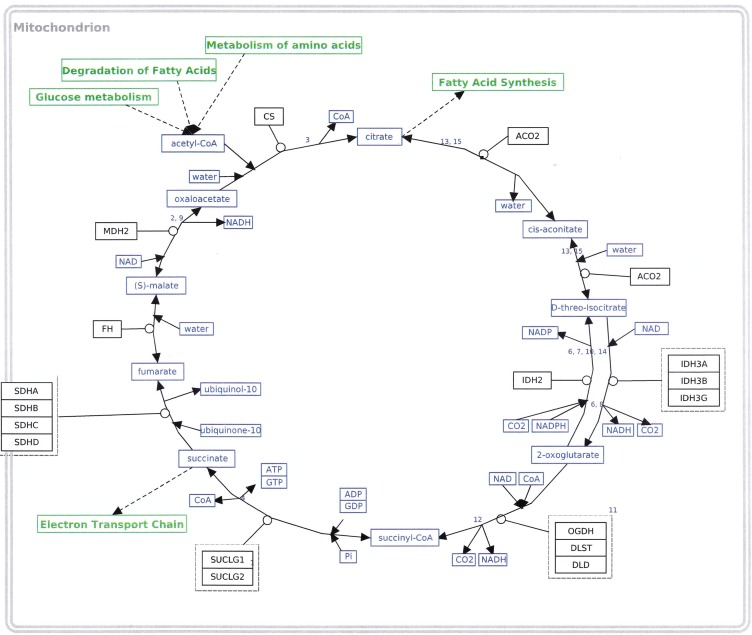
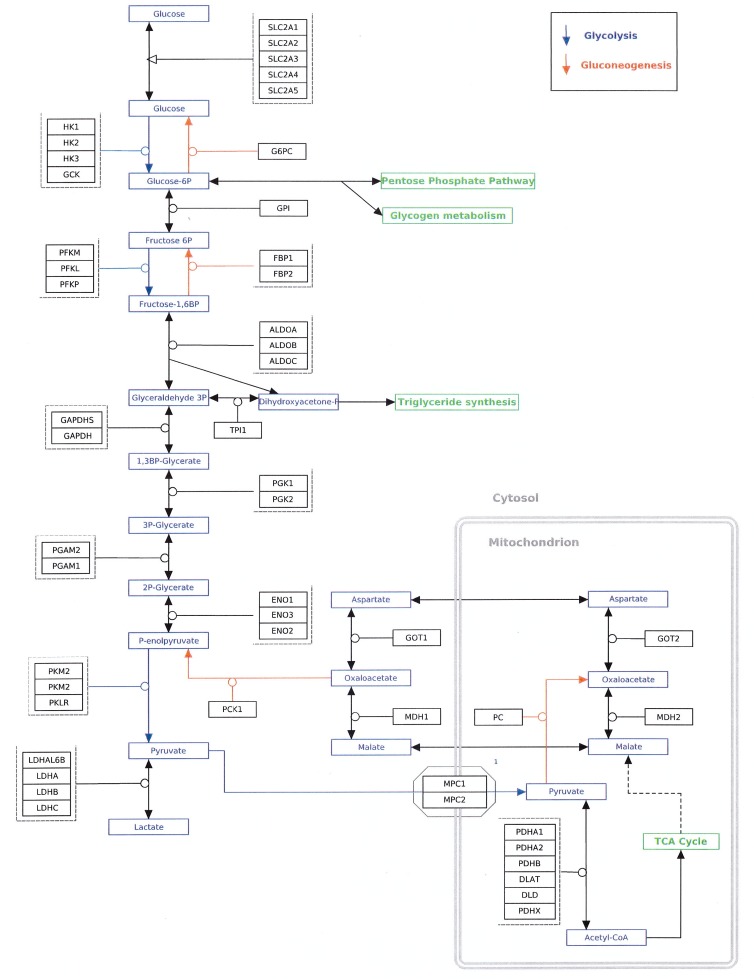
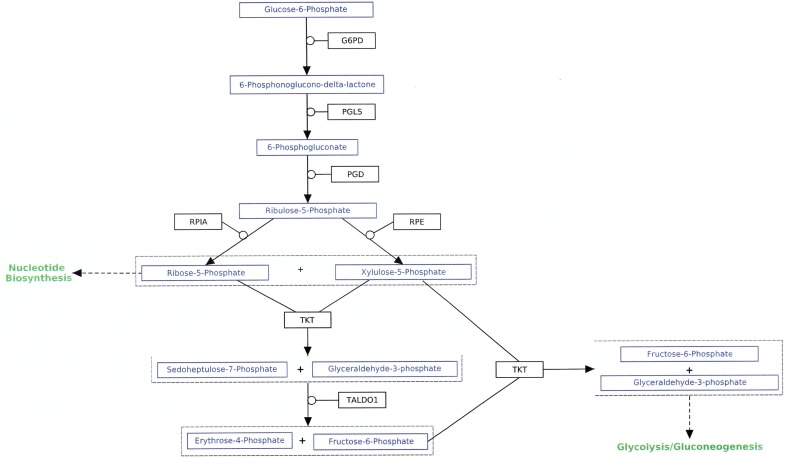
The Cytoscape network includes glycolysis, gluconeogenesis, the pentose phosphate pathway (PPP), the TCA cycle, the serine/glycine pathway, and partial glutaminolysis and fatty acid synthesis pathways. Gene expression FCs for nine of the 10 CCRCC patients in the GSE6344 data set were consistent with a shift to aerobic glycolysis. Genes involved in glycolysis and the synthesis and transport of lactate were over-expressed, as was the gene that codes for the kinase that inhibits the conversion of pyruvate to acetyl-CoA. Interestingly, genes that code for unique proteins involved in gluconeogenesis were strongly under-expressed as was also the case for the serine/glycine pathway. These latter two results suggest that the role attributed to the M2 isoform of pyruvate kinase (PKM2), frequently the principal isoform of PK present in cancer: i.e. causing a buildup of glucose metabolites that are shunted into branch pathways for synthesis of key biomolecules, may not be operative in CCRCC. The fact that there was no increase in the expression FC of any gene in the PPP is consistent with this hypothesis. Literature protein data generally support the transcriptomic findings.
A number of key genes have been identified that could serve as valid targets for anti-cancer pharmaceutical agents. Genes that are highly over-expressed include ENO2, HK2, PFKP, SLC2A3, PDK1, and SLC16A1. Genes that are highly under-expressed include ALDOB, PKLR, PFKFB2, G6PC, PCK1, FBP1, PC, and SUCLG1.
许多癌症采用一种以著名的瓦伯格效应(有氧糖酵解)为特征的代谢方式。最近,人们多次尝试通过靶向参与该途径的一种或多种基因产物来治疗癌症,但并未取得显著成功。这项工作概述了一种转录组学方法,以鉴定在透明细胞肾细胞癌(CCRCC)中受到高度干扰的基因。
我们建立了扩展瓦伯格效应的模型,并使用Cytoscape对该模型进行了概述。在此之后,将CCRCC患者(GSE6344)肿瘤组织和相邻正常组织的基因表达倍数变化(FC)映射到该网络上。FC大于2的基因表达值被视为CCRCC治疗的潜在靶点。
Cytoscape网络包括糖酵解、糖异生、磷酸戊糖途径(PPP)、三羧酸循环、丝氨酸/甘氨酸途径以及部分谷氨酰胺分解和脂肪酸合成途径。GSE6344数据集中10例CCRCC患者中有9例的基因表达FC与向有氧糖酵解的转变一致。参与糖酵解以及乳酸合成和转运的基因过度表达,编码抑制丙酮酸转化为乙酰辅酶A的激酶的基因也是如此。有趣的是,编码参与糖异生的独特蛋白质的基因以及丝氨酸/甘氨酸途径的基因强烈低表达。后两个结果表明,通常被认为是癌症中丙酮酸激酶(PK)主要同工型的丙酮酸激酶M2同工型(PKM2)的作用,即导致葡萄糖代谢产物积累并被分流到用于合成关键生物分子的分支途径中,在CCRCC中可能不起作用。PPP中任何基因的表达FC均未增加这一事实与该假设一致。文献中的蛋白质数据总体上支持转录组学研究结果。
已鉴定出一些关键基因,它们可作为抗癌药物的有效靶点。高度过度表达的基因包括ENO2、HK2、PFKP、SLC2A3、PDK1和SLC16A1。高度低表达的基因包括ALDOB、PKLR、PFKFB2、G6PC、PCK1、FBP1、PC和SUCLG1。