Ost Kyla S, O'Meara Teresa R, Huda Naureen, Esher Shannon K, Alspaugh J Andrew
Departments of Medicine/ Molecular Genetics & Microbiology, Duke University School of Medicine, Durham, North Carolina, United States of America.
PLoS Genet. 2015 Apr 10;11(4):e1005159. doi: 10.1371/journal.pgen.1005159. eCollection 2015 Apr.
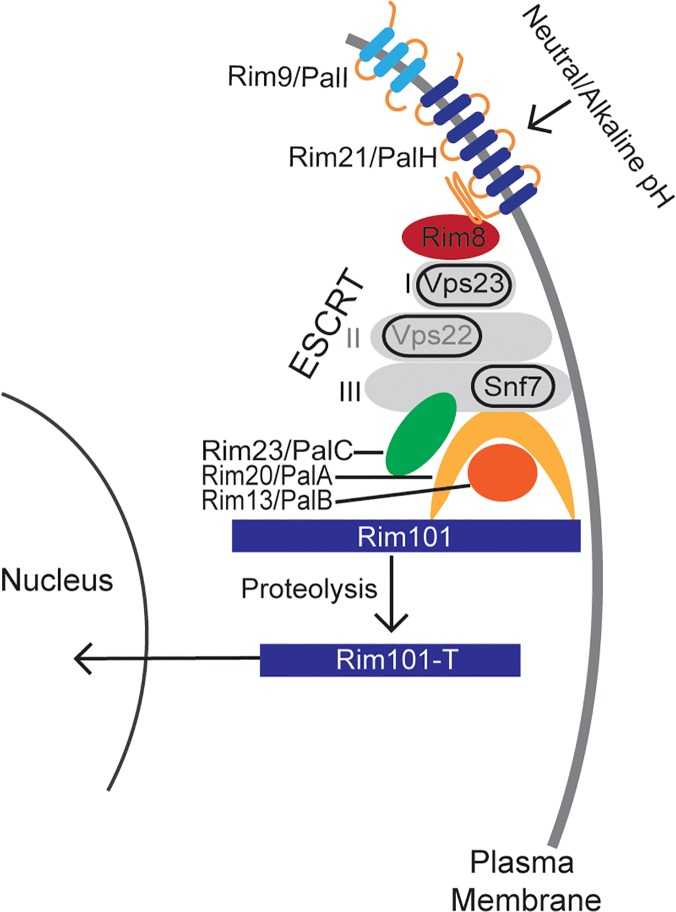
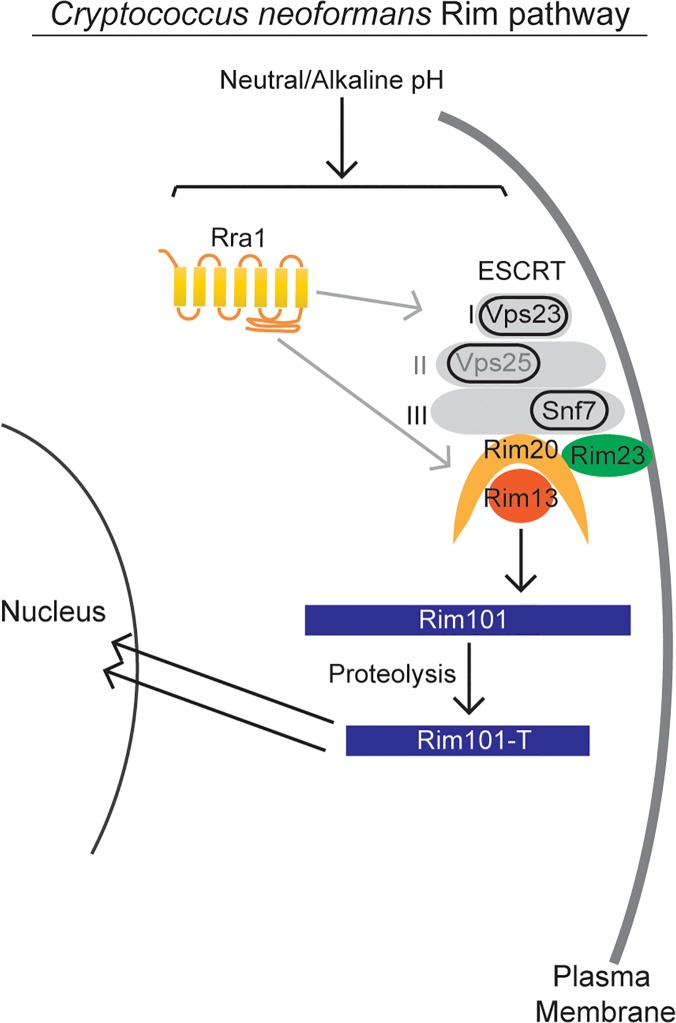
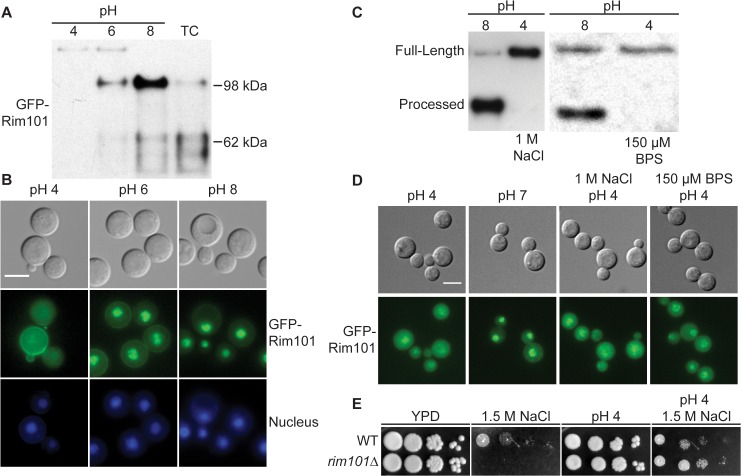
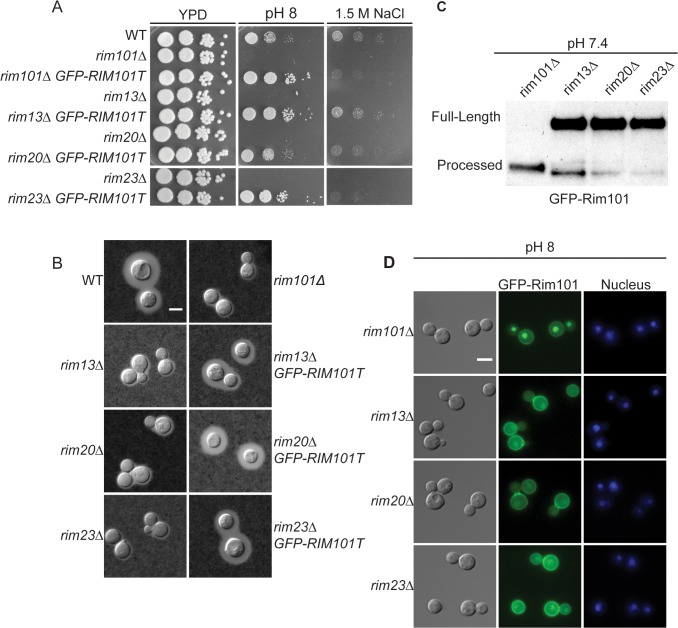
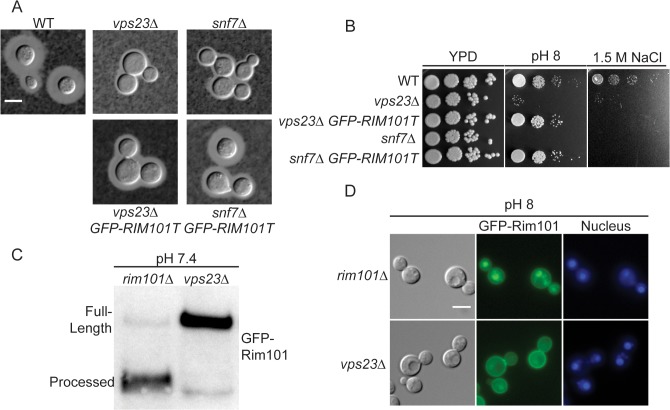
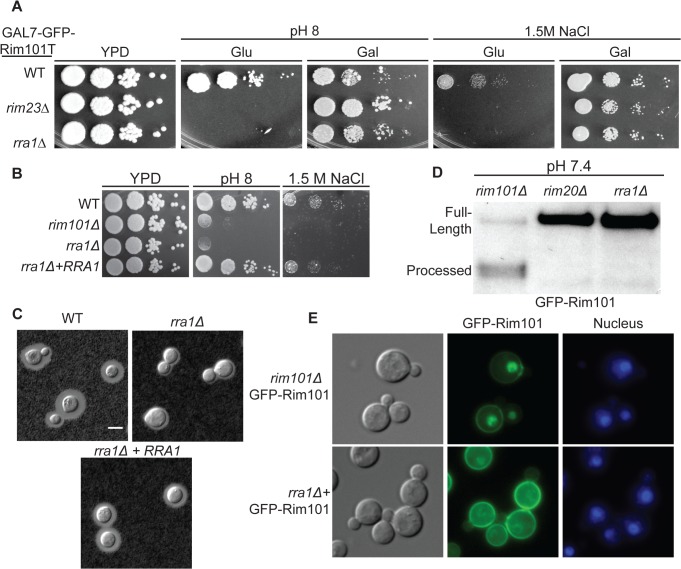
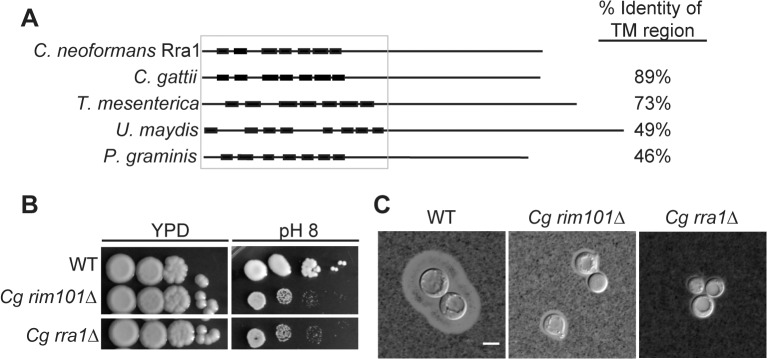
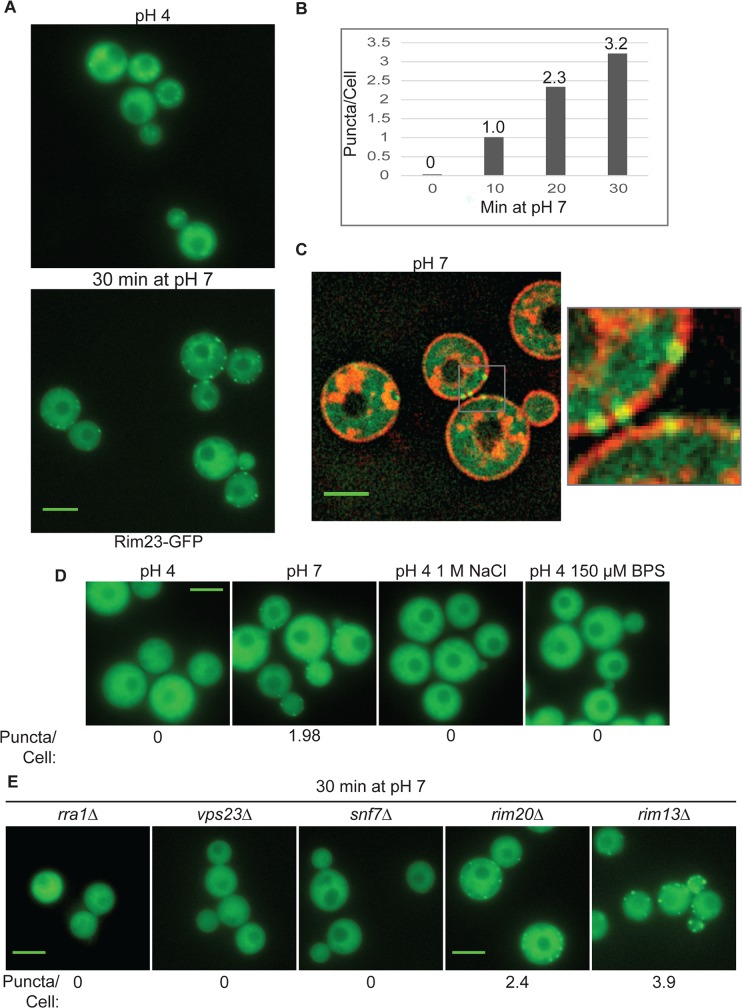
The Rim101/PacC transcription factor acts in a fungal-specific signaling pathway responsible for sensing extracellular pH signals. First characterized in ascomycete fungi such as Aspergillus nidulans and Saccharomyces cerevisiae, the Rim/Pal pathway maintains conserved features among very distantly related fungi, where it coordinates cellular adaptation to alkaline pH signals and micronutrient deprivation. However, it also directs species-specific functions in fungal pathogens such as Cryptococcus neoformans, where it controls surface capsule expression. Moreover, disruption of the Rim pathway central transcription factor, Rim101, results in a strain that causes a hyper-inflammatory response in animal infection models. Using targeted gene deletions, we demonstrate that several genes encoding components of the classical Rim/Pal pathway are present in the C. neoformans genome. Many of these genes are in fact required for Rim101 activation, including members of the ESCRT complex (Vps23 and Snf7), ESCRT-interacting proteins (Rim20 and Rim23), and the predicted Rim13 protease. We demonstrate that in neutral/alkaline pH, Rim23 is recruited to punctate regions on the plasma membrane. This change in Rim23 localization requires upstream ESCRT complex components but does not require other Rim101 proteolysis components, such as Rim20 or Rim13. Using a forward genetics screen, we identified the RRA1 gene encoding a novel membrane protein that is also required for Rim101 protein activation and, like the ESCRT complex, is functionally upstream of Rim23-membrane localization. Homologs of RRA1 are present in other Cryptococcus species as well as other basidiomycetes, but closely related genes are not present in ascomycetes. These findings suggest that major branches of the fungal Kingdom developed different mechanisms to sense and respond to very elemental extracellular signals such as changing pH levels.
Rim101/PacC转录因子作用于真菌特有的信号通路,负责感知细胞外pH信号。Rim/Pal通路最初在构巢曲霉和酿酒酵母等子囊菌中得到表征,在亲缘关系非常遥远的真菌中保持着保守特征,在这些真菌中它协调细胞对碱性pH信号和微量营养素剥夺的适应。然而,它也在新型隐球菌等真菌病原体中指导物种特异性功能,在该病原体中它控制表面荚膜的表达。此外,Rim通路核心转录因子Rim101的破坏会导致在动物感染模型中引发超炎症反应的菌株。通过靶向基因缺失,我们证明新型隐球菌基因组中存在几个编码经典Rim/Pal通路组分的基因。事实上,其中许多基因是Rim101激活所必需的,包括ESCRT复合体成员(Vps23和Snf7)、ESCRT相互作用蛋白(Rim20和Rim23)以及预测的Rim13蛋白酶。我们证明在中性/碱性pH条件下,Rim23被募集到质膜上的点状区域。Rim23定位的这种变化需要上游ESCRT复合体组分,但不需要其他Rim101蛋白水解组分,如Rim20或Rim13。通过正向遗传学筛选,我们鉴定出编码一种新型膜蛋白的RRA1基因,该基因也是Rim101蛋白激活所必需的,并且与ESCRT复合体一样,在功能上位于Rim23膜定位的上游。RRA1的同源物存在于其他隐球菌物种以及其他担子菌中,但在子囊菌中不存在密切相关的基因。这些发现表明真菌界的主要分支发展出了不同的机制来感知和响应非常基本的细胞外信号,如pH水平的变化。